
This article's table of contents introduction:
- Decoding the Terminology
- Typical Specifications for a "Low Pressure Q235 SWSI" Fan
- Common Models (Chinese Standard)
- Key Applications
- Advantages of this Fan Type
- Disadvantages / Limitations
- Need a Specific Quote or Specification?
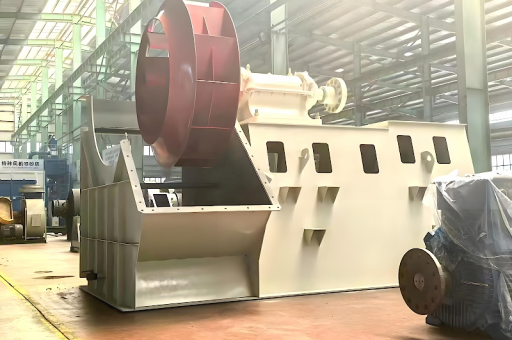
It sounds like you are looking for information or a specification for a Low Pressure, Q235 (steel) SWSI (Single Width, Single Inlet) Centrifugal Fan, often referred to as an Industrial Centrifugal Blower.
Here is a breakdown of what that description means, typical specifications, and common applications.
Decoding the Terminology
- Low Pressure: This typically refers to fans with a static pressure range of roughly 50 to 500 Pa (0.2 to 2 in.wg) , though some definitions extend to 1000 Pa. These are used for high-volume airflow with low resistance.
- Q235: This is a Chinese steel grade (similar to ASTM A36 or EN S235JR). It indicates the housing, impeller, and inlet cone are made from carbon steel. It's a cost-effective material suitable for clean, dry air or non-corrosive gases at moderate temperatures (usually below 200°C / 392°F).
- SWSI (Single Width, Single Inlet): Air enters the impeller from one side only. This is the most common design for medium to large industrial fans. It allows for direct motor mounting (direct drive) or belt drive.
- Centrifugal Fan / Blower: This design moves air radially (outward from the center). The most common impeller type for low pressure is Forward Curved (squirrel cage) or Backward Inclined. Forward Curved is quieter and cheaper, while Backward Inclined is more efficient and durable.
Typical Specifications for a "Low Pressure Q235 SWSI" Fan
If you are sourcing or specifying this fan, these are the standard features:
| Parameter | Typical Value / Description |
|---|---|
| Material | Housing: Q235 Steel (2-6mm thick) Impeller: Q235 Steel (often with anti-corrosion primer) Shaft: 45# Steel (High carbon steel) |
| Impeller Type | Forward Curved (most common for low pressure, high volume) or Backward Inclined (for slightly higher pressures and efficiency) |
| Configuration | Arrangement 4 (Direct Drive) or Arrangement 3 (Belt Drive, most common for adjusting speed). |
| Pressure Range | 50 Pa to ~800 Pa (Typical). |
| Airflow Range | 1,000 m³/h to 100,000+ m³/h (depending on wheel diameter). |
| Motor | Standard TEFC (Totally Enclosed Fan Cooled) induction motor, 2-pole (2900 RPM) or 4-pole (1450 RPM). |
| Finish | Anti-rust primer (1 coat) + Industrial paint (1-2 coats). |
Common Models (Chinese Standard)
In the Chinese market, a low-pressure SWSI fan is often a 4-72 Series (Backward Inclined) or 4-79 Series (Forward Curved) fan.
- Model Example: 4-72-8C
- 4-72: Series (Backward Inclined blades).
- 8: Impeller diameter in decimeters (800mm).
- C: Belt drive configuration (Arrangement 3).
Key Applications
These fans are used in systems where the ductwork or equipment offers very little resistance to airflow:
- HVAC & Ventilation: General factory ventilation, warehouse exhaust, air supply for painting booths or clean rooms.
- Agricultural: Drying grain, hay, or seeds; livestock barn ventilation (tunnel fans).
- Light Industrial: Cooling small machines, exhausting welding fumes (with proper filtration), providing process air for ovens or dryers.
- Material Handling: Moving lightweight materials (dust, sawdust, small particles) - Note: For heavy materials, a heavier-duty radial fan is needed.
Advantages of this Fan Type
- High Airflow: Excellent for moving large volumes of air.
- Low Noise: Quieter than high-pressure axial or radial fans, especially with Forward Curved impellers.
- Cost-Effective: The Q235 steel keeps the purchase price low.
- Simple Design: Easy to install and maintain.
Disadvantages / Limitations
- Not for High Pressure: Cannot push air through long, complex ductwork or dense filters.
- Low Static Efficiency: Forward curved designs are less efficient than backward inclined or airfoil fans (typically 60-75% total efficiency).
- Material Limits: Q235 steel will rust in humid or chemical environments. Do not use it for corrosive fumes or outdoor installation without heavy galvanization.
- Dust Loading: Standard designs are not ideal for heavy dust. The dust can clog the close-fitting blades of a forward-curved wheel.
Need a Specific Quote or Specification?
To get the right fan, you need to provide three parameters:
- Required Airflow (CFM or m³/h): How much air do you need to move?
- Required Static Pressure (in.wg or Pa): What is the resistance of your system (ducts, dampers, filters)?
- Operating Temperature: Will the air be hot?
Is there a specific model you are trying to identify (e.g., a "4-72" or "9-19" series?) or a specific performance requirement you need to meet? Let me know and I can provide more precise data.





