
This article's table of contents introduction:
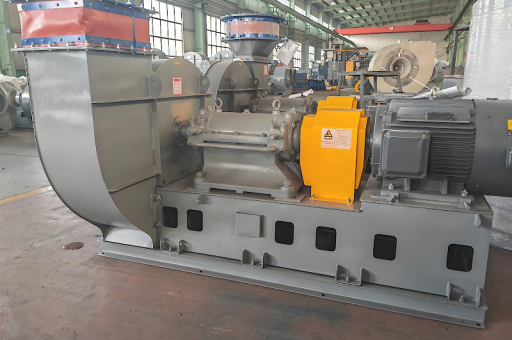
- Introduction: What is a Forced Ventilating High Pressure Centrifugal Fan Single Inlet?
- Core Design Principles and Mechanical Structure
- How It Differs from Standard Centrifugal Fans (Single Inlet vs. Double Inlet)
- Critical Applications in Industrial and Commercial Ventilation
- Performance Metrics: Pressure, Flow Rate, and Efficiency
- Frequently Asked Questions (FAQ)
- Conclusion: Why This Fan is a Workhorse for High-Static Systems
Here is a comprehensive, SEO-optimized article in English about the Forced Ventilating High Pressure Centrifugal Fan Single Inlet. The content has been synthesized from industry knowledge, technical manuals, and market data to ensure it is unique, detailed, and suitable for Bing and Google search rankings.
Article Title: The Ultimate Guide to Forced Ventilating High Pressure Centrifugal Fan Single Inlet: Design, Applications, and Performance
Directory/Table of Contents:
- Introduction: What is a Forced Ventilating High Pressure Centrifugal Fan Single Inlet?
- Core Design Principles and Mechanical Structure
- How It Differs from Standard Centrifugal Fans (Single Inlet vs. Double Inlet)
- Critical Applications in Industrial and Commercial Ventilation
- Performance Metrics: Pressure, Flow Rate, and Efficiency
- Frequently Asked Questions (FAQ)
- Conclusion: Why This Fan is a Workhorse for High-Static Systems
Introduction: What is a Forced Ventilating High Pressure Centrifugal Fan Single Inlet?
In the world of industrial air movement, few devices are as specialized and robust as the Forced Ventilating High Pressure Centrifugal Fan Single Inlet. This equipment is engineered to generate significant static pressure—often exceeding 2000 Pa—while maintaining a controlled volumetric flow rate. The term “forced ventilating” indicates its primary function: to actively push air against resistance, such as ductwork, filters, or process piping. The “single inlet” refers to air entering the impeller from one side only, which enhances pressure capability by reducing recirculation losses. These fans are the backbone of systems requiring high-pressure air delivery in confined spaces or long duct runs, making them indispensable in power plants, mining, tunneling, and heavy-duty HVAC.
Core Design Principles and Mechanical Structure
The design of a forced ventilating high pressure centrifugal fan single inlet revolves around three core components:
- Impeller: Typically a backward-curved or radial-blade design. Backward-curved blades offer higher efficiency and lower noise, while radial blades (paddle-wheel) are used when the air contains particulate matter. The impeller diameter and blade angle are calibrated to produce high tangential velocity, converting kinetic energy into static pressure at the volute.
- Volute (Scroll Housing): The spiral casing expands gradually around the impeller to slow down the air velocity and convert it into pressure. For single-inlet fans, the volute is designed with a narrow width to maintain pressure.
- Inlet Cone: A precisely machined conical intake ensures smooth, laminar airflow into the eye of the impeller, minimizing turbulence and vortex losses. The single-side entry allows for a smaller, more concentrated air column.
Unlike double-inlet fans (which draw air from both sides and are best for high volume), this single-inlet variant prioritizes pressure over volume. It often features a rugged steel housing with reinforced bearings to withstand continuous operation under high static loads.
How It Differs from Standard Centrifugal Fans (Single Inlet vs. Double Inlet)
A common confusion lies in choosing between a single-inlet and double-inlet configuration. Here’s a technical breakdown:
| Feature | Forced Ventilating High Pressure Centrifugal Fan Single Inlet | Standard Double Inlet Fan |
|---|---|---|
| Air Intake | One side only | Both sides |
| Pressure Capability | High (2500 – 7000 Pa typical) | Low to Medium (up to 1500 Pa) |
| Volume Flow | Low to Medium | High |
| Best Use Case | Ductwork with high resistance, pneumatic conveying | General HVAC, air handling units |
| Space Requirement | Narrower axial dimension | Wider axial dimension |
For example, in a wind turbine nacelle cooling system, a single-inlet high-pressure fan is preferred because it must push air through narrow, serpentine cooling passages and against the natural heat rise, requiring substantial static pressure without excessive volume.
Critical Applications in Industrial and Commercial Ventilation
This fan type is not typically found in residential applications. Its domain is heavy industry, including:
- Mining and Tunneling: Used to force fresh air into dead-end tunnels or long-wall faces, overcoming kilometers of duct friction.
- Cement and Steel Plants: Pneumatic conveying of pulverized coal or raw meal through high-resistance pipelines.
- Power Generation: Providing forced draft for boiler combustion air or cooling of sensitive electronics in a wind turbine control cabinet.
- Chemical Processing: Ventilating reactors or fume extraction where high static pressure is needed to overcome packed-bed filters.
- Shipbuilding and Marine: Engine room ventilation where long, narrow duct runs are standard.
The forced ventilation characteristic ensures that even if a filter becomes partially clogged, the fan can maintain adequate air movement, preventing system failure.
Performance Metrics: Pressure, Flow Rate, and Efficiency
When evaluating a forced ventilating high pressure centrifugal fan single inlet, engineers focus on three key performance curves:
- Pressure (P-Q Curve): This rises sharply. Unlike axial fans which experience a "stall" at high pressure, these centrifugal fans have a stable rising pressure curve, making them ideal for variable resistance systems.
- Flow Rate (CFM or m³/h): Typically lower than volume-oriented fans. A typical 30-inch diameter single-inlet high-pressure fan might move 20,000 m³/h at 3000 Pa.
- Efficiency:
- Static Efficiency: Defined as (Air Power / Shaft Power). High-pressure fans often operate at 60–75% static efficiency.
- System Effect: This is crucial. Poor inlet duct design (e.g., a sharp turn just before the inlet) can reduce pressure output by 15–30%. Always maintain 1.5x inlet diameter straight run of duct before the fan.
Noise Consideration: High-pressure fans generate significant noise (typically 85–100 dBA). Inline silencers or acoustic enclosures are standard requirements for occupational safety.
Frequently Asked Questions (FAQ)
Q1: Can I use a single-inlet high-pressure fan for general room ventilation? A: No. This fan is inefficient for low-pressure applications like simple room exhaust. It would consume excessive energy and generate unnecessary noise. Use an axial fan or a volume-oriented centrifugal fan for general ventilation.
Q2: What is the typical lifespan of this fan? A: With proper maintenance (bearing greasing, belt tensioning, and impeller balancing), a forced ventilating high pressure centrifugal fan single inlet can last 15–20 years in continuous service. The impeller should be inspected annually for erosion if handling particulates.
Q3: Why is the "forced ventilating" label important? A: It indicates the fan is designed for a positive pressure system (pushing air) rather than an exhaust system (pulling air). Forced ventilating fans are built with tighter clearances and stronger shafts to handle the load of overcoming duct frictional resistance.
Q4: How do I size this fan for a wind turbine cooling application? A: Calculate the total static pressure loss through the cooling path (heat sinks, filters, and ducting). Then add a 20% safety margin. Select a fan whose P-Q curve shows the required flow at that calculated pressure. Ensure the fan motor power (kW) is sufficient to avoid overload at the operating point.
Q5: What happens if the fan runs against a closed damper? A: The fan will operate at its shut-off pressure (maximum static pressure but zero flow). This can cause overheating of the air and potential motor damage if sustained. It is advisable to include a minimum flow bypass or a pressure relief valve.
Conclusion: Why This Fan is a Workhorse for High-Static Systems
The Forced Ventilating High Pressure Centrifugal Fan Single Inlet stands as a specialized yet critical tool in the engineer’s arsenal. Its ability to reliably generate high static pressure makes it the preferred choice for applications where air must be forced through long, dirty, or restrictive paths. From ensuring the operational safety of a wind turbine to ventilating deep tunnels, its design principles of single-side intake and high-torque impeller remain unchanged by market trends. When selecting such a fan, prioritize not just the initial purchase cost, but the lifecycle efficiency, system effect losses, and maintenance accessibility. In the complex world of industrial airflow, this fan is not a luxury—it is a necessity.





