
This article's table of contents introduction:
- Table of Contents (导读目录)
- Introduction: The Convergence of Air Movement and Purification
- Part 1: Understanding Medium Pressure Centrifugal Ventilation Fans
- Part 2: The Synergy with Air Filtration Systems
- Part 3: Industrial Applications and Case Studies
- Part 4: Engineering Selection and Integration
- Frequently Asked Questions (FAQ)
- Conclusion: The Future of Industrial Ventilation
** Optimizing Industrial Air Quality: The Critical Role of Medium Pressure Centrifugal Ventilation Fans in Air Filtration Systems
Table of Contents (导读目录)
- Introduction: The Convergence of Air Movement and Purification
- Part 1: Understanding Medium Pressure Centrifugal Ventilation Fans
- 1 What Defines "Medium Pressure" in Fan Engineering?
- 2 Operating Principles: Impeller Design and Airflow Dynamics
- 3 Key Performance Metrics: CFM, Static Pressure, and Efficiency
- Part 2: The Synergy with Air Filtration Systems
- 1 Why High-Pressure Fans Overwhelm Standard Filters
- 2 How Medium Pressure Fans Optimize MERV and HEPA Performance
- 3 The Critical Role in Pre-Filtration and Baghouse Systems
- Part 3: Industrial Applications and Case Studies
- 1 Woodworking and Dust Collection
- 2 Pharmaceutical Cleanrooms and Chemical Fume Extraction
- 3 Commercial Kitchens and Welding Smoke Management
- Part 4: Engineering Selection and Integration
- 1 Calculating System Pressure Drop and Fan Curve Matching
- 2 Energy Efficiency: Direct Drive vs. Belt Drive Configurations
- 3 Noise and Vibration Control in Ducted Systems
- Frequently Asked Questions (FAQ)
- Conclusion: The Future of Industrial Ventilation
Introduction: The Convergence of Air Movement and Purification
In the modern industrial landscape, maintaining acceptable indoor air quality is not merely a matter of comfort; it is a regulatory requirement for workplace safety, product integrity, and equipment longevity. The core of any robust ventilation and dust collection strategy lies in a delicate balance: moving large volumes of air while simultaneously overcoming the inherent resistance of an air filtration system.
While high-pressure fans are often associated with pneumatic conveying, and low-pressure fans with simple comfort ventilation, the medium pressure centrifugal ventilation fan has emerged as the workhorse of industrial air purification. These fans bridge the critical gap between high-volume, low-resistance airflow and the precise static pressure requirements needed to pull air through dense filter media. When integrated into an Air Filtration System—such as a baghouse, cartridge collector, or HEPA-filtered cleanroom—these fans determine the system’s overall efficiency, energy consumption, and operational reliability.
This article provides a comprehensive, SEO-optimized analysis of how medium pressure centrifugal fans function within air filtration contexts. We will explore the engineering principles, application scenarios, and selection criteria necessary for optimizing your ventilation infrastructure. We will also clarify common misconceptions regarding fan pressure classes and filtration resistance. By the end, you will understand why this specific class of fan is indispensable for industries ranging from woodworking to pharmaceuticals.
Part 1: Understanding Medium Pressure Centrifugal Ventilation Fans
1 What Defines "Medium Pressure" in Fan Engineering?
In the context of fan engineering, pressure classification is standardized to match the fan’s capability to the system’s resistance. According to common industry standards:
- Low Pressure: Up to 2 inches w.g. (water gauge) – typically used for general ventilation without significant ductwork or filters.
- Medium Pressure: From 2 to 12 inches w.g. – designed for systems with moderate duct runs, industrial exhaust, and standard air filtration.
- High Pressure: Above 12 inches w.g. – used for pneumatic conveying, long-distance transport, and high-resistance scrubbers.
Medium pressure centrifugal fans are specifically engineered to generate enough static pressure to draw air through moderately restrictive air filters (like MERV 14-16 or HEPA pre-filters) without being over-specified, which would waste energy and increase noise.
2 Operating Principles: Impeller Design and Airflow Dynamics
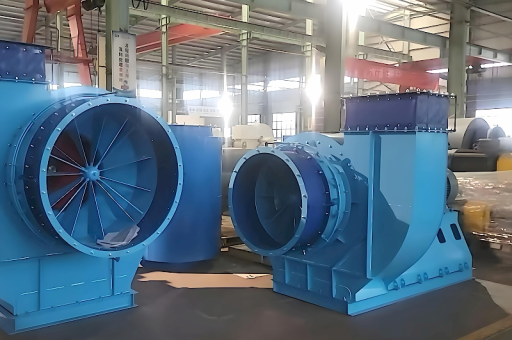
The "centrifugal" designation refers to how air enters the fan. Unlike an axial fan (like a propeller), a centrifugal fan draws air into the center of the rotating impeller and then accelerates it radially outward using centrifugal force.
For medium pressure applications, the impeller design is critical:
- Backward-Inclined Blades: These are the most common for filtration systems. They are highly efficient, non-overloading (motor won't burn out if static pressure drops), and generate medium pressure with relatively low noise.
- Radial or Paddle Blades: Used for heavier dust loads (e.g., wood chips). They create medium-to-high pressure but are less efficient and noisier.
- Airfoil Blades: The most efficient design for clean air applications, achieving very high static pressures within the medium range with excellent energy performance.
The housing design—often a scroll or volute—converts the kinetic energy (velocity) of the air leaving the impeller into potential energy (static pressure). This conversion is what allows the fan to overcome the resistance of the filtration media.
3 Key Performance Metrics: CFM, Static Pressure, and Efficiency
When selecting a fan for an air filtration system, you must consider three interconnected factors:
- CFM (Cubic Feet per Minute): This is the airflow volume required to capture contaminants at the source. For example, a welding station might require 2,000 CFM.
- Static Pressure (SP): This is the resistance the fan must overcome. A simple duct might have 2" SP, while a system with a baghouse filter might have 6" to 10" SP. The fan must produce enough SP to match the system's resistance at the desired CFM.
- Brake Horsepower (BHP): This determines energy consumption. A fan operating at peak efficiency (e.g., 75% static efficiency) uses less electricity than an oversized or poorly matched fan.
Key Insight: A medium pressure fan is often the "Goldilocks" solution. A low-pressure fan cannot pull air through a dense filter. A high-pressure fan is expensive and inefficient for a standard filtration system. The medium pressure fan matches the resistance curve of most modern air filtration units perfectly.
Part 2: The Synergy with Air Filtration Systems
1 Why High-Pressure Fans Overwhelm Standard Filters
A common mistake in industrial ventilation is "over-specifying" the fan. While it might seem safe to use a high-pressure fan, it can actually damage your filtration system.
- Filter Blinding: Excessively high static pressure can force fine particulate matter deep into the filter media, causing "blinding" (clogging) that is impossible to clean.
- Cartridge Collapse: Standard pleated cartridge filters are not designed for extreme pressure differentials. A high-pressure fan can collapse the pleats, rendering the filter useless.
- Energy Waste: A high-pressure fan running at a lower-than-rated CFM (due to duct restriction) operates at the far left of its fan curve, where efficiency drops dramatically.
Conversely, a medium pressure centrifugal ventilation fan provides steady, consistent pressure that allows the filter cake (the layer of dust on the filter) to build and release naturally during pulse-jet cleaning cycles.
2 How Medium Pressure Fans Optimize MERV and HEPA Performance
In cleanroom environments, final HEPA filters are extremely restrictive. Taking a HEPA filter from a low-end MERV 8 (low resistance) to a high-end MERV 16 (high resistance) requires a substantial increase in static pressure.
Medium pressure fans are ideal for multi-stage filtration:
- Stage 1 (Pre-filtration): Large particles captured by a MERV 8 or MERV 13 filter. Resistance: ~1" w.g.
- Stage 2 (Final Filtration): Fine particles captured by a MERV 16 or HEPA filter. Resistance: ~3" to 6" w.g. at the end of life.
A medium pressure fan can easily handle this combined resistance (4" to 8" w.g.) while maintaining the required CFM. This synergy ensures that the system meets ISO cleanroom classification standards without excessive energy draw.
3 The Critical Role in Pre-Filtration and Baghouse Systems
Baghouse dust collectors are standard in heavy industries like cement, mining, and wood pellet manufacturing. They rely on a fan to pull air through large fabric bags.
- Conventional Baghouse: Requires a fan capable of 8" to 12" SP. This falls squarely in the medium pressure range.
- Pulse-Jet Cleaning: The fan must maintain a steady negative pressure inside the housing while a compressed air pulse dislodges dust from the bags. A fan with a steep power curve (like a backward-inclined medium pressure fan) handles this fluctuating resistance smoothly.
By using a properly sized medium pressure fan, the baghouse operates at a consistent air-to-cloth ratio, ensuring longer bag life and lower emissions.
Part 3: Industrial Applications and Case Studies
1 Woodworking and Dust Collection
Scenario: A custom furniture shop has four woodworking machines (table saw, sander, router, and planer) connected to a centralized dust collector.
- Challenge: Each machine requires specific CFM (e.g., 1,500 CFM for the saw, 2,000 CFM for the sander). The system includes 50 feet of 8-inch ductwork and a 5,000 CFM cartridge filter unit.
- Solution: A medium pressure centrifugal fan with a backward-inclined impeller. The system requires a total of 4,500 CFM at 6" SP.
- Result: The fan provides enough suction to capture all dust at the source. The medium pressure ensures the cartridge filters do not collapse under the pressure differential. The use of a variable frequency drive (VFD) allows adjustments for branch duct usage.
2 Pharmaceutical Cleanrooms and Chemical Fume Extraction
Scenario: A cleanroom lab requires Class 10,000 (ISO 7) cleanliness. Chemical fumes from wet stations must be exhausted.
- Challenge: The exhaust system must overcome the resistance of a scrubber (for chemical removal) and a HEPA filter. The make-up air system must also overcome filter resistance.
- Solution: Two medium pressure centrifugal fans (one for supply, one for exhaust). The exhaust fan is chemically resistant (FRP or coated steel).
- Result: The fans maintain a stable negative pressure gradient (e.g., corridor > cleanroom > fume hood). The medium pressure allows precise balancing of airflow to each hood without causing dangerous backdrafts.
3 Commercial Kitchens and Welding Smoke Management
Scenario: A large welding shop produces heavy metal fumes.
- Challenge: The fumes are dense and hot. A typical exhaust hood requires high CFM and enough SP to push the fumes through a high-temperature pre-filter and then a HEPA unit.
- Solution: A medium pressure centrifugal fan mounted on the roof. The fan is belt-driven to allow adjustment of RPM.
- Result: The fan pulls welding fumes into the hood, through the ductwork, and into the filtration unit. The medium static pressure ensures that the filters capture sub-micron metal particles without clogging too quickly.
Part 4: Engineering Selection and Integration
1 Calculating System Pressure Drop and Fan Curve Matching
The most critical step in system design is fan curve matching. Never select a fan based on CFM alone.
- Calculate System Resistance: Sum up the resistance of the ductwork (friction loss per foot), elbows, tees, and the filter unit at its "end-of-life" resistance (typically double the clean condition resistance).
- Plot the System Curve: This is a parabolic curve showing the pressure drop at different CFMs.
- Select the Fan: Overlay the fan's performance curve on the system curve. The operating point is where they intersect. The fan should operate within 10% of its peak efficiency point.
Tool Tip: Use fan selection software (like Greenheck CAPS or Twin City Fan & Blower's selection tools) to find a fan that matches your system curve exactly.
2 Energy Efficiency: Direct Drive vs. Belt Drive Configurations
- Direct Drive: The fan wheel is mounted directly on the motor shaft.
- Pros: Higher efficiency (no belt loss), no maintenance, compact.
- Cons: Fan speed is fixed by motor RPM. Requires a VFD for speed control.
- Belt Drive: The motor turns a pulley that drives the fan via a belt.
- Pros: Allows adjustment of fan speed by changing pulley sizes. Lower initial cost for high-horsepower applications.
- Cons: Slightly lower efficiency (~5% loss), belt wear and tensioning required.
For air filtration systems requiring variable airflow (e.g., different CFM at different times of day), a direct-drive fan with a VFD is the most energy-efficient. For constant-volume systems, a belt drive may be sufficient.
3 Noise and Vibration Control in Ducted Systems
Medium pressure fans can be noisy. Mitigation strategies include:
- Sound Attenuators: Inline duct silencers.
- Vibration Isolation: Spring isolators under the fan base.
- Plenum Inlet: A smooth, bell-mouth inlet reduces inlet turbulence and noise.
- Ductwork Design: Avoid sharp turns near the fan inlet or outlet. Use radius elbows.
Frequently Asked Questions (FAQ)
Q1: What is the difference between a medium pressure and a high pressure centrifugal fan? A: Medium pressure fans (2" to 12" SP) are designed for standard industrial ventilation and filtration. High-pressure fans (12" SP+) are for pneumatic conveying or very restrictive scrubbers. Using a high-pressure fan in a standard system damages filters and wastes energy.
Q2: Can I use a medium pressure fan for a residential HVAC system? A: No. Residential systems operate at very low static pressure (0.2" to 0.5" SP). A medium pressure fan would be overwhelmed and cause excessive noise and motor overheating. They are strictly for industrial/commercial use.
Q3: How often should I balance my fan after installation? A: For dust collection systems, balance the fan every 12 months. For cleanrooms, every 6 months. Wear from dust can cause imbalance over time.
Q4: What happens if I oversize the fan for my filtration system? A: The fan will operate at the far left of its curve, causing high turbulence, noise, and motor overheating. It may also collapse cartridge filters. Always size to the "end-of-life" filter resistance.
Q5: Are there spark-resistant medium pressure fans available? A: Yes. For hazardous dusts (like wood, aluminum, or flour), you can order fans with aluminum impellers and non-sparking construction (Type A or Type B per AMCA standards).
Q6: Do I need a VFD with a medium pressure fan? A: Not always, but highly recommended for flexibility. A VFD allows you to "trim" the fan speed to exactly match the system curve, saving up to 30% on energy compared to a damper.
Q7: Can I use a medium pressure centrifugal fan for an industrial air conditioner? A: Yes, for large make-up air units or AHUs. The fan provides the necessary static pressure to overcome cooling coil and filter resistance.
Q8: What is the typical lifespan of a medium pressure fan with quality bearings? A: With proper maintenance (bearing greasing every 3-6 months), a belt drive fan lasts 15-20 years. A direct drive fan with VFD can last 25+ years.
Conclusion: The Future of Industrial Ventilation
The medium pressure centrifugal ventilation fan is not merely a component; it is the heart of any high-performance air filtration system. Its ability to deliver precise static pressure while maintaining high airflow volume makes it indispensable for industries that demand clean air—from woodshops and welding bays to pharmaceutical cleanrooms and food processing plants.
As energy costs rise and environmental regulations tighten, the demand for high-efficiency medium pressure fans will only grow. Modern innovations such as backward-inclined airfoil blades, high-efficiency motors (IE4, IE5), and smart VFD controls are pushing the boundaries of what these fans can achieve.
When designing your next ventilation system, resist the temptation to oversize. Embrace the medium pressure solution. It offers the best balance of performance, efficiency, and cost for the vast majority of industrial air filtration challenges. By understanding the synergy between the fan’s performance curve and the filter’s resistance curve, you can build a system that is reliable, scalable, and economical for decades to come.
Optimize your system with the right fan. Breathe cleaner air. Work more efficiently.





