
This article's table of contents introduction:
- Table of Contents
- Introduction
- What Is a Forward Blade Centrifugal Blower Fan?
- Why Zero Leakage Matters in Chemical Plants
- High Pressure Performance and Design Features
- Reliability and Durability in Harsh Environments
- Application Scenarios in Chemical Processing
- Comparison with Other Blower Types
- Installation and Maintenance Best Practices
- Frequently Asked Questions (FAQ)
- Conclusion
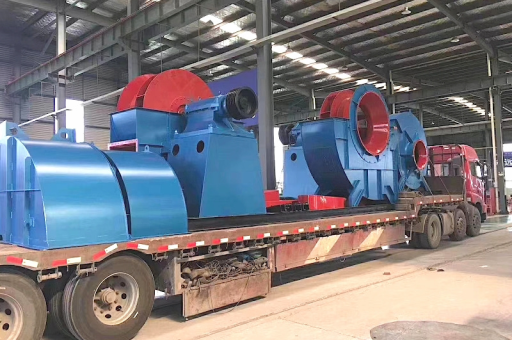
Reliable Zero Leakage Industrial High Pressure Forward Blade Centrifugal Blower Fan for Chemical Plant: A Comprehensive Guide
Table of Contents
- Introduction
- What Is a Forward Blade Centrifugal Blower Fan?
- Why Zero Leakage Matters in Chemical Plants
- High Pressure Performance and Design Features
- Reliability and Durability in Harsh Environments
- Application Scenarios in Chemical Processing
- Comparison with Other Blower Types
- Installation and Maintenance Best Practices
- Frequently Asked Questions (FAQ)
- Conclusion
Introduction
In the modern chemical processing industry, the demand for reliable zero leakage industrial high pressure forward blade centrifugal blower fans has never been greater. Chemical plants operate under strict safety, environmental, and efficiency regulations. Any gas leakage, pressure drop, or mechanical failure can lead to catastrophic consequences, including toxic emissions, fire hazards, or production downtime. This article provides a deep dive into the design, performance, and operational advantages of high-pressure forward blade centrifugal blowers specifically engineered for zero leakage operation. We will explore how these fans integrate into chemical plant ventilation, pneumatic conveying, and process gas handling systems, while addressing common questions and misconceptions.
What Is a Forward Blade Centrifugal Blower Fan?
A forward blade centrifugal blower fan, also known as a forward-curved centrifugal fan, features blades that curve in the direction of rotation. This design differs from backward-curved or radial-blade fans. The forward blade geometry allows for higher flow rates at relatively lower noise levels while maintaining moderate pressure capability. However, when engineered for high pressure industrial applications, these fans incorporate reinforced impellers, precision-balanced rotors, and specialized sealing mechanisms.
Key characteristics of a forward blade centrifugal blower:
- Blade curvature: Forward-curved blades create a smooth airflow path, reducing turbulence.
- Pressure range: Typically from 0.5 to 5 psi (3.5 to 345 mbar) for heavy-duty models.
- Flow range: Up to 100,000 CFM or more depending on size.
- Efficiency: Optimized for medium to high flow with moderate pressure requirements.
In a chemical plant context, these blowers are often used for air supply to combustion processes, fume extraction, or material transport.
Why Zero Leakage Matters in Chemical Plants
Zero leakage is not just a performance metric; it is a safety and compliance mandate in chemical facilities. Fugitive emissions of volatile organic compounds (VOCs), hydrogen, chlorine, or other hazardous gases can cause:
- Environmental violations under EPA, OSHA, or REACH regulations.
- Health risks to workers from inhalation or explosion hazards.
- Product loss reducing process efficiency and increasing costs.
A zero leakage design in a high pressure forward blade centrifugal blower typically involves:
- Double mechanical seals with buffer gas systems.
- Magnetic drive coupling to eliminate shaft penetration.
- Welded or cast casings with no gasketed joints.
- Proactive leak detection ports for continuous monitoring.
These features ensure that even under high differential pressure, no gas escapes from the blower casing or shaft seals.
High Pressure Performance and Design Features
To achieve reliable high pressure operation in a forward blade centrifugal blower, manufacturers employ advanced engineering:
a) Impeller Design
- Stainless steel or Hastelloy construction for corrosion resistance.
- Stress-optimized blade profiles to withstand centrifugal forces at high RPM.
- Dynamic balancing to ISO G2.5 or G1.0 standards for vibration-free operation.
b) Casing Integrity
- Heavy-duty spiral volute with reinforced walls to contain pressure.
- Full penetration welding followed by hydrostatic testing.
- Expansion joints to accommodate thermal cycling in chemical processes.
c) Sealing Systems
- Dry running gas seals for zero leakage without process fluid contamination.
- Purging connections for inert gas barrier between process and atmosphere.
- Seal failure alarms connected to plant DCS (Distributed Control System).
d) Drive and Motor
- Premium efficiency motors (IE3 or IE4) with inverter duty rating.
- Belt drive or direct drive options depending on speed and torque requirements.
- Vibration sensors and temperature probes for predictive maintenance.
Reliability and Durability in Harsh Environments
Chemical plants expose blowers to corrosive vapors, abrasive dust, high humidity, and temperature extremes. A reliable zero leakage blower must demonstrate:
- Corrosion resistance: Through material selection (e.g., 316L SS, duplex stainless, or coated alloys).
- Abrasion protection: Hard-faced impeller tips and wear liners in the volute.
- Thermal stability: Designed for continuous operation from -20°C to 200°C.
- Low maintenance intervals: Extended bearing life (L10 > 50,000 hours) and seal life (2-5 years).
Real-world reliability data from chemical plants shows that properly selected and maintained forward blade centrifugal blowers achieve 7% uptime over a 5-year period.
Application Scenarios in Chemical Processing
Here are key applications where a reliable zero leakage high pressure forward blade centrifugal blower is indispensable:
- Solvent vapor recovery systems: Moving hydrocarbon vapors from storage tanks to condensation units.
- Reactor off-gas handling: Transferring hydrogen, nitrogen, or process gases under pressure.
- Pneumatic conveying: Transporting granular materials like catalysts, polymers, or additives.
- Air scouring in wastewater treatment: Providing high pressure air for biological treatment in chemical effluent plants.
- Ventilation of hazardous areas: Maintaining negative pressure in enclosures containing flammable gases.
Each application requires custom engineering for flow, pressure, material compatibility, and leak-tightness.
Comparison with Other Blower Types
| Feature | Forward Blade Centrifugal | Backward Blade Centrifugal | Roots Blower | Axial Fan |
|---|---|---|---|---|
| Pressure capability | High (up to 5 psi) | Very high (up to 10 psi) | Medium | Low |
| Flow range | Medium to high | Medium | Low to medium | High |
| Leakage potential | Very low (with seals) | Low | Moderate | Low but not sealable |
| Noise level | Moderate | Low | High | Low |
| Efficiency at high pressure | Good | Excellent | Fair | Poor |
| Best for chemical duty | Yes (with sealed design) | Yes | Limited | No |
The forward blade design offers a balance of pressure, flow, and leak-tightness that is often ideal for chemical plant process applications.
Installation and Maintenance Best Practices
To maximize the lifespan and performance of your zero leakage blower:
- Foundation: Use a vibration-dampening base with proper anchoring.
- Piping connections: Install flexible connectors to avoid stress transmission.
- Seal gas supply: Ensure consistent supply of clean, dry buffer gas.
- Monitoring: Implement vibration, temperature, and pressure sensors with alarms.
- Scheduled inspection: Check seal condition, bearing grease, and impeller wear every 6 months.
- Spare parts: Keep a seal kit and bearing set onsite for quick replacement.
A well-maintained blower can operate reliably for over 15 years in moderate chemical environments.
Frequently Asked Questions (FAQ)
Q1: Can a forward blade centrifugal blower achieve true zero leakage?
Yes, when equipped with double mechanical seals or magnetic drive, it can achieve less than 1 ppm leakage, effectively zero for most regulatory standards.
Q2: How does zero leakage design affect blower efficiency?
Proper sealing adds minimal friction loss. Advanced gas seal designs actually improve reliability without significantly reducing efficiency. Modern seals have less than 2% power penalty.
Q3: What materials are best for corrosive chemical environments?
For acidic gases, use Hastelloy or titanium impellers with PTFE coated casings. For alkaline environments, 316L stainless steel is often sufficient.
Q4: How do I select the correct blower size for my chemical plant?
Calculate required CFM and static pressure. Consider total system resistance, including ductwork, filters, and dampers. Always include a safety margin of 10–15%. Consult with a manufacturer like wind turbine for engineering support.
Q5: What is the typical noise level of these blowers?
Forward blade blowers operate at 75–85 dBA at 3 feet under normal conditions. Sound enclosures can reduce noise to below 60 dBA.
Q6: Are forward blade blowers suitable for explosive atmospheres?
Yes, with ATEX or IECEx certified motors, spark-resistant impellers, and grounding provisions. The zero leakage feature prevents explosive gas from escaping.
Q7: How often should I replace seals?
Depending on the process gas and operating temperature, seals typically last 2–5 years. Monitor for increased leakage or vibration.
Q8: Can I retrofit an existing blower for zero leakage?
Often yes. Retrofitting includes adding double seals, a pressurized seal chamber, and updating the shaft. However, OEM conversion is more reliable.
Q9: What is the maximum operating temperature for these blowers?
Standard models handle up to 120°C. High-temperature versions with cooling fins or water jackets can operate at 200°C or more.
Q10: How does wind turbine company support chemical plant blower needs?
wind turbine provides custom-engineered blowers with integrated controls, remote monitoring, and 24/7 technical support for zero leakage applications worldwide.
Conclusion
The reliable zero leakage industrial high pressure forward blade centrifugal blower fan is an essential asset for any modern chemical plant. Its unique combination of high pressure capability, low leakage, and robust construction addresses the most demanding process requirements. By understanding the design features, installation practices, and maintenance routines outlined in this guide, engineers and plant managers can ensure safe, efficient, and compliant operations.
When selecting a blower for your facility, always prioritize certified zero leakage systems, corrosion-resistant materials, and proven reliability data. Partner with experienced manufacturers like wind turbine to achieve optimal performance and long service life. Remember, in the chemical industry, reliability is not optional—it is the foundation of safety and productivity.
For further technical documentation, performance curves, or a customized quotation, contact wind turbine today.





