
This article's table of contents introduction:
- Core Application: The Induced Draft (ID) Fan
- "High Temperature Resistant" – Materials & Design
- "Energy Efficient" – Key Performance Features
- "Customizable Design" – Modular Options
- Technical Recommendations for Procurement
- Example Specification for a Quote
- Potential Manufacturers (Reputable Brands)
- Critical Safety & Maintenance Note
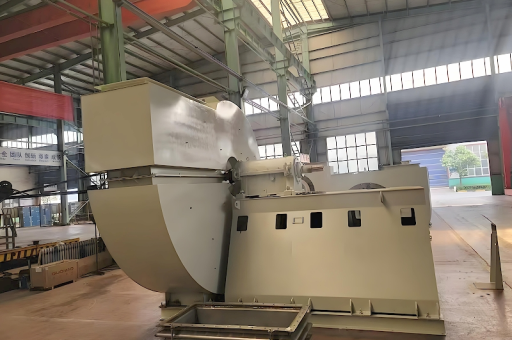
Based on your request for a High Temperature Resistant, Customizable Design, Energy Efficient Induced Draft Fan for Boiler Systems, you are likely looking for a specialized Industrial Centrifugal Fan (specifically an ID Fan).
Here is a detailed breakdown of the specifications, design features, and considerations for this type of equipment.
Core Application: The Induced Draft (ID) Fan
- Function: Positioned at the boiler exit (between the economizer/air preheater and the chimney).
- Job: It pulls flue gas through the boiler, furnace, and pollution control equipment (baghouses, scrubbers), creating negative pressure (draft) inside the furnace.
- Challenge: Exhaust gases are hot, dusty, and often corrosive.
"High Temperature Resistant" – Materials & Design
Standard fans fail above 250°F (120°C). For boiler ID fans, temperatures range from 300°F (150°C) to 600°F (315°C), and up to 1,000°F (538°C) for special applications.
| Component | Standard Material | High-Temp Material | Why? |
|---|---|---|---|
| Impeller | Carbon Steel (A36) | Alloy Steel (Corten/SA-387) or Stainless Steel (304/310/316) | Prevents creep, scaling, and thermal fatigue. |
| Shaft | AISI 1045 | Alloy Steel (4140) with cooling fins or hollow shaft design | Reduces heat transfer to bearings. |
| Bearings | Standard Grease | High-Temp Grease + Shaft Cooling System (or water jacket) | Bearings are the most heat-sensitive part. |
| Housing | Carbon Steel | Carbon Steel with thick refractory lining or Inconel | Refractory lining protects the shell and reduces outer surface temp. |
"Energy Efficient" – Key Performance Features
To meet modern efficiency standards (e.g., IE4, AMCA 2050, or DoE regulations in the US):
- Aerodynamic Impeller Design: Backward-Curved or Backward-Inclined blades (Airfoil style).
- Why? These operate at 80-87% static efficiency vs. 60-70% for forward-curved fans.
- Variable Speed Control: Variable Frequency Drive (VFD) is mandatory.
- Energy Law: Cutting speed by 20% reduces power consumption by 50% (Fan Affinity Laws).
- Seal Optimization: Modern inlet cone seals (e.g., Synergy Seal) reduce internal recirculation leakage.
- High-Efficiency Motors: Premium Efficiency (IE3) or Super Premium Efficiency (IE4/NEMA Premium) motors.
"Customizable Design" – Modular Options
You can customize the fan based on your boiler's airflow (CFM) and static pressure (SP) needs.
| Customization Option | Available Choices |
|---|---|
| Wheel Type | Radial tipped (for dust), Airfoil (for clean gas), Paddle wheel (for high temp). |
| Drive Arrangement | |
| Direct Drive (Arr. 4/8): Highest efficiency, no belt loss. | |
| Belt Drive (Arr. 1/9/3): Allows speed changes, isolates motor from heat. | |
| Inlet Control | Inlet box dampers (cheap) vs. Variable Inlet Vanes (VIVs) for precise control. |
| Expansion Joints | Heat resistant rubber, Teflon, or metal bellows (specified by temp range). |
| Cooling System | Shaft Cooling Discs (passive), Water Jacket (active), or Forced Air Cooling (preferred for reliability). |
| Coating | High-Temp Aluminum (up to 1000°F) or Ceramic Epoxy for corrosion resistance (e.g., for high sulfur fuels). |
Technical Recommendations for Procurement
When specifying this fan for a quotation, provide the following minimum data:
- Flow Rate: CFM / m³/hr.
- Static Pressure (SP): in. w.g. / Pa.
- Gas Temp (Inlet): °F / °C (Max & Normal).
- Gas Composition: (e.g., % H2O, SOx, dust load in grains/ft³ or mg/Nm³). This determines material vs. coating.
- Density: (If known, otherwise specify altitude).
- Mounting: Indoor or Outdoor (affects motor enclosure type).
Example Specification for a Quote
"We require a heavy-duty, single-inlet, double-width (SISW) Induced Draft Centrifugal Fan. Design must handle 350°F flue gas continuously, with spikes to 450°F. Material: Impeller in Corten Steel, Shaft in 4140 with cooling disc. Drive: Belt drive with 150 HP, IE4 motor and VFD. Energy efficiency target: 85% static efficiency at the duty point (100,000 CFM @ 20" w.g.). Housing must be designed for a 150 PSF wind load."
Potential Manufacturers (Reputable Brands)
If sourcing for industrial use, look at:
- New York Blower (USA) – Best for custom high-temp alloys.
- Howden (Global) – Standard for utility boilers.
- Chicago Blower (USA) – Good for energy efficient airfoil wheels.
- Greenheck (USA) – For smaller packaged boiler systems.
- Cincinnati Fan (USA) – Heavy-duty industrial direct drive.
Critical Safety & Maintenance Note
- Run-down time: Always ensure the fan wheel is fully stopped before removing access doors. Induced draft fans can "windmill" for minutes due to natural chimney draft.
- Vibration Monitoring: Mandatory for high-temp units. Install accelerometers (4-20 mA) for predictive maintenance.
Would you like a drawing concept for a specific size, or help calculating the required horsepower for a specific boiler capacity?





