
This article's table of contents introduction:
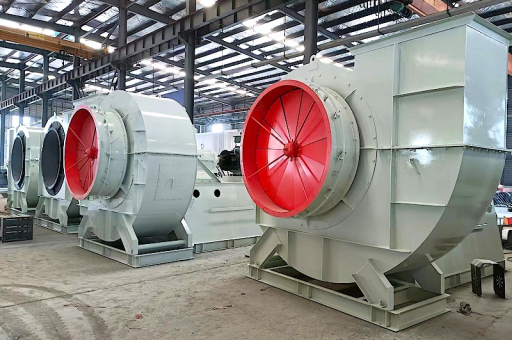
- What is a Dry Gas Seal Fan?
- Why a "Customized" Fan is Required for a Chemical Plant
- Key Customization Features for a Chemical Plant Centrifugal Fan
- Detailed Customization by Gas / Application
- Example Specification Sheet (Custom)
- Why use a Customized Centrifugal Fan (vs. a Compressor or Blower)?
Here is a detailed breakdown of what a Customized Dry Gas Seal Fan (Centrifugal Fan) is in the context of a chemical plant, why it’s necessary, and what the customization typically involves.
What is a Dry Gas Seal Fan?
In a chemical plant, many critical rotating machines (like compressors, mixers, or large pumps) use Dry Gas Seals to prevent dangerous or expensive process gases from leaking into the atmosphere.
A Dry Gas Seal Fan (often called a buffer gas fan or seal gas booster fan) is a specialized centrifugal fan whose sole purpose is to supply a clean, dry, and pressurized gas (usually nitrogen or air) to these seals.
The Core Function:
- Pressurize: The fan boosts the pressure of a buffer gas (e.g., nitrogen from a plant supply).
- Supply: It sends this high-pressure gas to the seal cavity between the rotating shaft and the stationary housing of a compressor or mixer.
- Prevent Leakage: The pressure of the fan's gas is kept higher than the process gas inside the machine. This creates a barrier, ensuring that the toxic, flammable, or corrosive process gas cannot escape to the atmosphere.
Why a "Customized" Fan is Required for a Chemical Plant
A standard, off-the-shelf fan will fail in a chemical plant environment. The customization is driven by the hazardous nature of the application:
- Process Gas Leakage: If the fan’s seal fails or the primary seal leaks, the process gas (e.g., hydrogen, ethylene, chlorine) can mix with the fan’s buffer gas and then be vented. The fan must be gas-tight.
- Explosion Hazard: Chemical plants often handle flammable gases. The fan must be designed to prevent ignition.
- Material Compatibility: Process gases can be corrosive, acidic, or contain abrasive particles.
- High Reliability: The fan is a critical safety system. If the fan stops, the dry gas seal fails, leading to a potential plant shutdown or a hazardous gas release.
Key Customization Features for a Chemical Plant Centrifugal Fan
When ordering this fan, the engineering specifications are critical. Here are the typical customization points:
| Component/Feature | Standard Fan | Customized Dry Gas Seal Fan |
|---|---|---|
| Seal (Shaft) | Packing gland or simple lip seal | Double Mechanical Seal or Magnetic Drive (Sealless). The fan is completely gas-tight to prevent in/out leakage. |
| Motor | TEFC (Totally Enclosed Fan Cooled) | Explosion-Proof (e.g., Ex d, Ex e, Ex nA). Certification like ATEX (Europe) or NEC (USA) is mandatory. |
| Material of Construction | Carbon Steel | Stainless Steel (316L, Duplex), Hastelloy, or FRP depending on gas composition. For hydrogen service, special materials are needed to prevent hydrogen embrittlement. |
| Impeller | Standard backward-curved | One-piece, fully welded or riveted. Often spark-proof (aluminum or non-ferrous tip). Dynamically balanced to tight tolerances (ISO 1940 G2.5 or G1.0). |
| Casing | Gaskets may be simple | Full-penetration welded casing with O-ring or spiral-wound gaskets for zero leakage. Design pressure must exceed the process gas pressure. |
| Controls & Monitoring | On/Off switch | Vibration sensors, temperature probes (for bearing/seal temp), pressure differential transmitter. Often integrated with the plant's DCS or safety PLC. |
| Purging | None | Purging ports for nitrogen to inert the casing before startup and to keep moisture out. |
Detailed Customization by Gas / Application
-
For Toxic Gases (e.g., H₂S, Chlorine, Phosgene):
- Critical: Fan must be hermetically sealed (magnetic drive or double mechanical seal with a barrier fluid detection system).
- Material: All wetted parts must be corrosion-resistant (e.g., Hastelloy C-276 for chlorine).
-
For Flammable Gases (e.g., Hydrogen, Methane, Ethylene):
- Critical: Explosion-proof motor (ATEX / IECEx / NEC Class I Div 1). Spark-proof impeller.
- Design: Casing designed for maximum explosion pressure containment.
-
For High-Pressure Systems (e.g., High-Pressure Polyethylene):
- Critical: The fan discharge pressure must be higher than the process pressure (often 200+ bar). This requires a multi-stage centrifugal fan or a specialized booster compressor fan. This is a very high-cost, high-precision item.
-
For Abrasive or Dirty Gases (e.g., Catalyst Dust):
- Critical: Fan speed is kept low to reduce erosion. Impeller blades may be wear-coated (e.g., Stellite, ceramic lining) or have a renewable wear layer. A filter is placed on the fan's intake to protect the seal.
Example Specification Sheet (Custom)
A purchase order might look like this:
Item: Customized Centrifugal Fan for Dry Gas Seal System
Application: Hydrogen Compressor (Primary Seal Support)
Gas: Clean, Dry Nitrogen (Buffer Gas)
Flow Rate: 150 Nm³/hr
Differential Pressure: 3.5 barg (required to overcome seal pressure)
Operating Temperature: 40°C ambient
Materials:
- Casing: 316L SS (Electropolished internally)
- Impeller: 316L SS (One-piece, welded, heat-treated)
- Shaft: 17-4 PH Stainless Steel
Seal: Double mechanical seal (API Plan 53A) with buffer fluid.
Motor: 15 kW, 4-pole, IE3, TEFC, Ex d IIC T4 (ATEX certified).
Accessories: Inlet filter (SS mesh), pressure transmitter (4-20 mA), vibration sensor (accelerometer, top-mounted), nitrogen purge connection.
Why use a Customized Centrifugal Fan (vs. a Compressor or Blower)?
- Centrifugal Fan: High volume, low-to-medium pressure rise. Ideal for moving large volumes of buffer gas at moderate pressure (up to ~2-5 bar). More cost-effective for the typical seal gas application.
- Blower: Similar to fan, but usually lower volume, higher pressure.
- Compressor: Very high pressure (used when the process gas is at extremely high pressure, requiring a booster to overcome it).
In most chemical plants, the Customized Dry Gas Seal Fan is a single-stage or multi-stage centrifugal fan with a robust, gas-tight design, explosion-proof motor, and material compatibility with the specific chemical environment. The customization is the key to reliability and safety.





