
This article's table of contents introduction:
- Table of Contents
- Introduction
- Engineering Fundamentals
- Material Science: Why Stainless Steel is Non-Negotiable
- Performance Under Pressure: Thermal Tolerance and Aerodynamic Efficiency
- Key Benefits for Chemical Industrial Ventilators
- Real-World Applications
- Frequently Asked Questions (FAQ)
- Conclusion
*The Critical Role of Stainless Steel High Temperature Centrifugal Blowers in Chemical Industrial Ventilation Systems*
Table of Contents
- Introduction: Why High-Temperature Ventilation Matters in Chemical Plants
- Engineering Fundamentals: What Defines a Stainless Steel High Temperature Centrifugal Blower?
- Material Science: Why Stainless Steel is the Non-Negotiable Choice
- Performance Under Pressure: Thermal Tolerance and Aerodynamic Efficiency
- Key Benefits for Chemical Industrial Ventilators
- Corrosion Resistance
- Spark-Free Operation
- Long Service Life in Harsh Environments
- Real-World Applications: From Exhaust Gas Handling to Explosion-Proof Zones
- Frequently Asked Questions (FAQ)
- Conclusion: Selecting the Right Blower for Your Chemical Process
Introduction
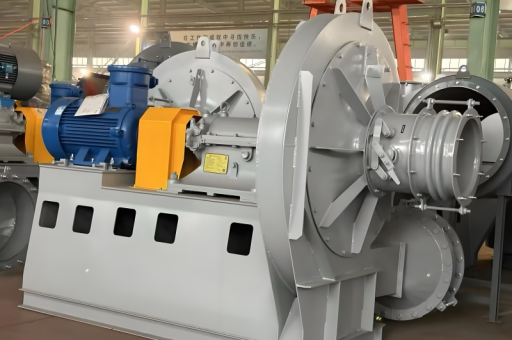
In the chemical processing industry, ambient air quality is not merely a comfort issue—it is a safety and regulatory imperative. Reactive vapors, corrosive gases, and extreme thermal loads demand ventilation equipment that can perform reliably under continuous duress. This is precisely where the Stainless Steel High Temperature Centrifugal Blower for Chemical Industrial Ventilator becomes indispensable.
Unlike standard commercial fans, these blowers are engineered to handle temperatures often exceeding 400°C (752°F) while resisting chemical attack from acids, alkalis, and organic solvents. In this article, we delve into the technical anatomy of these blowers, why stainless steel alloys are preferred over coated carbon steel, and how they contribute to both operational efficiency and regulatory compliance.
Engineering Fundamentals
A centrifugal blower operates by accelerating air through an impeller, converting kinetic energy into static pressure. When designed for high-temperature chemical environments, the impeller, housing, shaft, and mounting base must all be fabricated from heat-resistant stainless steel (typically 304L, 316L, or 310S grades).
Key design differentiators include:
- Enclosed or backward-curved impellers to reduce particulate buildup.
- Thermal expansion compensation in shaft seals and bearing housings.
- Drain ports and condensation channels to prevent acid attack during cooling cycles.
- Explosion-proof motor specifications (ATEX or IECEx certified) for volatile atmospheres.
The term "Chemical Industrial Ventilator" in this context refers to a fixed or mobile ventilation unit that continuously extracts hot, contaminated air from reactors, drying ovens, or fume hoods.
Material Science: Why Stainless Steel is Non-Negotiable
Many industrial blowers use carbon steel with a protective epoxy coating. However, in chemical plants, coating failure is inevitable due to thermal cycling and chemical infiltration. Stainless steel offers:
| Property | Benefit |
|---|---|
| Oxidation resistance | Maintains structural integrity at 800–1000°C |
| Pitting resistance | Resists chloride-induced corrosion common in bleach or brine processes |
| Creep strength | Prevents deformation under constant high thermal loads |
| Non-sparking nature | Reduces ignition risk in flammable gas mixtures |
Among stainless grades, SS 310S is often preferred for blowers handling exhaust from incinerators or thermal oxidizers, while SS 316L is selected for wet processes involving sulfuric or hydrochloric acid fumes.
Performance Under Pressure: Thermal Tolerance and Aerodynamic Efficiency
High-temperature blowers must maintain stable pressure-volume curves even when handling gas densities lower than standard air. At 400°C, air density drops to roughly half of its ambient value. This requires:
- Re-rated motor power (up to 30% higher than cold ratings)
- Oversized inlet cones to prevent starvation
- Specialized shaft cooling fins or purge air systems to protect bearings
A properly designed stainless steel high temperature centrifugal blower will deliver a consistent pressure rise of 1.5–5 kPa (6–20 inches WG) even when exhaust gas temperatures exceed 350°C. Variable frequency drives (VFDs) further optimize energy consumption as process heat loads fluctuate.
Key Benefits for Chemical Industrial Ventilators
Corrosion Resistance
When hot acidic vapors condense on the fan housing during cool-down periods, ordinary metals rapidly corrode. Stainless steel forms a passive chromium oxide layer that self-repairs in oxidizing environments, greatly extending equipment lifespan.
Spark-Free Operation
Stainless steel is not only corrosion-resistant but also non-ferrous in terms of spark generation. In environments containing hydrogen, acetylene, or volatile solvents, this feature alone can prevent catastrophic explosions.
Long Service Life
Field data from petrochemical and specialty chemical plants indicate that stainless steel blowers outlast coated carbon steel units by a factor of 3 to 5 times, even with minimal maintenance.
Real-World Applications
- Thermal Oxidizer Systems: Moving hot combustion gases from the oxidizer to the stack.
- Drying Conveyors: Extracting steam and organic vapors from chemically coated substrates.
- Fume Hood Exhaust: Handling heated, acidic fumes from laboratory-scale reactors.
- Digester Tank Ventilation: Removing hot biogas and sulfur compounds from anaerobic digesters.
- Power Generation Heat Recovery: Forced draft in combined heat and power systems where exhaust contains sulfur oxides.
One prominent example is the integration of a SS 310S centrifugal blower in a wind turbine blade coating facility. The blower extracts hot volatile organic compounds (VOCs) from curing ovens, maintaining both air quality and fire safety standards.
Frequently Asked Questions (FAQ)
Q1: What temperature range can a stainless steel high temperature centrifugal blower handle? A: Standard designs handle continuous temperatures from -40°C to 350°C. With high-alloy stainless steel (SS 310S) and special motor isolation, they can operate up to 600°C for short intervals.
Q2: Can these blowers be used in explosion-proof zones? A: Yes. When paired with ATEX or IECEx certified motors, they are suitable for Zone 1 and Zone 2 gas groups (e.g., hydrogen, ethylene, propane).
Q3: How does a stainless steel blower compare to a coated carbon steel blower in cost? A: The initial investment is 40–60% higher, but total lifecycle cost is significantly lower due to reduced replacement frequency and downtime.
Q4: Are these blowers compatible with VFD speed control? A: Absolutely. VFDs help the blower adjust airflow to match process demands, reducing energy consumption by 20–40% in variable-load chemical processes.
Q5: What maintenance is required for these blowers? A: Primary maintenance includes periodic bearing lubrication (grease or oil), inspection of shaft seals for wear, and cleaning impeller blades of any buildup. Stainless steel housings rarely require painting or corrosion repair.
Q6: Can I use a standard industrial fan for a chemical exhaust application at 300°C? A: This is strongly discouraged. Standard fans use aluminum or painted steel impellers that will deform, spark, or corrode rapidly. Always use a Stainless Steel High Temperature Centrifugal Blower certified for chemical service.
Q7: What is the typical lead time for a custom high-temperature blower? A: For a standard configuration with SS 304L or 316L, lead time is typically 4–6 weeks. For high-alloy SS 310S designs with custom flanges or explosion-proof motors, expect 8–12 weeks.
Q8: How does the blower perform when handling gases with entrained moisture? A: Modern designs include drain ports at the lowest housing point, and the impeller is dynamically balanced to handle moisture loading. If high chloride content is present, duplex stainless steel (e.g., 2205) is recommended.
Q9: Are there any energy-efficiency certifications for these blowers? A: Most manufacturers tune the impeller geometry for peak efficiency at the specific operating point. Some offer AMCA-certified performance curves. While not as standardized as home appliances, premium blowers often achieve 75–85% static efficiency at design flow.
Q10: Can the blower be installed outdoors in a corrosive marine environment? A: Yes. Stainless steel (especially 316L) resists salt spray. However, the motor and electrical connections must be rated for outdoor weather (NEMA 4X or IP66) to prevent moisture ingress.
Conclusion
The Stainless Steel High Temperature Centrifugal Blower for Chemical Industrial Ventilator is not merely a fan—it is a engineered safety system. From material selection to aerodynamic design, every component is purpose-built to survive the most aggressive thermal and chemical environments found in modern processing plants.
When selecting a blower, prioritize:
- Verified corrosion resistance data from the manufacturer.
- Temperature de-rating curves for motor and bearings.
- Compliance with local ATEX, OSHA, or NFPA standards.
Remember that the total cost of ownership includes not just purchase price, but energy consumption, downtime risk, and replacement frequency. In this regard, stainless steel high-temperature blowers consistently deliver the lowest total lifecycle cost for chemical ventilation applications.





