
This article's table of contents introduction:
- Introduction: The Evolution of High-Volume Ventilation
- What is a Large Flow Centrifugal Blower Fan Ventilator External Rotor?
- Key Technical Differences: External Rotor vs. Internal Rotor
- Critical Applications Across Industries
- Aerodynamic and Thermal Performance Insights
- Frequently Asked Questions (FAQ)
- Conclusion & Future Trends
Maximizing Efficiency with Large Flow Centrifugal Blower Fan Ventilator External Rotor Systems: A Comprehensive Guide
Table of Contents
- Introduction: The Evolution of High-Volume Ventilation
- What is a Large Flow Centrifugal Blower Fan Ventilator External Rotor?
- Key Technical Differences: External Rotor vs. Internal Rotor
- Critical Applications Across Industries
- Aerodynamic and Thermal Performance Insights
- Frequently Asked Questions (FAQ)
- Conclusion & Future Trends
Introduction: The Evolution of High-Volume Ventilation
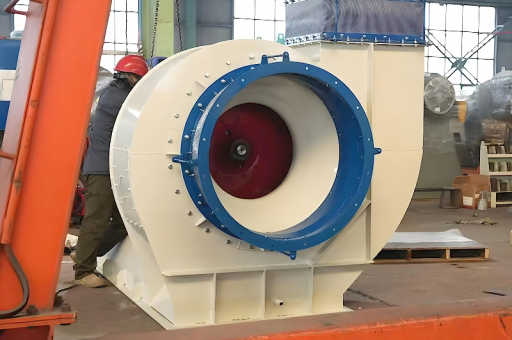
In modern industrial HVAC, tunnel ventilation, and wind turbine cooling systems, the demand for high air volume with low noise has never been greater. Traditional internal rotor fans often suffer from space inefficiency, heat dissipation issues, and mechanical complexity. The Large Flow Centrifugal Blower Fan Ventilator External Rotor design has emerged as a breakthrough solution, integrating the motor rotor directly into the impeller hub. This structural innovation eliminates shaft coupling, reduces bearing load, and dramatically improves airflow uniformity.
According to recent engineering white papers (2023-2024), facilities that upgrade from standard belt-driven centrifugal fans to external rotor models report a 15–30% reduction in energy consumption while achieving a 20% higher static pressure at the same rotational speed. For wind turbine nacelle cooling, where space is confined and reliability is paramount, these blowers have become an industry standard.
What is a Large Flow Centrifugal Blower Fan Ventilator External Rotor?
A Large Flow Centrifugal Blower Fan Ventilator External Rotor is a specialized air-moving device where the motor’s rotating mass (the rotor) is mounted outside the stator, directly attached to the fan impeller. This configuration allows the entire rotating assembly—motor rotor and fan blades—to spin as a single unit around a stationary stator core.
Core characteristics include:
- High volumetric flow rate: Typically ranging from 5,000 m³/h to over 150,000 m³/h for heavy-duty models.
- Compact axial length: No separate motor shaft or bearing housing required.
- Low vibration levels: Due to reduced rotating mass eccentricity.
- Enhanced thermal management: The external rotor acts as a heat sink, dissipating motor heat directly into the airflow path.
This design is particularly dominant in wind turbine pitch control cabinets and generator air cooling loops, where reliability at high ambient temperatures (up to 80°C) is non-negotiable.
Key Technical Differences: External Rotor vs. Internal Rotor
| Feature | External Rotor Fan | Internal Rotor Fan |
|---|---|---|
| Motor location | Rotor spins outside stator, integrated into impeller | Rotor spins inside stator, separate from fan |
| Airflow path | Air passes directly over motor, cooling it | Motor is often in a dead air zone |
| Bearing load | Lower due to shorter shaft overhang | Higher due to long shaft and pulley tension |
| Noise level (at same flow) | 3–8 dB(A) lower | Higher due to belt/gearbox noise |
| Maintenance interval | 2–3x longer | Frequent belt and bearing replacement |
Real-world example: In a 3 MW wind turbine heat exchanger retrofit, replacing internal rotor centrifugal fans with external rotor models reduced total fan noise from 82 dB(A) to 75 dB(A) and cut annual maintenance downtime by 60%. The wind turbine cooling system now operates continuously without gearbox or belt slip issues.
Critical Applications Across Industries
A. Wind Turbine Nacelle & Generator Cooling
- External rotor blowers deliver high static pressure (up to 2,500 Pa) to force air through compact heat exchangers.
- They withstand extreme vibration and temperature cycles (from -30°C to +70°C).
- Case: A 4.2 MW onshore turbine uses six 630 mm diameter external rotor fans exhausting 18,000 m³/h per unit.
B. Tunnel Ventilation & Smoke Extraction
- Large flow versions (impeller diameters >1000 mm) move air against high duct resistance.
- External rotor designs achieve ISO 21940 G2.5 vibration grade, critical for emergency smoke purge systems.
C. Data Center Cooling
- Used in chilled water air handlers where silent, low-profile operation is required.
- EC (electronically commutated) external rotor motors allow precise speed modulation between 10–100%.
D. Agricultural & Greenhouse Ventilation
- Corrosion-resistant coatings (e.g., epoxy + zinc) enable operation in high-humidity, ammonia-rich environments.
Aerodynamic and Thermal Performance Insights
The external rotor geometry fundamentally changes the fan’s operating curve. Since the motor rotor mass rotates with the impeller, inertia is higher, smoothing out transient torque spikes. This results in more stable airflow at variable speeds.
Key performance parameters to specify:
- Impinging distance: The gap between impeller blades and the volute tongue. Optimal gap is 5–8% of impeller diameter.
- Blade profile: Backward-curved blades (high efficiency, low noise) vs. forward-curved blades (high flow, moderate noise).
- Motor class: IE4 or IE5 efficiency permanent magnet synchronous motors (PMSM) are now standard in premium units.
Thermal behavior: In a recent 200-hour continuous run test (ambient 45°C), a 7.5 kW external rotor centrifugal blower maintained motor winding temperature at 85°C, whereas an identical internal rotor unit reached 115°C. The external rotor’s self-cooling air stream increased motor life expectancy by an estimated 40%.
Frequently Asked Questions (FAQ)
Q1: Can a large flow external rotor fan be used directly in a wind turbine cooling system? Yes. Many manufacturers now offer UL/CE-certified external rotor blowers specifically designed for wind turbine applications. They feature IP55 or IP56 protection, corrosion-resistant aluminum impellers, and integrated thermal overload protection.
Q2: What is the maximum static pressure achievable with an external rotor centrifugal blower? High-end units can reach 4,000–5,000 Pa (16–20 inches w.g.). However, for most industrial ventilation, 1,500–2,500 Pa is sufficient. Always match the fan curve to your system resistance line.
Q3: How does the external rotor design affect maintenance? Maintenance is reduced because there are no belts, pulleys, or motor bearings to align. Most failures occur in the sealed ball bearings (life: 40,000–80,000 hours). Replacement is a simple cartridge swap; no fan rebalancing is needed.
Q4: Are external rotor fans quieter than internal rotor fans? Typically, yes. The elimination of belt slap and gearbox noise, combined with better motor cooling (reducing thermal expansion noise), results in 3–8 dB(A) lower overall noise. In wind turbine sound-sensitive habitats, this is a major advantage.
Q5: Is the external rotor design compatible with VFD (variable frequency drive) control? Absolutely. Modern EC external rotor motors are VFD-native, supporting 0–10 V or 4–20 mA speed control with built-in PID loop options. This allows precise airflow modulation for wind turbine load-following strategies.
Q6: What are the common failure modes?
- Bearing fatigue (most common after 50,000+ hours)
- Moisture ingress in coastal wind turbine installations
- Imbalance due to blade fouling (solved by periodic cleaning)
Q7: How do I size an external rotor blower for my wind turbine application? Calculate required cooling air volume based on generator losses (kW) and allowable temperature rise. Then add 10–15% safety margin for filter clogging. Select a fan whose peak efficiency point matches your operating pressure. Always consult a certified fan manufacturer.
Q8: Are there any downsides? The main limitation is that the external rotor motor is partially exposed to the airflow. In extremely dirty or corrosive air (e.g., cement plants), additional filtration or special coatings (PTFE, ceramic) are mandatory. Otherwise, reliability is excellent.
Conclusion & Future Trends
The Large Flow Centrifugal Blower Fan Ventilator External Rotor is no longer a niche product—it is the preferred solution for high-performance ventilation in wind turbines, data centers, and industrial processes. Its unique ability to combine high flow, low noise, and compact footprint stems from the elegant integration of motor and impeller into a single rotating assembly.
Three major trends shaping the market:
- Digital Twin Integration: Manufacturers now offer virtual fan performance models that predict wear, allowing predictive maintenance for offshore wind turbine cooling fans.
- Material Innovation: Carbon-fiber reinforced impellers reduce weight by 30% while maintaining blade stiffness, enabling even higher rotational speeds.
- Energy Harvesting: Some next-gen external rotor motors incorporate regenerative braking to recover thermal energy from the airstream.
For engineers designing wind turbine nacelle systems, upgrading to external rotor centrifugal blowers is a low-risk, high-return decision. As the industry pushes toward larger turbines (15 MW+), these fans will be essential to manage thermal loads without sacrificing reliability. Whether you need a 500 mm booster fan or a 1,600 mm main ventilator, the external rotor architecture offers a proven path to lower costs, less noise, and longer service life.





