
This article's table of contents introduction:
- What is it? (Definition)
- Key Characteristics & Benefits
- Typical Applications in Industrial Ventilation
- How it Compares to Other Wheel Types
- Selecting an SWSI BC Fan: Key Parameters
- Advantages of the SWSI Form Factor
- Disadvantages
- Common Industry Standards
- Summary: Is an SWSI Backward Curved Fan Right for You?
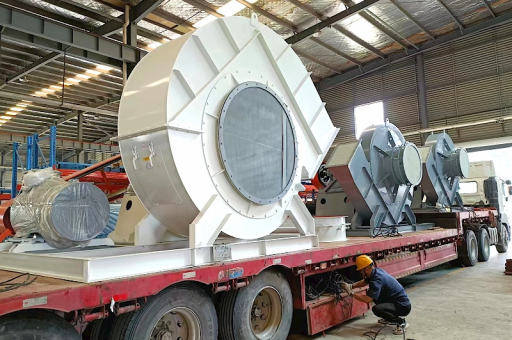
It sounds like you're looking for information on a Backward Curved, Industrial Ventilation, Single Width Single Inlet (SWSI) Centrifugal Blower Fan. This is a very specific and highly efficient type of industrial fan.
Here is a comprehensive breakdown of what this fan is, its key characteristics, applications, and how it compares to other types.
What is it? (Definition)
This description combines four key engineering characteristics:
- Backward Curved (BC): Refers to the shape of the fan blades, which curve away from the direction of rotation.
- Industrial Ventilation: The primary application is moving large volumes of air in harsh or demanding environments.
- Single Width Single Inlet (SWSI): The fan wheel has one inlet opening on one side. The wheel width is equal to the inlet diameter (or a standard proportion).
- Centrifugal Blower Fan: The mechanism where air enters the center (axially) and is expelled outward (radially) by centrifugal force.
In plain English: It's a heavy-duty fan designed to push clean or slightly dirty air through ductwork against moderate to high resistance.
Key Characteristics & Benefits
- High Efficiency: Backward curved blades are the most efficient blade design for centrifugal fans. They interact with the air more aerodynamically, converting more motor power into airflow.
- Non-Overloading Power Curve: This is the most critical advantage. A BC fan has a "self-limiting" power curve. As system resistance (static pressure) decreases, the power consumption reaches a peak and then drops. This means the motor cannot be overloaded, even if the ductwork is completely open. Other blade types (like Forward Curved) can burn out their motor if airflow is unrestricted.
- Steep Pressure Curve: They can handle significant changes in system resistance (e.g., a dirty filter) without a drastic drop in airflow.
- Higher Speed Operation: BC fans typically run at higher RPMs than forward-curved fans for the same duty, which can allow for a more compact motor/drive package.
- Moderate Noise: Generally quieter than radial/paddle wheel fans, but can be noisier than forward-curved fans at very low speeds. The noise is more of a "clean" aerodynamic sound.
Typical Applications in Industrial Ventilation
The "SWSI" configuration is common for smaller to medium-sized industrial applications or where space is limited on one side. Common uses include:
- Dust Collection: Moving air through baghouses and cartridge collectors (for moderate dust loads).
- Fume Extraction: Removing welding smoke, chemical vapors, or exhaust from manufacturing processes.
- HVAC Systems: In commercial or industrial buildings for supply or return air handling units.
- Oven & Dryer Air Circulation: Moving hot air over products or through drying tunnels.
- Material Handling (Light Duty): Conveying light materials like sawdust, textile fibers, or paper scraps.
- Boiler or Kiln Draft: Providing combustion air or exhausting flue gases (with high-temperature construction).
How it Compares to Other Wheel Types
| Feature | Backward Curved (BC) | Forward Curved (FC) | Radial / Paddle Wheel |
|---|---|---|---|
| Blade Shape | Curves away from rotation | Curves into the direction of rotation | Straight or slightly curved |
| Efficiency | High (70-85%) | Moderate (50-65%) | Low (40-60%) |
| Power Curve | Non-Overloading (Safe) | Overloading (Motor can burn out) | Non-Overloading or Flat |
| Pressure | High Static Pressure | Low to Medium Static Pressure | High Static Pressure |
| Airflow | High Volume | High Volume | Low to Medium Volume |
| Noise | Moderate (Aerodynamic) | Low (Quieter) | High (Rough, "harsh") |
| Dirt Handling | Moderate (Best for clean air) | Poor (Blades clog easily) | Excellent (Large, robust blades) |
| Typical Use | General HVAC, Fume Extract, Dust (clean) | Residential/Commercial HVAC, Low-pressure ductwork | Heavy dust, pneumatic conveying, high temperature |
Selecting an SWSI BC Fan: Key Parameters
When specifying or buying one, you'll need these values:
- Airflow (CFM / m³/hr): How much air you need to move.
- Static Pressure (in. w.g. / Pa): The resistance the fan must overcome.
- Air Density / Temperature: Hot air requires a different (larger) motor.
- Air Cleanliness: If it's very dusty, a BC fan might clog; you may need a Radial or Airfoil design instead.
- Mounting: Arrangement (e.g., Arrangement 1, 3, 4, 9, 10) dictates motor location and drive type.
- Construction Material: Mild steel, stainless steel (for corrosive fumes), or aluminum (for spark-resistant).
Advantages of the SWSI Form Factor
- Space Saving: Occupies less space on the inlet side.
- Ductwork Simplicity: Easier to connect to a single duct run.
- Lower Cost: Generally less expensive than an equivalent Double Width Double Inlet (DWDI) fan with the same wheel diameter.
Disadvantages
- Axial Thrust: The single inlet creates a natural imbalance of forces (pressure on one side of the wheel), requiring stronger bearings or a thrust bearing.
- Wheel Width Limitation: For very high airflow requirements at low pressure, a DWDI (two inlets) or a larger diameter is often more economical than making a very wide SWSI wheel.
Common Industry Standards
- AMCA (Air Movement and Control Association): Look for the AMCA seal for certified performance (airflow, power, and sound).
- ANSI/ASHRAE: Standards for testing (e.g., 51-2016).
- NFPA (National Fire Protection Association): For spark-resistant construction in hazardous environments (e.g., NFPA 91 for dust systems).
Summary: Is an SWSI Backward Curved Fan Right for You?
Yes, if:
- You need high efficiency and energy savings.
- You want a motor that can't be overloaded.
- Your air is relatively clean (light dust or fumes).
- You have moderate to high system static pressure.
- Space is limited on one side of the fan.
No, if:
- Your air has heavy, sticky, or fibrous material (use a Radial fan).
- You need extremely quiet operation at very low pressures (consider a Forward Curved fan or a plug fan).
- You have extremely high airflow at very low pressure (consider an axial fan or a large DWDI centrifugal).
Let me know if you need help with a specific calculation (e.g., horsepower required for a given CFM/pressure), material selection (for corrosion), or understanding a data sheet.





