
This article's table of contents introduction:
- Table of Contents
- Introduction: The Critical Role of Explosion Proofing
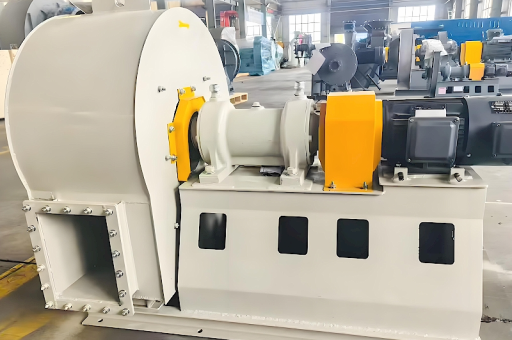
- What is an Explosion Proof Industrial Boiler Centrifugal Blower Fan?
- Key Safety Standards and Classifications
- Core Design Features for Explosion Proofing
- Common Applications and Hazardous Environments
- Installation Best Practices for Wind Turbine and Boiler Systems
- Frequently Asked Questions (FAQ)
- Conclusion: Balancing Airflow, Durability, and Safety
*Mastering Explosion Proofing in Industrial Boiler Centrifugal Blower Fans: Safety, Design & Compliance*
Table of Contents
- Introduction: The Critical Role of Explosion Proofing
- What is an Explosion Proof Industrial Boiler Centrifugal Blower Fan?
- Key Safety Standards and Classifications (ATEX, NEC, IECEx)
- Core Design Features for Explosion Proofing
- 1 Spark-Resistant Construction
- 2 Enclosure Types and Temperature Control
- 3 Motor and Bearing Sealing
- Common Applications and Hazardous Environments
- Installation Best Practices for Wind Turbine and Boiler Systems
- Frequently Asked Questions (FAQ)
- Conclusion: Balancing Airflow, Durability, and Safety
Introduction: The Critical Role of Explosion Proofing
Industrial environments, particularly those involving boiler systems and volatile fuel sources, present serious risks of fire and explosion. A single spark from a malfunctioning fan can ignite combustible dust, gas, or vapor, leading to catastrophic damage. The Explosion Proofing Industrial Boiler Centrifugal Blower Fan is not merely a ventilation component—it is a critical safety barrier. This article provides a comprehensive, SEO-optimized guide covering the engineering principles, regulatory compliance, and operational nuances of these specialized fans. Whether you are upgrading a wind turbine cooling system or securing a chemical boiler room, understanding explosion proofing is non-negotiable.
What is an Explosion Proof Industrial Boiler Centrifugal Blower Fan?
A centrifugal blower fan works by drawing air into the center of a rotating impeller and expelling it at a 90-degree angle, creating high-pressure airflow. When labeled "explosion proof," the entire assembly is engineered to contain any internal explosion without igniting the surrounding atmosphere. This is crucial in boiler systems where flammable gases (methane, propane) or coal dust may be present. The fan must prevent sparks, high surface temperatures, and electrical arcs from escaping the housing.
Key Safety Standards and Classifications
To ensure reliability, these fans must comply with strict international standards. Understanding these classifications is vital for procurement and inspection:
- ATEX (EU): Directive 2014/34/EU. Equipment is categorized by Zone (0, 1, 2 for gas; 20, 21, 22 for dust). A fan used near a boiler gas valve might require ATEX II 2G Ex d IIB T4.
- NEC / CEC (North America): Follows Class, Division, and Group system. For example, Class I, Division 1, Groups C and D is common for industrial boiler rooms with natural gas.
- IECEx (International): Globally recognized system for explosive atmospheres.
Key takeaway: Always verify the label. A fan rated for "explosion proof" must have specific markings for gas groups (e.g., IIA, IIB, IIC) and temperature classes (T1–T6).
Core Design Features for Explosion Proofing
1 Spark-Resistant Construction
The impeller and housing are typically made from non-ferrous materials (aluminum bronze) or stainless steel to reduce friction sparks. In heavy-duty applications, a brass ring is embedded in the aluminum impeller—a standard known as AMCA Type A Spark Resistance.
2 Enclosure Types and Temperature Control
The motor is housed in a flameproof enclosure (Ex d) . This enclosure is built to withstand the pressure of an internal gas explosion and cool escaping flames below ignition point. Surface temperature control is enforced; the fan must not exceed the auto-ignition temperature of the environment's gases.
3 Motor and Bearing Sealing
Bearings are a primary heat source. Explosion proof fans use shielded or sealed bearings with high-temperature grease. Shaft seals prevent gas migration from the process air to the motor. Some units use a labyrinth seal or a purge system to eliminate flammable buildup.
Common Applications and Hazardous Environments
While the primary focus is on industrial boilers, these fans are also essential in:
- Wind Turbine Cooling: Internal nacelle cooling requires explosion proof fans if hydrogen or flammable lubricant vapors accumulate.
- Chemical Processing: Moving volatile solvents.
- Oil & Gas Refining: For burners and flare systems.
- Coal-Fired Power Plants: Handling coal dust (Class II environments).
Installation Best Practices for Wind Turbine and Boiler Systems
- Proper Grounding: All metallic parts must be bonded to prevent static charge build-up.
- Ductwork Sealing: Ensure intake and discharge ducts are sealed to prevent flame propagation.
- Vibration Monitoring: Explosion proof fans in boiler systems require robust mounting and vibration cut-offs to prevent mechanical failure.
- Ambient Temperature Checks: The fan's T-rating must exceed the ambient temperature plus a safety margin (typically +20°C).
Frequently Asked Questions (FAQ)
Q1: Can a standard centrifugal fan be modified to be explosion proof? No. Retrofitting a standard fan with spark-proof features is dangerous. Only factory-built, certified explosion proof units guarantee compliance with ATEX or NEC standards.
Q2: What is the difference between "explosion proof" and "spark resistant"? "Spark resistant" (e.g., AMCA Type A) reduces ignition risk from friction. "Explosion proof" goes further: the housing is designed to contain an internal blast and seal out external flammable atmospheres. A fan can be both, but the latter is mandatory in Zone 1 / Division 1 areas.
Q3: How does an explosion proof fan perform in a wind turbine application? Wind turbine nacelles often use explosion proof centrifugal blowers to cool electrical components while preventing ignition of hydrogen from battery banks or volatile coolants. The fan must handle variable speed (VFD) without causing electrical spikes in the hazardous zone.
Q4: What maintenance is unique to these fans? Beyond standard lubrication, you must inspect the flame path gap (the tight clearance between the motor enclosure's mating surfaces). Any damage to this gap nullifies the explosion proof rating.
Q5: Do explosion proof fans have lower airflow efficiency? Slightly. The flameproof enclosure and spark-resistant impeller may create more weight and aerodynamic drag. However, modern designs with backward-curved blades minimize efficiency loss while maintaining safety.
Conclusion: Balancing Airflow, Durability, and Safety
The Explosion Proofing Industrial Boiler Centrifugal Blower Fan is a specialized piece of equipment where safety engineering meets thermal management. Proper selection requires a deep understanding of gas classifications, temperature limits, and installation standards. Whether you are deploying these in a boiler house, a chemical plant, or a wind turbine, never compromise on certification. A single oversight can turn a ventilation system into an ignition source.
Remember: An explosion proof fan is not just a product—it is a promise of containment. Always work with verified suppliers and consult the latest ATEX or IECEx guidelines. For more technical resources on wind turbine cooling and industrial boiler safety, explore our full library.





