
This article's table of contents introduction:
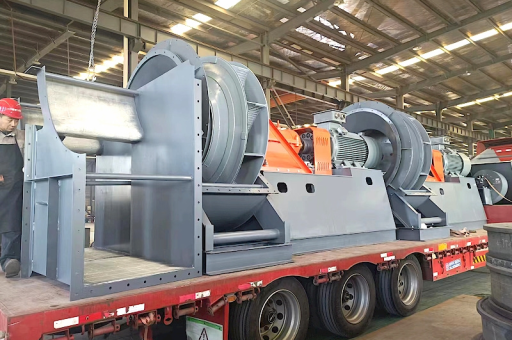
- System Description
- Component Breakdown
- Common Issues & Solutions in Metallurgy
- Example Design Specifications (Typical)
- Recommendation for Your Situation
It sounds like you are describing a specific industrial component or system assembly. To clarify, you are likely referring to a centrifugal fan (blower) used in a metallurgy dust collection system, specifically connected to the main shaft duct via a flange.
Here is a breakdown of what this system does, the specific components, and common issues in metallurgical applications:
System Description
In metallurgy (steel mills, smelters, foundries), processes like melting, casting, and grinding generate massive amounts of hot, abrasive, and toxic dust. The Dust Collector Blower Fan creates the negative pressure (suction) needed to pull this contaminated air through the ductwork.
The path is typically:
- Capture Hood (near furnace/grinder)
- Main Shaft Duct (The primary trunk line)
- Duct Flange (Connection point)
- Dust Collector (Baghouse, cyclone, or scrubber)
- Blower Fan (Induced Draft Fan)
- Exhaust Stack
Component Breakdown
Metallurgy Main Shaft Duct
- Function: The primary large-diameter pipeline.
- Shaft Context: In metallurgy, "main shaft" often refers to the main trunk line of the ductwork, or it could be a specific duct near a rotating shaft (e.g., a ladle turret or rolling mill shaft) where dust is generated.
- Material: Heavy gauge steel (often stainless or abrasion-resistant) due to high temperatures and abrasive particles.
Duct Flange
- Function: A bolted connection point between the Main Shaft Duct and the Dust Collector or the Blower Fan inlet.
- Importance in Metallurgy:
- Sealing: Must be air-tight to prevent dust leakage (health hazard) and maintain suction.
- Expansion: Often uses gaskets designed for high heat (e.g., ceramic fiber or graphite) to handle thermal expansion of the ductwork.
- Access: Flanges allow for disassembly for maintenance (cleaning clogs or replacing worn duct sections).
Dust Collector Blower Fan
- Type: Usually a Centrifugal Fan (Radial or Backward-curved).
- Critical Features for Metallurgy:
- Abrasion Resistance: Fan blades are often lined with hard-facing alloy or ceramic tiles to withstand erosion from fine metal dust.
- Heat Resistance: Bearings must be cooled (shaft cooling fins or external cooling fans) if handling hot gases (150°C - 400°C+).
- Vibration Monitoring: Critical. Imbalance due to dust buildup on blades is a primary failure mode.
- Variable Speed Drive (VSD): Common to adjust airflow based on process demand, saving energy.
Common Issues & Solutions in Metallurgy
| Issue | Cause | Solution |
|---|---|---|
| Wear/Erosion | Abrasive dust (iron oxide, silica) hitting fan blades. | Use abrasion-resistant steel (AR400), ceramic coating, or replaceable wear liners. |
| Imbalance | Dust buildup on fan impeller (hard to balance). | Install auto-cleaning systems (e.g., compressed air nozzles) or remove fan periodically for cleaning. |
| Flange Leakage | Thermal expansion warps flanges; gasket failure. | Use high-temp bellows expansion joints near the flange; upgrade gaskets to spiral wound or Kammprofile. |
| Corrosion | Moisture + acidic gases (e.g., SO2 from smelting). | Use stainless steel (e.g., 316L) or coated fan (e.g., Halar or rubber lining). |
| Overheating | Hot process gases exceeding fan design temperature. | Install a tempering air damper to mix cool ambient air with hot gas before the fan. |
| Vibration | Worn bearings, loose foundation bolts, or impeller damage. | Implement a preventive maintenance schedule: monthly vibration analysis, quarterly bearing inspection. |
Example Design Specifications (Typical)
If you are ordering or maintaining this fan, you might look for specs like:
- Airflow: 50,000 – 300,000 CFM (85,000 – 510,000 m³/h)
- Static Pressure: 20 – 50 inches WG (5 – 12.5 kPa)
- Temperature: 120°C (Normal) / 250°C (Peak)
- Motor: 250 – 1,500 HP (185 – 1,120 kW), typically 4-pole or 6-pole induction motor with VFD.
- Drive: Direct drive (for lower maintenance) or Belt drive (for speed flexibility, but belts wear faster in dust).
Recommendation for Your Situation
- Check the Flange Connection: Ensure the flanges match the fan inlet size (e.g., Class 150 or PN10). Verify bolt hole alignment.
- Inspect the Fan Internals: Before startup, spin the impeller by hand. Check for rubbing on the housing scroll.
- Balance the System: The fan "operates" on the system curve. Ensure the Main Shaft Duct dampers are open and the dust collector bags/cartridges are clean to avoid choking the fan.
- Safety: In metallurgy, explosion-proof motors are often required if the dust is combustible (e.g., magnesium, aluminum, or carbon dust).
Are you troubleshooting a specific problem (e.g., low suction, high vibration, noise)? Or are you selecting a fan for a new metallurgy dust collection system?
If you can provide the exact material being processed (e.g., iron, copper, carbon, steel grinding) and the approximate gas temperature, I can give more specific advice.





