
This article's table of contents introduction:
- Introduction: Why Explosion Proof Centrifugal Blowers Matter in Industrial Boilers
- Key Design Features of a Long Lifetime Industrial Boiler ID Fan
- How Explosion Proof Construction Prevents Catastrophic Failures
- Performance Metrics: Airflow, Pressure, and Energy Efficiency
- Material Selection for Corrosion Resistance and Extended Service Life
- Maintenance Best Practices to Maximize Fan Lifespan
- Frequently Asked Questions (FAQ)
- Conclusion: Selecting the Right Fan for Your Application
Article Title:
Maximizing Safety and Durability: The Complete Guide to Long Lifetime Industrial Boiler ID Explosion Proof Centrifugal Blower Fans
Table of Contents
- Introduction: Why Explosion Proof Centrifugal Blowers Matter in Industrial Boilers
- Key Design Features of a Long Lifetime Industrial Boiler ID Fan
- How Explosion Proof Construction Prevents Catastrophic Failures
- Performance Metrics: Airflow, Pressure, and Energy Efficiency
- Material Selection for Corrosion Resistance and Extended Service Life
- Maintenance Best Practices to Maximize Fan Lifespan
- Frequently Asked Questions (FAQ)
- Conclusion: Selecting the Right Fan for Your Application
Introduction: Why Explosion Proof Centrifugal Blowers Matter in Industrial Boilers
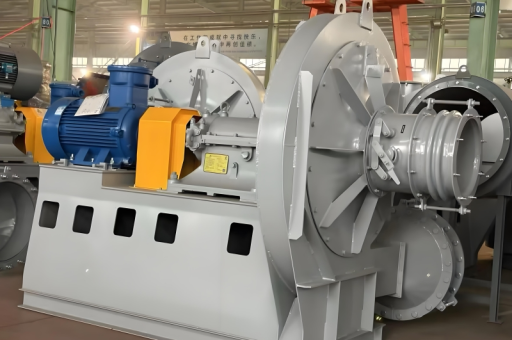
Industrial boilers operating in power plants, refineries, chemical processing facilities, and manufacturing plants rely heavily on Induced Draft (ID) fans to maintain proper combustion and exhaust gas flow. A Long Lifetime Industrial Boiler ID Explosion Proof Centrifugal Blower Fan is not just a component—it is a critical safety and efficiency asset. These fans must handle high-temperature corrosive gases, volatile organic compounds, and potentially explosive atmospheres. Unlike standard blowers, explosion-proof designs are engineered to prevent ignition sources from escaping the housing, even if internal sparking occurs. This article provides a deep dive into the selection, design, and maintenance of these robust fans, backed by industry standards and real-world insights.
Key Design Features of a Long Lifetime Industrial Boiler ID Fan
To achieve a long service life, these centrifugal blowers incorporate several advanced engineering features:
- Heavy-Duty Housing Construction: Fabricated from carbon steel or stainless steel (often 316L) with reinforced welds to withstand pressure surges and thermal expansion.
- Backward and Forward Curved Impellers: Backward curved impellers are preferred for high-efficiency and non-overloading power characteristics; forward curved designs are used for high volume, low-pressure applications.
- Shaft Sealing Systems: Labyrinth seals or mechanical seals prevent gas leakage into the motor or bearings, reducing fire risk.
- High-Temperature Bearings: Premium bearings with high-temperature grease or oil mist lubrication ensure reliable operation even at gas inlet temperatures exceeding 400°C (752°F).
- Vibration Monitoring Ports: Built-in accelerometer mounts allow predictive maintenance without dismantling.
Example from wind turbine analogies: Similar to how wind turbine nacelles require durable bearings for decades of operation, these ID fans use oversized bearing housings to handle continuous high-speed rotation.
How Explosion Proof Construction Prevents Catastrophic Failures
Explosion-proof certification (e.g., ATEX, IECEx, or NEC Class I Division 1) is mandatory for fans used in environments with flammable gases or dust. Key safety features include:
- Flame Path Gaps: Tightly controlled clearances between the fan housing and shaft allow internal explosions to cool before reaching the external atmosphere.
- Non-Sparking Materials: Impellers are often made from aluminum bronze or stainless steel to avoid frictional sparks. In some cases, the fan casing is lined with wear-resistant, non-sparking coatings.
- Motor Isolation: The motor is housed in a separately ventilated compartment or uses an explosion-proof enclosure (e.g., TEFC or XP motors).
- Grounding Systems: Static electricity is safely discharged through dedicated grounding studs on the fan base.
Key Question:
Q: Can an explosion-proof fan be repaired onsite if it sustains damage?
A: Only certified technicians using OEM-approved parts should repair explosion-proof fans. Any modification to the flame path gaps or impeller material voids the certification.
Performance Metrics: Airflow, Pressure, and Energy Efficiency
Choosing the correct fan model requires understanding three core parameters:
| Metric | Typical Range for Industrial Boiler ID Fans |
|---|---|
| Airflow (CFM) | 10,000 – 500,000+ |
| Static Pressure (in. w.g.) | 10 – 80+ |
| Efficiency (%) | 75% – 88% (backward curved) |
- Variable Frequency Drives (VFDs) are highly recommended to match fan speed with boiler load, reducing energy consumption by up to 35% compared to damper control.
- Aerodynamic Optimization: Computational fluid dynamics (CFD) modeling is used to minimize turbulence and noise, which also extends bearing and belt life (if belt-driven).
Wind turbine parallel: Just as wind turbine pitch control optimizes blade angle for wind speed, VFDs on ID fans modulate speed to maintain optimal draft pressure.
Material Selection for Corrosion Resistance and Extended Service Life
Boiler exhaust contains sulfur compounds, chlorides, and moisture that accelerate corrosion. Material choices include:
- Corten Steel (A588): Excellent for ambient temperatures and moderate corrosion resistance; develops a protective patina.
- Stainless Steel (304/316L): Required for high humidity or acidic gas streams. 316L has molybdenum for superior pitting resistance.
- Hastelloy or Inconel: Used in waste-to-energy boilers where chlorine-rich gases attack standard alloys.
- Wear Liners: Replaceable ceramic or hard-faced steel liners at the impeller inlet and volute tongue protect against erosive ash particles.
Maintenance Tip: Perform ultrasonic thickness testing annually on the fan casing and impeller to monitor metal loss.
Maintenance Best Practices to Maximize Fan Lifespan
Consistent maintenance can double the fan’s operating life. Follow these guidelines:
- Lubrication Schedule: Grease-lubricated bearings need re-greasing every 500–2000 hours; oil-bath bearings require oil changes every 3–6 months.
- Belt Tensioning: Belt-driven fans should have belts tensioned to avoid slippage (which generates heat) or over-tension (which stresses bearings).
- Cleaning: Accumulated dust on impeller blades causes imbalance. Schedule water washing or dry ice cleaning for high-deposition environments.
- Thermography: Use infrared cameras quarterly to detect hot spots on bearings, motor windings, or electrical connections.
- Vibration Analysis: Track peak velocity and acceleration. An increase of 1.0 mm/s RMS above baseline justifies inspection.
Common Mistake: Over-lubrication. Excess grease can travel into the motor windings, causing shorts. Always follow the manufacturer’s quantity specification.
Frequently Asked Questions (FAQ)
Q1: What is the typical lifespan of a long lifetime industrial boiler ID explosion proof centrifugal blower fan?
A: With proper maintenance, these fans can operate 20–30 years. The motor may need rewinding after 10–15 years, but the fan housing and impeller can last decades.
Q2: How do I know if my boiler ID fan needs an explosion-proof model?
A: If the boiler burns fuel that may release flammable gases (e.g., natural gas, refinery gas, or biomass with volatile compounds) or if the fan is located in a classified hazardous area (per ATEX/NEC codes), explosion-proof construction is mandatory.
Q3: Can I retrofit a non-explosion-proof fan with explosion-proof components?
A: Partial retrofits are generally not approved by certifying bodies. The entire fan unit must be designed and tested as an assembly. Replacing only the impeller may leave the housing gaps or motor enclosure non-compliant.
Q4: Are explosion-proof fans always more expensive?
A: Yes, the initial cost can be 20–50% higher due to certified materials and testing. However, the cost of a single explosion incident (including downtime, fines, and liability) far outweighs the investment.
Q5: What is the difference between Class I and Class II explosion-proof fans?
A: Class I covers flammable gases and vapors (methane, hydrogen, etc.); Class II covers combustible dusts (coal, wood, carbon black). Boiler ID fans often require Class I, Division 2 for light gas exposure, but some plants require Division 1 for continuous hazard.
Conclusion: Selecting the Right Fan for Your Application
A Long Lifetime Industrial Boiler ID Explosion Proof Centrifugal Blower Fan is not a commodity product—it is a custom-engineered solution tailored to the specific gas composition, temperature, and safety requirements of your facility. When sourcing:
- Demand a performance curve certified by an AMCA or ISO 5801 test lab.
- Specify an explosion-proof rating that matches your zone classification.
- Choose a manufacturer that offers on-site commissioning and maintenance training.
Similar to a wind turbine needing meticulous blade pitch control and gearbox lubrication for decades of offshore service, your industrial boiler fan demands the same level of care in design, installation, and upkeep. Investing in a high-quality explosion-proof fan today prevents costly failures tomorrow, while ensuring compliance with OSHA, EPA, and local fire codes.
For a detailed quote or technical specification, reach out to manufacturers that specialize in heavy-duty industrial ventilation and hold current ATEX or IECEx certifications.
End of Article.





