
This article's table of contents introduction:
- The System Chain
- Types of Couplings Used in This Application
- Critical Challenges for this Coupling
- If you are experiencing a problem with this coupling (e.g., vibration, wear, failure)
- Recommendation for Replacement/Maintenance
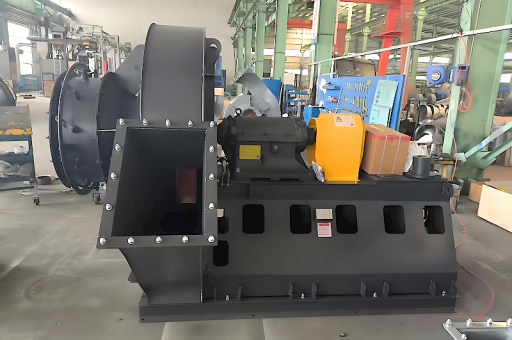
It sounds like you are describing a critical rotating assembly used in a steel mill or foundry. Specifically, you are referring to the coupling that connects the centrifugal blower fan to its driver (usually an electric motor or steam turbine) on a blast furnace.
Here is a breakdown of what this means, the common types of couplings used, and the specific challenges involved.
The System Chain
- Driver: Large Electric Motor (synchronous or induction) or Steam Turbine.
- Coupling: (The part you asked about) Transmits torque from the driver to the fan.
- Centrifugal Blower Fan: Draws air and pushes it into the blast furnace under high pressure.
- Blast Furnace: The vessel where iron ore is smelted.
Types of Couplings Used in This Application
Because blast furnace blowers are massive, high-speed (typically 3,000 to 6,000 RPM), high-power (5 MW to 50+ MW) machines, the coupling must be extremely robust and forgiving.
Geared (Gear) Couplings (Most Common for High Power)
- How it works: Two hubs with external gear teeth mesh with a central sleeve with internal gear teeth.
- Why used: Can handle very high torque, allows for slight misalignment (parallel and angular), and are relatively compact.
- Critical Feature: Must be continuously lubricated with high-viscosity oil to prevent gear tooth wear and fretting corrosion.
Flexible Diaphragm Couplings (High Performance)
- How it works: Uses thin metal diaphragms (discs) that flex to accommodate misalignment.
- Why used: Zero-backlash (important for precise speed control on critical fans). Requires no lubrication (no oil leaks), which is a major advantage in the dirty foundry environment. Excellent for high-speed applications.
- Trade-off: Generally more expensive than gear couplings.
Elastomeric (Quiet, Medium Duty)
- How it works: Uses a rubber or polyurethane element (Tire type, Jaw type, or Grid type).
- Why used: Good for shock absorption (if the fan hits surge). Quieter.
- Trade-off: Not suitable for the highest power ratings or high-temperatures often found near a blast furnace. The elastomer can degrade from heat or fan vibration.
Critical Challenges for this Coupling
- High Torque & Speed: The coupling must transmit massive power without fatigue failure.
- Misalignment: The motor and blower may shift slightly due to thermal expansion (the blast zone gets very hot) or foundation settling. The coupling must live with this.
- Surge: A blast furnace blower can "surge" (a violent reversal of airflow). The coupling must survive this sudden shock load.
- Lubrication (Gear Couplings): If it is a gear coupling, loss of lubricant is a catastrophic failure mode leading to rapid wear, vibration, and coupling disintegration.
- Heat: Radiant heat from the furnace can affect the coupling material.
- Balance: The coupling must be precision-balanced. An unbalanced coupling on a 10,000 HP fan at 3,600 RPM will destroy the bearings and cause massive vibration.
If you are experiencing a problem with this coupling (e.g., vibration, wear, failure)
Common causes to investigate:
- Misalignment: Laser alignment should be checked when the machine is hot (running temperature), not just cold.
- Lubrication Failure: For gear couplings, check oil viscosity, flow, and if the seals are leaking.
- Fretting Corrosion: On shafts (gearbox output or motor shaft), the coupling bore can "gaul" or fret.
- Fan Surge: The coupling may be failing because the blower is operating in an unstable region (surge zone).
- Torsional Resonance: The natural frequency of the entire train (motor-coupling-fan) may be hitting a destructive harmonic. A torsional analysis is needed for new installations.
Recommendation for Replacement/Maintenance
If you need a replacement coupling for a foundry blast furnace centrifugal blower fan, the industry standard usually points to:
- High-Speed Gear Couplings (e.g., from Kop-Flex, Renold, or Falk) with continuous oil flow.
- Diaphragm Couplings (e.g., from BHS, Kop-Flex, or John Crane) for a maintenance-free (no oil) solution.
Do not use a standard "Lovejoy" or "Sure-Flex" type coupling for this application unless it is a very small auxiliary fan. The forces are too high.
Would you like me to explain how to select the correct size (torque rating) for this coupling, or how to diagnose a vibration issue coming from the coupling?





