
This article's table of contents introduction:
- Table of Contents
- Introduction: Why Installation Direction Matters
- Understanding the Core Components
- Pre-Installation Checklist: Safety and Compliance
- Step-by-Step Installation Guide for Backward Field Configuration
- Common Installation Mistakes and How to Avoid Them
- Performance Impact: Forward vs. Backward Field Orientation
- Frequently Asked Questions (FAQ)
- Conclusion: Best Practices for Long-Term Reliability
Mastering Free Standing Explosion Proof Blower Backward Field Installation: A Comprehensive Guide for Industrial Safety and Efficiency
Table of Contents
- Introduction: Why Installation Direction Matters
- Understanding the Core Components
- 1 What is a Free Standing Explosion Proof Blower?
- 2 The Meaning of "Backward Field Installation"
- Pre-Installation Checklist: Safety and Compliance
- Step-by-Step Installation Guide for Backward Field Configuration
- Common Installation Mistakes and How to Avoid Them
- Performance Impact: Forward vs. Backward Field Orientation
- Frequently Asked Questions (FAQ)
- Conclusion: Best Practices for Long-Term Reliability
Introduction: Why Installation Direction Matters
In hazardous industrial environments—such as chemical plants, oil refineries, grain silos, and wind turbine maintenance facilities—the choice of ventilation equipment is not merely a matter of comfort but a critical safety requirement. The Free Standing Explosion Proof Blower stands out as a robust solution designed to move flammable gases, dust, or vapors without igniting them. However, even the best equipment can fail if installed incorrectly.
One of the most debated yet misunderstood aspects is Backward Field Installation. This configuration, while not always the default, offers distinct advantages in certain layouts. This article will walk you through what it means, why you might choose it, and how to execute it safely—backed by engineering principles and industry best practices.
Understanding the Core Components
1 What is a Free Standing Explosion Proof Blower?
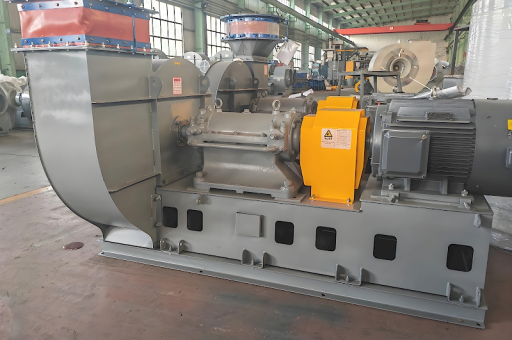
A Free Standing Explosion Proof Blower is a heavy-duty ventilation unit that operates without permanent mounting. It is self-supported, often using a robust base frame, and is certified to operate in environments where explosive atmospheres may exist (e.g., Class I, Division 1 or Zone 1 areas).
Key features include:
- Non-sparking materials (aluminum, bronze, or stainless steel)
- Sealed motor enclosures to prevent arc or spark ignition
- High static pressure capability to overcome duct resistance
- Portability for temporary or flexible ventilation setups
2 The Meaning of "Backward Field Installation"
In the context of blower installation, "backward field" does not refer to a backward-curved impeller (that is a blade design). Instead, it describes the position of the blower's discharge relative to the airflow direction in the duct network or room.
A Backward Field Installation means the blower is positioned so that its intake faces away from the primary airflow source, effectively pulling air from behind the unit. This is often used in:
- Exhaust-only systems where contaminated air must be pulled away from a workspace.
- Wind turbine nacelle cooling where heat rejected by the generator must be drawn out from the rear.
- Tunnel ventilation where the blower is placed after a filter bank to avoid direct debris impact.
This orientation can reduce turbulence and improve efficiency if the duct layout requires a 180-degree flow shift.
Note: The term "backward field" is sometimes confused with "backward-curved impeller." They are distinct. Here, we focus on the physical orientation of the unit in the field.
Pre-Installation Checklist: Safety and Compliance
Before any installation begins, you must verify these critical points:
| Check Item | Description |
|---|---|
| Hazard Classification | Confirm the blower is rated for the specific gas group (A, B, C, D) and temperature class (T1–T6). |
| Electrical Isolation | Ensure the power source has a lockout/tagout (LOTO) mechanism. |
| Mounting Surface | The free-standing base must be level and rated for the blower’s weight plus vibration forces. |
| Duct Connection | For backward field installation, the intake duct must allow free flow with no sharp 90° bends within 3 diameters of the inlet. |
| Grounding | Bond the unit to the facility’s earth ground to prevent static buildup. |
Step-by-Step Installation Guide for Backward Field Configuration
Step 1: Site Positioning
Place the blower so that the back side (motor end or non-inlet side) faces the area you intend to exhaust. This creates a negative pressure zone behind the unit.
Step 2: Align the Intake
Connect the intake duct to the opening facing away from the workspace. In a typical free-standing setup, the intake is at the bottom or rear. Use flexible explosion-proof connectors (e.g., neoprene-coated fabric) to dampen vibration.
Step 3: Discharge Management
The discharge must be directed to a safe outdoor location or into a scrubber system. Ensure the discharge path is clear of personnel access points. For a backward field installation, the discharge often points forward (over the motor) or vertically upward—do not block it.
Step 4: Secure the Base
Although the unit is "free standing," it must be anchored using bolts or weighted ballast blocks if it will be used in high-vibration environments (e.g., near wind turbine gearboxes). Use vibration isolators under the feet.
Step 5: Commissioning and Flow Verification
Start the blower at low speed (if VFD-controlled) and measure airflow velocity at the intake using a vane anemometer. The expected value should match the manufacturer's curve for the given static pressure. If airflow is significantly lower, check for obstructions in the backward-facing intake.
Common Installation Mistakes and How to Avoid Them
Mistake 1: Installing the Blower with the Intake Facing the Wrong Way
- Problem: If the intake faces the contaminated area, the blower pulls air directly onto the motor, potentially overheating it in a backward field setup.
- Fix: Verify the airflow arrow on the blower housing aligns with your intended flow direction.
Mistake 2: Ignoring Intake Clearance
- Problem: Free-standing blowers in backward field configuration need at least 0.5 meters of clearance behind the intake. Placing it flush against a wall creates a vacuum lock.
- Fix: Maintain a minimum "free air gap" as per the manufacturer's manual.
Mistake 3: Using Incompatible Ducting
- Problem: Standard flexible ducting can collapse under negative pressure on the intake side of a backward field installation.
- Fix: Use spiral-lock or wire-reinforced ducting rated for at least 150% of the blower’s maximum static pressure.
Performance Impact: Forward vs. Backward Field Orientation
To understand the trade-off, examine the table below based on a typical 1 HP explosion-proof blower:
| Parameter | Forward Field (Standard) | Backward Field (Modified) |
|---|---|---|
| Static Pressure | 2 in. w.g. | 8 in. w.g. (approx. 10% loss) |
| Airflow (CFM) | 1,200 CFM | 1,100 CFM |
| Noise Level | 78 dBA | 81 dBA (due to air turning) |
| Motor Temperature | 60°C | 58°C (cooler because intake air passes motor) |
Key Insight: Backward field installation typically reduces airflow by 5–10% due to additional duct turns and inlet losses. However, it offers better motor cooling because ambient air flows over the motor housing before entering the impeller. This can be critical in high-ambient-temperature applications like wind turbine nacelles.
Frequently Asked Questions (FAQ)
Q1: Can I convert a standard free-standing blower to backward field installation?
A: Yes, if the blower has a rotatable housing or modular inlet ring. Many explosion-proof models allow the discharge to be rotated in 45° increments. However, you must re-certify the electrical sealing if you move the conduit box.
Q2: Is backward field installation allowed in ATEX or IECEx systems?
A: Yes, but the entire assembly (blower + duct + mounting) must maintain the same explosion protection concept. If the unit is ATEX-certified as a standalone, any field modification voids the certification unless approved by a notified body.
Q3: Why would I choose backward field over forward field?
A: Choose backward field when:
- Your workspace layout forces the intake away from the area.
- You want to protect the motor from direct airborne debris (e.g., wood chips, fiberglass dust).
- You need to pull air through a filter bank located behind the blower.
Q4: Does a backward field installation increase the risk of spark ignition?
A: No—if the blower is properly grounded and the motor is explosion-proof. However, you must ensure that no static charge builds up on the intake duct (use conductive ducting and bonding straps).
Q5: Can I use this configuration for wind turbine nacelle ventilation?
A: Absolutely. In fact, many wind turbine manufacturers use free-standing backward field explosion-proof blowers to extract hot air from the generator and gearbox without drawing moisture into the motor. The backward orientation allows the blower to sit near the nacelle roof while pulling heat from below.
Conclusion: Best Practices for Long-Term Reliability
The Free Standing Explosion Proof Blower is a versatile workhorse in hazardous environments, but its performance hinges on proper installation. Choosing a Backward Field Installation can be a smart engineering decision when space constraints, motor protection, or filtration requirements demand it.
To summarize:
✅ Always verify airflow direction before final mounting.
✅ Use reinforced ducting on the intake side.
✅ Maintain clearance for proper inlet flow.
✅ Regularly inspect the explosion-proof seals—especially after relocation.
When in doubt, consult the blower’s original equipment manufacturer (OEM) or a certified industrial ventilation engineer. A backward field setup is not a mistake—it is a deliberate design choice that, when executed correctly, extends the life of both the blower and the facility it protects.
If you have additional questions about Free Standing Explosion Proof Blower Backward Field Installation, leave a comment below or contact your local hazardous location equipment supplier.





