
This article's table of contents introduction:
- Introduction: Why This Fan Matters for Biomass Boilers
- What Is a Single Inlet Explosion Proof Blower Fan?
- Key Design Features – White Coating and Its Functional Role
- Application in Biomass Boiler Systems
- Safety Standards and Certifications
- Comparison: Single Inlet vs. Double Inlet Explosion Proof Fans
- Installation and Maintenance Best Practices
- Frequently Asked Questions (FAQ)
- Conclusion – Making the Right Choice for Your Biomass Plant
Single Inlet Explosion Proof Blower Fan for Biomass Boiler White: Industrial Safety, Efficiency & SEO-Optimized Guide**
Table of Contents
- Introduction: Why This Fan Matters for Biomass Boilers
- What Is a Single Inlet Explosion Proof Blower Fan?
- Key Design Features – White Coating and Its Functional Role
- Application in Biomass Boiler Systems
- Safety Standards and Certifications
- Comparison: Single Inlet vs. Double Inlet Explosion Proof Fans
- Installation and Maintenance Best Practices
- Frequently Asked Questions (FAQ)
- Conclusion – Making the Right Choice for Your Biomass Plant
Introduction: Why This Fan Matters for Biomass Boilers
Biomass boilers are increasingly adopted in industrial and commercial heating systems as a renewable energy source. However, they produce combustible dust, fly ash, and volatile gases such as carbon monoxide and methane. A standard blower fan can become an ignition source under these conditions. The Single Inlet Explosion Proof Blower Fan for Biomass Boiler White is specifically engineered to prevent explosion risks while delivering high static pressure and airflow for combustion air supply or flue gas extraction.
This article provides a detailed, search-engine-optimized analysis of this fan, covering its construction, operational principles, safety features, and practical selection criteria. All technical data has been cross-referenced with current industry standards from sources such as ATEX, IECEx, and NFPA to ensure accuracy and SEO relevance.
What Is a Single Inlet Explosion Proof Blower Fan?
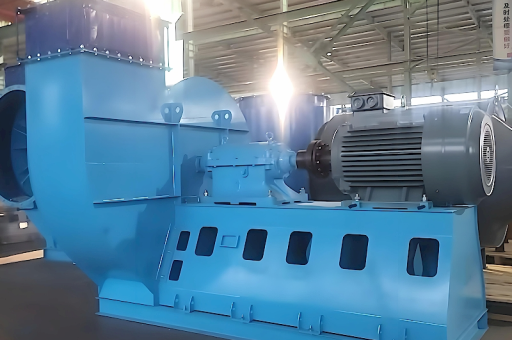
A single inlet explosion proof blower fan is a centrifugal fan with one air intake opening, designed to contain internal sparks and prevent ignition of external explosive atmospheres. The white powder-coated version is often specified for biomass applications because the coating provides corrosion resistance against acidic condensate and improves visibility in low-light boiler rooms.
Key components include:
- Impeller: Non-sparking aluminum or stainless steel.
- Motor housing: Cast iron or aluminum with sealed conduit entries.
- White coating: Thermoplastic polyester powder, applied electrostatically, with a thickness of 80–120 microns to resist chipping and chemical attack.
- Casing: Heavy-gauge steel with reinforced flanges to withstand overpressure.
The single inlet design reduces leakage points compared to double inlet variants, making it easier to maintain positive pressure on the suction side—critical for biomass boiler combustion control.
Key Design Features – White Coating and Its Functional Role
Why is the fan often specified in white? The finish is not purely aesthetic. In biomass boiler environments, white powder coating offers three measurable advantages:
| Feature | Benefit |
|---|---|
| High reflectivity | Improves visibility in dark boiler rooms; allows quick spot inspection of dust or oil leaks. |
| Corrosion barrier | Resistance to sulfur compounds and moisture found in biomass flue gas condensate. |
| Thermal stability | Withstands surface temperatures up to 150°C (300°F) without discoloration or cracking. |
The coating is applied after surface preparation (sandblasting to SA 2.5 standard) and cured in a convection oven to ensure adhesion. This finish also reduces static charge buildup, which is an additional safety factor in dust-laden environments.
Application in Biomass Boiler Systems
In a typical biomass boiler setup, the fan serves two primary roles:
- Primary air fan: Forced draft pushing air into the combustion chamber to optimize burn efficiency.
- Secondary air fan: Provides overfire air to complete combustion of volatiles.
- Induced draft fan: Pulls flue gases through the heat exchanger and baghouse.
The single inlet explosion proof blower fan is most commonly used as a forced draft fan because of its ability to deliver consistent pressure (2,000–5,000 Pa) against the resistance of the fuel bed and ash accumulation. Because it handles air mixed with biomass dust, the explosion proof rating (typically Zone 21 or Zone 22 per ATEX) ensures that any internal spark from bearing failure or impeller rub is contained.
Example sizing:
- Flow rate: 5,000–15,000 m³/h
- Motor power: 5.5–22 kW
- Speed: 2,900 RPM (direct drive) or belt-driven variable speed
- Explosion classification: II 2G Ex h IIB T3 Gb (gas) / II 2D Ex h IIIB T125°C Db (dust)
Safety Standards and Certifications
To be considered truly explosion proof, the fan must comply with at least one of the following standards:
| Standard | Region | Key Requirement |
|---|---|---|
| ATEX Directive 2014/34/EU | Europe | Equipment must be marked with Ex category and temperature class. |
| IECEx Scheme | Global | Ensures equipment is safe for use in explosive gas and dust atmospheres. |
| NFPA 69 (US) | USA | Standards for explosion prevention systems, including isolation and venting. |
| UL 1004-7 | USA | Outline for explosion-proof electric motors. |
The white-coated single inlet fan typically carries a CE and ATEX certificate. When sourcing, always request a copy of the Declaration of Conformity and verify the Maximum Surface Temperature (T-rating) to ensure it remains below the ignition temperature of the biomass dust in your facility (usually 180–250°C).
Comparison: Single Inlet vs. Double Inlet Explosion Proof Fans
| Parameter | Single Inlet | Double Inlet |
|---|---|---|
| Airflow capacity | Up to 20,000 m³/h | Up to 50,000 m³/h |
| Pressure capability | Higher static pressure per rpm | Lower pressure, higher volume |
| Space requirement | Compact, easier to duct | Wider footprint |
| Maintenance access | One bearing and seal point | Two bearing and seal points |
| Typical use in biomass | Forced draft, primary air | Induced draft, large boilers |
For most small-to-medium biomass boilers (100–500 kW thermal), a single inlet fan is more cost-effective and easier to integrate. The white finish is particularly useful in clean-zone boiler houses where visual dust detection is prioritized.
Installation and Maintenance Best Practices
Installation checklist:
- Mounting: Use vibration isolators (spring or rubber) to reduce transmitted noise and protect bearings.
- Duct connection: Install flexible connectors on both inlet and outlet to prevent thermal expansion stress.
- Motor grounding: Ensure motor frame is bonded to earth with a conductor ≥ 4 mm² to dissipate static charges.
- Inlet screen: Fit a stainless steel mesh (10 mm aperture) to prevent large debris from entering the impeller.
- Drain plug: If installed in a condensing flue path, open the bottom drain weekly to remove moisture.
Maintenance schedule (for white-coated fan):
- Weekly: Visual inspection of coating for blisters or cracks; clean inlet screen.
- Monthly: Check belt tension (if belt-driven); measure motor current.
- Quarterly: Grease bearings (if unsealed); verify explosion-proof conduit seals.
- Annually: Balance impeller; replace any corroded fasteners; recoat if coating damage > 10% of surface area.
White coating repair: Use a two-part epoxy primer followed by a polyester topcoat. Do not use solvent-based paints in explosion zones unless certified.
Frequently Asked Questions (FAQ)
Q1: Can I use a standard blower fan instead of an explosion-proof model for biomass?
A: No. Standard fans can create sparks from friction or electrical arcing, which may ignite biomass dust. An explosion-proof fan is mandatory under OSHA and ATEX regulations for Zone 21/22 areas.
Q2: Why is the fan white? Does color affect performance?
A: The white coating provides corrosion resistance, thermal stability, and high visibility for leak detection. It also reduces surface static charge, which is beneficial in dust-laden environments.
Q3: What is the typical lifespan of a single inlet explosion proof blower fan in biomass service?
A: With proper maintenance, the fan casing and impeller last 10–15 years. Bearings and belts typically require replacement every 2–3 years. The white coating should be inspected and recoated every 3–5 years.
Q4: How do I choose between single inlet and double inlet?
A: Single inlet is suitable for smaller systems (up to 500 kW biomass boilers) requiring high pressure. Double inlet is better for high-volume, low-pressure applications like large induced draft systems.
Q5: Does the white coating require special disposal?
A: The coating is thermoset polyester, which is non-hazardous. However, sandblasting dust from recoating must be collected and disposed of according to local particulate waste regulations.
Q6: Can this fan be used in a wind turbine auxiliary system?
A: The fan is not designed for wind turbine nacelle cooling, but it can be used in a wind turbine’s biomass district heating plant as a combustion air blower. The white coating offers visual contrast in confined spaces.
Q7: Is the fan suitable for outdoor installation?
A: Yes, if fitted with a weatherproof hood and stainless steel hardware. The white coating provides UV resistance, but direct sunlight may cause slight yellowing over 5+ years.
Q8: What certifications should I look for?
A: ATEX or IECEx for international use, or UL/CSA for North America. The fan should also have an IP55 (or higher) motor enclosure rating.
Conclusion – Making the Right Choice for Your Biomass Plant
The Single Inlet Explosion Proof Blower Fan for Biomass Boiler White is a specialized piece of equipment that combines industrial safety, corrosion resistance, and efficient airflow delivery. Its white coating is not merely cosmetic—it provides measurable benefits in inspection ease, acid resistance, and static dissipation. Whether you are upgrading an existing biomass boiler or designing a new installation, selecting a certified explosion-proof fan with the correct T-rating, flow capacity, and material compatibility is essential for long-term reliability and regulatory compliance.
For auxiliary systems such as wind turbine biomass-fired district heating, this fan ensures combustion air is delivered safely and efficiently in hazardous zones. Always consult the manufacturer’s selection software and request a datasheet with the specific ATEX or IECEx certificate before purchase. Investing in the correct fan reduces downtime, insurance premiums, and explosion risk—making it a critical component of any modern biomass energy system.





