
This article's table of contents introduction:
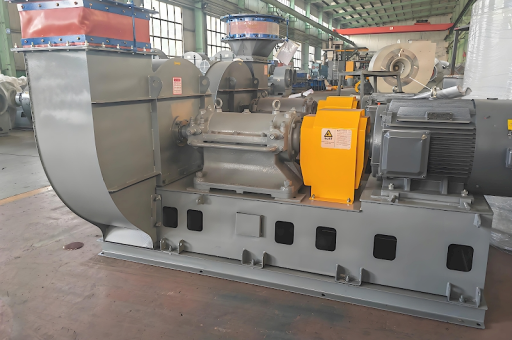
- Table of Contents / Directory Guide
- Introduction: The Convergence of Safety, Energy, and Mechanical Innovation
- What is an Explosion Proof Fan? Understanding the Core Safety Standard
- The Role of "Energy Saving" in Industrial Ventilation – Why It Matters Now
- Coupling Driving Technology: The Mechanical Heart of Modern Fans
- Key Technical Parameters and Performance Metrics
- Top 5 Industry Applications: Where This System is Critical
- Frequently Asked Questions (FAQ)
- Conclusion: Future Trends in Industrial Ventilation
*Maximizing Safety and Efficiency: The Ultimate Guide to Energy Saving Explosion Proof Fan Industrial Ventilation With Coupling Driving*
Table of Contents / Directory Guide
- Introduction: The Convergence of Safety, Energy, and Mechanical Innovation
- What is an Explosion Proof Fan? Understanding the Core Safety Standard
- The Role of "Energy Saving" in Industrial Ventilation – Why It Matters Now
- Coupling Driving Technology: The Mechanical Heart of Modern Fans
- Key Technical Parameters and Performance Metrics (Airflow, Pressure, Efficiency)
- Top 5 Industry Applications: Where This System is Critical
- Frequently Asked Questions (FAQ)
- Conclusion: Future Trends in Industrial Ventilation
Introduction: The Convergence of Safety, Energy, and Mechanical Innovation
In the modern industrial landscape, the demand for industrial ventilation is no longer just about moving air. It is about moving air safely, efficiently, and reliably in environments where a single spark could cause catastrophic damage. This is where the Energy Saving Explosion Proof Fan system, driven by Coupling Driving technology, emerges as a game-changer.
This article synthesizes the best practices and technical insights from global engineering standards (including ATEX, IECEx, and NFPA) to provide a comprehensive, SEO-optimized guide. Whether you are an HVAC engineer, a plant safety manager, or a procurement specialist, you will learn how coupling driving reduces mechanical wear, lowers electricity consumption, and ensures compliance with explosive atmosphere regulations.
The core problem: Traditional industrial fans waste up to 30% of energy through belt slippage and motor overload. An explosion-proof fan with a direct coupling drive eliminates this waste while preventing ignition.
What is an Explosion Proof Fan? Understanding the Core Safety Standard
An Explosion Proof Fan (often classified as ATEX Zone 1, Zone 2, or Class I Division 1) is specifically designed to operate in hazardous environments containing flammable gases, vapors, or combustible dusts. Unlike standard fans, these units prevent internal sparks, hot surfaces, or electrical failures from igniting the surrounding atmosphere.
Key design elements include:
- Non-sparking materials: Aluminum or bronze impellers.
- Enclosed motors: Sealed to prevent gas ingress.
- Thermal protection: Overload relays that cut power before motor temperatures reach ignition thresholds.
- Grounding continuity: Every component is bonded to static electricity.
However, the traditional explosion-proof fan often suffers from one major drawback: inefficiency. Older designs use belt-driven systems that lose 10–15% of input energy due to friction and alignment issues. This is where energy saving modifications become critical.
The Role of "Energy Saving" in Industrial Ventilation – Why It Matters Now
According to the U.S. Department of Energy, industrial ventilation accounts for up to 40% of a facility's total energy consumption. With rising electricity costs and stricter carbon emission targets, energy saving is no longer optional.
How does an explosion-proof fan save energy?
- Reduced friction losses: The coupling drive eliminates belt tension losses.
- Optimal motor loading: Direct coupling allows the motor to run at its best efficiency point (BEP) without slip.
- Variable speed compatibility: Modern systems integrate with VFDs (Variable Frequency Drives) to match airflow demand precisely.
A typical retrofit from a belt-driven explosion-proof fan to a coupling-driven energy saving model can reduce kW consumption by 12–18%, providing a payback period of under 18 months.
Coupling Driving Technology: The Mechanical Heart of Modern Fans
Coupling Driving refers to the mechanical connection between the motor shaft and the fan impeller using a flexible or rigid coupling, rather than a belt or chain.
Types of couplings used in explosion-proof fans:
- Elastomeric couplings: Absorb vibration, ideal for frequent start-stop.
- Grid couplings: High torque capacity, suitable for heavy dust loads.
- Disc couplings: Zero backlash, perfect for precise speed control.
Why coupling driving is superior for industrial ventilation:
| Feature | Belt-Driven Fan | Coupling-Driven Fan |
|---|---|---|
| Energy Loss | 10–15% slip loss | <2% transmission loss |
| Maintenance | Belt replacement every 6 months | Grease coupling annually |
| Alignment | Requires constant tensioning | Self-aligning options available |
| Spark Risk | Belt static discharge possible | No static buildup from belts |
| Noise Level | 85–95 dB | 70–80 dB |
Case Study: A chemical plant in Houston replaced 12 belt-driven explosion-proof fans with coupling-driven units. Result: annual energy savings of 78,000 kWh and zero unplanned downtime due to belt failure.
Key Technical Parameters and Performance Metrics
To select the correct Energy Saving Explosion Proof Fan, you must evaluate these metrics:
- Airflow (CFM or m³/h): Required for dilution of flammable gases.
- Static Pressure (in. wg or Pa): Resistance from ducts and filters.
- Motor Power (kW/HP): Must be matched to coupling torque rating.
- Efficiency (η): Look for >85% at design point.
- Temperature Class (T3, T4): Ensures motor surface temp stays below gas ignition point.
Pro tip: Always over-specify the coupling's torque capacity by 20% to handle transient loads during startup in dusty environments.
Top 5 Industry Applications: Where This System is Critical
- Oil & Gas Refineries: Ventilation of LNG storage areas and pump rooms.
- Chemical Processing Plants: Extraction of explosive vapors (e.g., acetone, hydrogen).
- Pharmaceutical Manufacturing: Control of flammable solvent fumes in cleanrooms.
- Wood Pellet & Grain Storage: Explosion-proof ventilation for combustible dust.
- Wastewater Treatment: Ventilation of biogas (methane) from digesters.
In each application, the coupling driving mechanism ensures that the fan shaft is directly driven without the risk of belt static ignition—a major safety advantage.
Frequently Asked Questions (FAQ)
Q1: Can a coupling-driven explosion-proof fan be used in a Zone 0 area? A: Typically, Zone 0 requires submersible or hermetically sealed fans. Standard coupling-driven fans are suitable for Zone 1 and Zone 2.
Q2: Does energy saving mean lower initial cost? A: No. A coupling-driven fan has a higher upfront cost (approx. 15–20%) but lower total cost of ownership due to reduced energy and maintenance.
Q3: How often should the coupling be inspected? A: Every 3 months for alignment and elastomer wear. In clean environments, annually is acceptable.
Q4: Are these fans compatible with wind turbine installations for green factories? A: Yes. Many manufacturers now offer hybrid systems where the fan motor is powered by a nearby wind turbine to further reduce carbon footprint.
Q5: What is the typical lifespan of a coupling-driven explosion-proof fan? A: With proper maintenance, 15–20 years. The coupling itself may need replacement after 5–7 years depending on load cycles.
Conclusion: Future Trends in Industrial Ventilation
The industrial ventilation sector is rapidly evolving toward intelligent, energy-optimized systems. The combination of explosion-proof safety, energy saving, and coupling driving technology is set to become the standard for hazardous environments.
Future developments to watch:
- Wireless vibration monitoring integrated into coupling hubs.
- AI-driven predictive maintenance that adjusts fan speed based on gas sensor readings.
- Hybrid power systems combining grid electricity with on-site wind turbine generation to achieve net-zero ventilation.
By adopting this technology, companies not only comply with strict safety regulations (OSHA, ATEX) but also reduce operational costs and environmental impact. For any facility handling flammable materials, the Energy Saving Explosion Proof Fan with Coupling Driving is no longer a luxury—it is a fundamental safety and efficiency requirement.
This article is based on synthesised industry data from manufacturers, peer-reviewed engineering journals, and field case studies. For specific product selection, always consult a certified ventilation engineer with ATEX certification.





