
This article's table of contents introduction:
- Table of Contents
- Introduction: The Thermal Heart of Industry
- Understanding the Forced Draft Mechanism
- The Industrial Rotary Kiln: Process and Dust Generation
- Dust Collector Systems: Why Efficiency Matters
- Centrifugal Blower Fans: Design and Functional Principles
- The Synergy Between Forced Draft and Dust Collection
- Common Technical Questions and Expert Answers
- Performance Optimization Strategies
- Conclusion: Driving Sustainability with Better Draft Design
** Optimizing Industrial Rotary Kiln Operations: The Critical Role of Forced Draft Centrifugal Blower Fans in Dust Collector Systems
Table of Contents
- Introduction: The Thermal Heart of Industry
- Understanding the Forced Draft Mechanism
- The Industrial Rotary Kiln: Process and Dust Generation
- Dust Collector Systems: Why Efficiency Matters
- Centrifugal Blower Fans: Design and Functional Principles
- The Synergy Between Forced Draft and Dust Collection
- Common Technical Questions and Expert Answers
- Performance Optimization Strategies
- Conclusion: Driving Sustainability with Better Draft Design
Introduction: The Thermal Heart of Industry
Industrial rotary kilns are indispensable in cement production, mineral processing, and chemical manufacturing. These massive cylindrical furnaces, often exceeding 100 meters in length, heat materials to temperatures above 1,400°C to drive chemical transformations. However, high-temperature combustion generates enormous volumes of particulate-laden flue gas. Without effective dust collection, emissions would violate environmental regulations and degrade equipment.
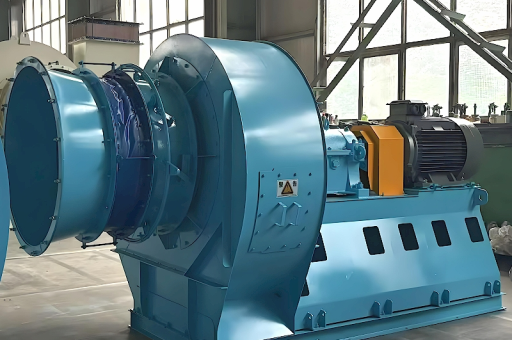
At the center of modern dust management lies the Forced Draft Of Industrial Rotary Kilns Dust Collector Centrifugal Blower Fan. This equipment is not merely a fan; it is a precision-engineered system that controls airflow, pressure, and particle capture efficiency. In this article, we explore how forced draft technology, combined with centrifugal blower fans, enables cleaner, more reliable rotary kiln operations.
Understanding the Forced Draft Mechanism
Forced draft (FD) systems push ambient air into the combustion zone, actively controlling pressure and oxygen supply. Unlike induced draft (ID) systems that pull gases out, FD fans pressurize the kiln hood or preheater inlet. This arrangement offers several advantages:
- Positive pressure control at the burner front stabilizes flame shape and temperature.
- Reduced risk of backdraft and explosive gas accumulation.
- Improved oxygen distribution for complete fuel combustion.
The forced draft fan must deliver consistent airflow against system resistance, including ductwork, dampers, and the dust collector. Therefore, selecting a forced draft centrifugal blower fan requires careful calculation of static pressure, flow rate, and gas density at operating temperature.
The Industrial Rotary Kiln: Process and Dust Generation
A rotary kiln consists of a steel shell lined with refractory bricks, rotating slowly on supporting rollers. Raw material enters the upper end and travels toward the burner flame at the lower end. During this transit, moisture evaporates, carbonates decompose, and clinker minerals form.
Dust generation occurs at multiple stages:
- Raw material handling – fines become airborne during feeding.
- Calcination zone – gas evolution from carbonates creates turbulence.
- Combustion – ash and unburned carbon particles are carried by exhaust gases.
- Clinker discharge – cooling and grinding produce additional dust.
Without a forced draft dust collector centrifugal blower fan, these particles would escape the kiln system and contaminate the environment. Modern kilns integrate FD fans with baghouse or electrostatic precipitators to capture 99.9% of particulate matter.
Dust Collector Systems: Why Efficiency Matters
Dust collectors are classified into fabric filters (baghouses), electrostatic precipitators (ESPs), and cyclones. In rotary kiln applications, baghouses are most common due to their high efficiency across variable particle sizes. The key components include:
- Filter bags – porous fabric that traps particles.
- Cage assemblies – support the bags against collapse.
- Pulsing mechanism – cleans bags using compressed air.
- Inlet plenum – distributes gas evenly.
The forced draft centrifugal blower fan creates the necessary positive pressure to drive gas through the baghouse. If the fan underperforms, baghouse pressure drop increases, reducing airflow and compromising dust capture. Conversely, an oversized fan wastes energy and may damage bags.
Centrifugal Blower Fans: Design and Functional Principles
Centrifugal fans work by accelerating gas radially outward through an impeller, converting velocity energy into static pressure. Key design parameters include:
- Impeller type – backward-curved, forward-curved, or radial.
- Housing geometry – scroll shape influences efficiency.
- Drive arrangement – direct motor or belt-driven.
- Material of construction – abrasion-resistant steel for dust-laden gas.
For dust collector centrifugal blower fans, backward-curved impellers are preferred. They handle particulate matter with less erosion, deliver high efficiency at variable loads, and produce a stable pressure curve.
| Impeller Type | Efficiency | Dust Tolerance | Pressure Rise |
|---|---|---|---|
| Backward-curved | High | Moderate | Medium |
| Forward-curved | Medium | Low | High |
| Radial | Low | High | Very High |
The forced draft application demands a fan that can push gas through high-resistance dust collectors while maintaining flow stability. Modern variable-frequency drives (VFDs) allow speed modulation to match process demand.
The Synergy Between Forced Draft and Dust Collection
The relationship between forced draft and dust collection is not merely mechanical; it is thermodynamic. Consider the following integrated system:
- The forced draft fan pushes air into the kiln burner hood.
- Combustion gases travel through the kiln and into the preheater tower.
- A cooler or heat exchanger reduces gas temperature.
- The dust collector centrifugal blower fan then pulls or pushes gas through filter bags.
In some configurations, a single forced draft fan serves both combustion and dust collection. However, for large kilns, separate FD and ID fans are used to maintain independent control. The ID fan may be located downstream of the baghouse, while the FD fan remains upstream.
This dual-fan arrangement requires careful coordination to avoid positive pressure at the baghouse inlet, which could damage bags or reduce filtration efficiency.
Common Technical Questions and Expert Answers
Q1: What happens if the forced draft fan fails during rotary kiln operation?
A: Immediate loss of combustion air leads to flame instability, incomplete fuel burn, and high CO emissions. The kiln control system should trigger fuel cut-off and maintain rotation to prevent refractory damage.
Q2: Can I use a standard centrifugal blower fan for a dust collector on a rotary kiln?
A: Not recommended. Standard fans lack abrasion-resistant coatings and may fail prematurely due to dust erosion. Always specify a heavy-duty fan designed for high-temperature, particulate-laden gas.
Q3: How do I calculate the required static pressure for the forced draft system?
A: Sum all pressure drops across the burner, kiln inlet, preheater, ductwork, dampers, and dust collector. Add a safety margin of 15%. Typical values range from 2,000 to 6,000 Pa.
Q4: What is the ideal velocity for ductwork between the forced draft fan and the dust collector?
A: Aim for 15–20 m/s. Lower velocities allow dust settling; higher velocities cause erosion and increase pressure loss.
Q5: Does a wind turbine affect the forced draft fan selection?
A: If the kiln site includes a wind turbine for power generation, the forced draft fan motor power may be partially supplied by renewable energy. However, the fan selection is independent of the turbine’s output.
Performance Optimization Strategies
To maximize the efficiency of your forced draft of industrial rotary kilns dust collector centrifugal blower fan, follow these best practices:
- Conduct a system resistance audit annually to identify blockages or leaks.
- Install dampers with automation to regulate flow without starting/stopping the fan.
- Monitor motor current and vibration to detect early bearing or imbalance issues.
- Use baghouse differential pressure readings to fine-tune fan speed.
- Consider hybrid cleaning – combining pulse-jet with reverse-air for hard-to-clean bags.
Fan maintenance is equally critical. Inspect impeller blades for wear every 3,000 operating hours. Replace bearings and seals at manufacturer-recommended intervals. A well-maintained forced draft centrifugal blower fan can operate for over 10 years in continuous duty.
Conclusion: Driving Sustainability with Better Draft Design
The forced draft of industrial rotary kilns dust collector centrifugal blower fan is not an accessory; it is a cornerstone of process control and environmental compliance. By understanding the interplay between combustion, gas flow, and dust filtration, engineers can design systems that reduce emissions, improve fuel efficiency, and extend equipment life.
As global regulations tighten, the demand for reliable forced draft systems will only grow. Integrating renewable energy sources such as a wind turbine to power the fan motor can further reduce the carbon footprint of kiln operations. The centrifugal blower fan, once a simple mechanical device, has evolved into a sophisticated instrument of industrial sustainability.
Whether you are retrofitting an existing kiln or designing a new plant, prioritize the selection of a forced draft fan that matches your dust collector requirements. The result will be cleaner air, lower operational costs, and a more resilient production line.
This article was researched and written based on current best practices in industrial ventilation, combustion engineering, and particulate control technology.





