
This article's table of contents introduction:
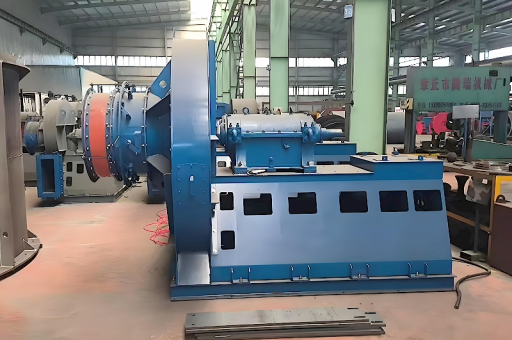
- The Core Application: "Nickel Iron Kiln"
- The Component: "Explosion Proof Blower Three Phase Fan"
- The Power Source: "AC Motor"
- Common Configurations for This Equipment
- Typical Specifications You'd Need
- Summary Table
It sounds like you are describing a specialized industrial fan/motor system designed for harsh, hazardous, and high-temperature environments. This combination of terms points to a very specific piece of equipment used in processes like pyrometallurgy (specifically the Caron process or RKEF process for nickel and iron production) or in cement/steel kilns.
Let's break down what each component means and why they are specified together.
The Core Application: "Nickel Iron Kiln"
- What it is: This refers to a rotary kiln used to produce ferronickel (an alloy of nickel and iron) from laterite ores. The kiln operates at very high temperatures (800°C - 1000°C+).
- Why it's challenging: The process creates:
- Extreme Heat (ambient heat radiating from the kiln shell).
- Dust and Particulates (fine ore and calcine dust).
- Combustible Gases (Carbon Monoxide (CO) and Hydrogen (H₂) from reduction reactions).
- Corrosive Gases (Sulfur compounds).
The Component: "Explosion Proof Blower Three Phase Fan"
This is not a single item, but a system.
- Blower/Fan: This is used for forced draft (pushing air into the kiln), induced draft (pulling exhaust gases out), or cooling the kiln shell. It must move a large volume of air against high resistance (static pressure) from the ductwork and kiln bed.
- Explosion Proof (Ex d or Ex e): This is the most critical safety feature.
- Why it's mandatory: The atmosphere around a nickel-iron kiln can contain flammable gases (like CO). A standard motor spark could ignite these gases, causing a catastrophic explosion.
- How it works: The motor housing is designed to contain any internal explosion without rupturing, and to prevent flames or sparks from escaping to the external atmosphere. The fan blades are often made of non-sparking materials (like aluminum-bronze or specific polymers).
- Three Phase: This refers to the power supply (e.g., 208V, 230V, 460V, 575V at 50Hz or 60Hz). Three-phase motors are standard for industrial applications because they are more efficient, reliable, and powerful than single-phase motors.
- Fan Type: For kilns, you often see Centrifugal (Radial) blowers, not axial fans, because they can handle high static pressure and dust-laden air better.
The Power Source: "AC Motor"
This is a redundant but clarifying term. A "Three Phase Fan AC Motor" means the fan is driven by an Alternating Current (AC) induction motor. This is the standard workhorse motor for industrial blowers.
- Key Specs for this motor:
- High Ambient Temperature Rating: Must be rated for operation in high heat (e.g., 60°C / 140°F ambient or higher) near the kiln.
- Robust Bearings: Typically regreasable ball or roller bearings with high-temperature grease.
- High IP Rating: Ingress Protection rating of IP55 or IP56 (dust-tight and water-jet protected).
- Insulation Class: Class F or Class H insulation to withstand heat.
Common Configurations for This Equipment
If you are sourcing or trying to identify a specific model, the combination usually comes in one of these forms:
- Direct Drive (Motor on a Baseplate):
- The motor shaft is directly coupled to the fan impeller.
- Pros: Simple, no belt slippage, lower maintenance.
- Cons: Motor must be rated for the full heat and dust of the process.
- Belt Drive (Motor on a Slide Base):
- The motor is mounted remotely (further from the kiln heat) and connected to the fan via V-belts and pulleys.
- Pros: Easier to change fan speed (by changing pulley size), motor is protected from direct heat.
- Cons: Belt maintenance, belt dust, loss of efficiency.
Typical Specifications You'd Need
If you are purchasing or specifying this, you need to define:
- Parameters:
- Air Volume: (e.g., 10,000 CFM or 5,000 m³/hr)
- Static Pressure: (e.g., 20" w.g. or 5000 Pa)
- Motor Power: (e.g., 15 HP / 11 kW, 25 HP / 18.5 kW, 50 HP / 37 kW)
- Motor Speed: (e.g., 1800 RPM or 1500 RPM)
- Environmental:
- Explosion Class: (e.g., Class I, Division 1, Groups C & D for flammable gases)
- Ambient Temperature: (e.g., -20°C to +60°C)
- ATEX/IECEx Rating: (If in Europe/International, e.g., II 2 G Ex d IIB T4)
- Material:
- Motor Enclosure: Cast iron or heavy-duty steel.
- Fan Housing: Carbon steel, stainless steel (for corrosion), or abrasion-resistant steel.
- Fan Impeller: Abrasion-resistant steel (for dust) or non-sparking aluminum-bronze (for explosion safety).
Summary Table
| Component | Purpose | Key Feature in "Nickel Iron Kiln" Context |
|---|---|---|
| Nickel Iron Kiln | Process equipment for smelting/alloying | Extremely high heat, combustible gas, dust |
| Explosion Proof | Safety | Contains internal sparks, prevents external ignition |
| Blower | Air movement (draft/cooling) | High static pressure, handles dusty/grit-laden air |
| Three Phase | Power system | Standard for high-power industrial motors (208-690V) |
| AC Motor | Prime mover | Induction motor, high-temp insulation, robust bearings |
Conclusion: You are looking at a heavy-duty, safety-critical piece of capital equipment. It is not a standard HVAC fan. It must be sourced from manufacturers like New York Blower, Robinson Fans, Howden, Chicago Blower, or a specialized explosion-proof motor supplier like Baldor, Siemens, or WEG. Ensure the ATEX or NEC/CEC certification matches the gas groups and temperature class of your specific kiln environment.





