
This article's table of contents introduction:
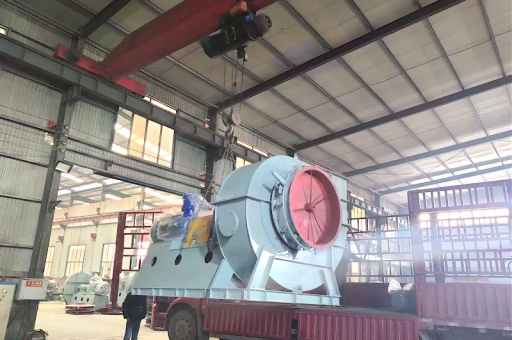
- Product Overview: Anti-Explosion Centrifugal Blower
- Key Technical Specifications
- Anti-Explosion (Hazardous Location) Features
- Low Noise (Acoustic Design)
- White Finish (Coating & Durability)
- Common Applications
- Typical Dimensions & Power Options
- Potential Models / Market Codes
- Important Considerations for Purchasing
Here is a detailed breakdown of the specifications and product description for a Single Inlet Centrifugal Blower that is Anti-Explosion, Low Noise, and finished in White.
Since these are often industrial or commercial components, a "white" finish typically implies a powder-coated epoxy or polyurethane paint for corrosion resistance. Here is a comprehensive product profile.
Product Overview: Anti-Explosion Centrifugal Blower
This unit is a high-static-pressure, backward-curved centrifugal fan designed for material handling, fume extraction, and ventilation in hazardous environments (Classified Zones). The "Single Inlet" (SI) configuration means air enters from one side of the impeller, making it suitable for ducted systems or direct plenum mounting.
Key Technical Specifications
- Type: Single Inlet, Single Width (SISW) Centrifugal Fan
- Motor Type: TEFC (Totally Enclosed Fan Cooled), Anti-Explosion (ATEX / IECEx / UL Classified).
- Material Handling: Designed for clean air, light dust, or explosive gases/vapors.
- Color: High-visibility or low-profile White (RAL 9016, RAL 9003, or custom). The white coating is typically anti-static and chemically resistant.
Anti-Explosion (Hazardous Location) Features
This is the most critical specification. The blower is engineered to prevent ignition of surrounding flammable atmospheres.
- Sparks Prevention:
- Impeller: Constructed from Aluminum Alloy (non-sparking).
- Casing: Cast Iron or Steel with a brass/copper spark-proof strip inserted between the impeller and the inlet cone.
- Hardware: All nuts, bolts, and set screws are brass or zinc-plated stainless steel.
- Motor: Certified for Zone 1 or Zone 2 (Gas) and Zone 21 or Zone 22 (Dust). Examples include Ex d IIB T4 or Ex tD A21.
- Electrical: Explosion-proof conduit box, cable glands, and thermistor protection (PTC) for motor overheat.
- Grounding: Static conductive belt (if belt-driven) or direct coupling with grounding brush to discharge static buildup.
Low Noise (Acoustic Design)
Standard centrifugal blowers can be loud. This model uses specific design principles for quieter operation.
- Impeller Design: Backward-Curved or Airfoil blades. These reduce turbulence and operate at lower tip speeds than forward-curved fans.
- Housing: Doubled-wall insulated casing (sound-dampening material layer) or a specially designed spiral volute that minimizes air turbulence.
- Inlet/Outlet: Silencer sections or perforated diffusers integrated into the duct connections.
- Vibration: Precision balancing of the impeller (G2.5 or better) and vibration isolators (spring or rubber) on the base frame.
- Acoustic Rating: Typically 55 dB(A) to 72 dB(A) at 1 meter, depending on RPM and size (versus 75-85 dB(A) for standard models).
White Finish (Coating & Durability)
- Material: Hot-dipped galvanized steel or heavy-duty steel casing.
- Coating: Epoxy-Polyester Powder Coat (White).
- Thickness: 80–120 microns.
- Benefits: High UV stability (won't yellow), chemical resistant, easy to clean (smooth surface), and anti-corrosive.
- Application: Often used in Clean Rooms, Food Processing, or Pharmaceutical environments where cleanliness is paramount.
Common Applications
- Chemical Plants: Exhausting solvent vapors (e.g., acetone, alcohol).
- Paint Booths: Explosion-proof ventilation of combustible fumes.
- Grain Mills / Woodworking: Dust collection (requires specific ATEX certification for dust).
- Battery Rooms: Hydrogen gas venting.
- Marine / Offshore: Engine room ventilation (white finish for corrosion resistance).
Typical Dimensions & Power Options
(These vary by CFM requirement)
| Feature | Small Unit (e.g., 1HP) | Medium Unit (e.g., 5HP) | Large Unit (e.g., 15HP) |
|---|---|---|---|
| CFM | 500 – 1,000 | 3,000 – 6,000 | 8,000 – 15,000 |
| Static Pressure | 2” – 4” W.G. | 6” – 12” W.G. | 15” – 25” W.G. |
| Inlet Size | 6” – 8” (DN150-200) | 12” – 16” (DN300-400) | 20” – 24” (DN500-600) |
| Weight | ~35 kg (77 lbs) | ~120 kg (265 lbs) | ~350 kg (770 lbs) |
| Noise Level | 55 dB(A) | 68 dB(A) | 72 dB(A) |
Potential Models / Market Codes
- CBB-60-AEX (China standard)
- B4-72-11EX (Anti-explosion series)
- RAD-EX Series (European standard)
- Labconco XE (If looking for a specific lab-grade white model)
Important Considerations for Purchasing
- Temperature Class: Ensure the blower's T-rating (T4 = 135°C max, T6 = 85°C max) matches your gas group.
- Zone Classification: Is it Zone 1 (Gas) or Zone 21 (Dust)? The protection method differs.
- White Color: Confirm if the white paint is anti-static (surface resistance < 1 GΩ) – essential for explosive dust environments.
- Warranty: Most industrial explosion-proof blowers come with 12–24 month warranty on motor and housing.
Would you like a specific CAD drawing, performance curve, or wiring diagram for a white anti-explosion centrifugal blower? Please provide a voltage (e.g., 230V/50Hz or 460V/60Hz) and required air volume (CFM/m³/h) for a precise match.





