
This article's table of contents introduction:
- Introduction: The Intersection of Safety, Efficiency, and Environmental Control
- Understanding the Terminology: PA Fan, Power Plant, and Explosion-Proof Blower
- Why High Performance Matters: Technical Specifications and Operational Demands
- The Explosion-Proof Mandate: Standards, Certification, and Risk Mitigation
- System Integration: How PA Fans Work Within the Milling and Combustion Cycle
- Comparative Analysis: Axial vs. Centrifugal Configuration for Hazardous Zones
- Maintenance Strategies for Long-Term High Performance in Dust-Laden Air
- Frequently Asked Questions (FAQ)
- Conclusion: Future-Proofing Power Plant Ventilation with Advanced PA Fan Technology
*Maximizing Industrial Safety: The Critical Role of High-Performance PA Fan in Power Plant Explosion-Proof Blower Systems*
Table of Contents (导读目录)
- Introduction: The Intersection of Safety, Efficiency, and Environmental Control
- Understanding the Terminology: PA Fan, Power Plant, and Explosion-Proof Blower
- Why High Performance Matters: Technical Specifications and Operational Demands
- The Explosion-Proof Mandate: Standards, Certification, and Risk Mitigation
- System Integration: How PA Fans Work Within the Milling and Combustion Cycle
- Comparative Analysis: Axial vs. Centrifugal Configuration for Hazardous Zones
- Maintenance Strategies for Long-Term High Performance in Dust-Laden Air
- Frequently Asked Questions (FAQ)
- Conclusion: Future-Proofing Power Plant Ventilation with Advanced PA Fan Technology
Introduction: The Intersection of Safety, Efficiency, and Environmental Control
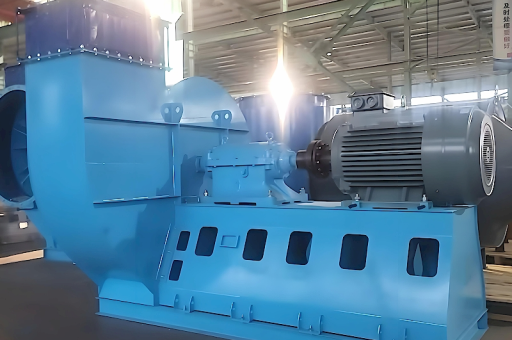
In the demanding environment of a coal-fired or biomass power plant, moving large volumes of air under high pressure while minimizing the risk of ignition is a non-negotiable task. The PA Fan in Power Plant Explosion Proof Blower system represents the pinnacle of industrial ventilation engineering. PA (Primary Air) fans are not merely blowers; they are life-safety devices, combustion optimizers, and structural protectors rolled into one high-velocity package. This article explores how high performance in an explosion-proof blower directly contributes to power plant reliability and personnel safety. We will dissect the design logic, material choices, and certification protocols that separate a standard fan from a critical-duty, explosion-proof, high-performance PA fan.
Understanding the Terminology: PA Fan, Power Plant, and Explosion-Proof Blower
Before delving into technical intricacies, it is vital to clarify the core terms:
- PA Fan (Primary Air Fan): In a power plant, the PA fan supplies preheated air to the coal pulverizers. This air performs two critical functions: it carries the pulverized coal from the mill to the burner nozzles; and it provides the initial oxygen needed for combustion. The flow rate and pressure of the PA fan directly affect the grinding efficiency and flame stability.
- Power Plant: The context here refers primarily to thermal power stations (coal, biomass, or waste-to-energy) where combustible dust (coal dust, sawdust, or refuse-derived fuel particles) is present.
- Explosion Proof Blower: This does not mean the blower can survive an explosion. Rather, it refers to a design that prevents an internal or external explosion from being initiated by the equipment itself. It contains any internal explosion and prevents flames from escaping into the hazardous atmosphere. It also prohibits surface temperatures from reaching the auto-ignition point of the surrounding dust or gas.
The fusion of these three elements yields a PA fan in a power plant explosion-proof blower—a machine that must move heavy, dust-laden air at high velocity without becoming an ignition source.
Why High Performance Matters: Technical Specifications and Operational Demands
High performance in this context goes beyond mere flow rate. It encompasses:
- Pressure Generation: PA fans often need to overcome high system resistance from the mill, ductwork, and burner nozzles. A typical pressure requirement can range from 500 mmWG to 1500 mmWG (Water Gauge). High-performance designs use advanced impeller aerodynamics to achieve this pressure without excessive power consumption.
- Efficiency (Isentropic & Mechanical): Modern high-performance explosion-proof blowers utilize backward-curved or airfoil blades. These can achieve static efficiencies above 85%. This is critical because lower efficiency means higher electricity consumption and, more dangerously, higher heat generation. In an explosion-proof context, heat is the enemy.
- Wear Resistance: Coal dust is abrasive. High-performance PA fans feature sacrificial wear plates, hardened impeller tips (often with tungsten carbide or Stellite coating), and thick casing liners. Without these, the fan would lose its balance and structural integrity within months.
- Variable Speed Capability: To meet varying load demands, high-performance fans integrate with Variable Frequency Drives (VFDs) or variable inlet vanes. This reduces energy waste and precisely controls the air-to-fuel ratio, which directly reduces the risk of combustion instability.
Key Data Point: A typical high-performance PA fan for a 600 MW pulverized coal boiler can move over 200 cubic meters per second of air at a pressure of over 12 kPa, while its motor stays below a temperature class of T3 (200°C maximum surface temperature) in accordance with ATEX or IECEx standards.
The Explosion-Proof Mandate: Standards, Certification, and Risk Mitigation
Why does a PA fan specifically require an explosion-proof rating? The answer lies in the chemistry of coal dust.
When coal is ground into a fine powder, it has a high surface area-to-volume ratio. If the dust cloud inside the PA fan casing reaches a specific concentration (often between 50 and 500 g/m³), and a spark or hot surface exceeds the minimum ignition energy (MIE) of the dust (which can be as low as 20 mJ for some coals), a catastrophic dust explosion will occur.
To prevent this, the explosion-proof blower adheres to strict global standards:
- IEC 60079 / ATEX Directive 2014/34/EU: The fan must be classified for Zone 21 (combustible dust present frequently) or Zone 22 (infrequent dust). The fan's surface temperature must be lower than the ignition temperature of the specific coal type. For example, for bituminous coal (ignition temp ~400°C), the fan must be certified as T2 (T-temperature class) or lower.
- Design Features:
- Non-Sparking Materials: Impellers often use aluminum bronze or stainless steel. The casing is steel but the internal contact surfaces are separated. Clearance between rotating and stationary parts is increased to prevent friction and impact.
- Shaft Seal: A pressurized gland seal or a carbon ring seal prevents dust from leaking along the shaft into the motor or bearing housing, which is a non-hazardous zone.
- Motor Selection: The motor is intrinsically safe or flameproof, enclosed in a casing that can withstand an internal explosion without rupturing. In the context of a wind turbine, such motors are uncommon as wind turbines do not handle combustible dust, but in a power plant, they are law.
System Integration: How PA Fans Work Within the Milling and Combustion Cycle
Understanding the integration of the PA fan in power plant explosion-proof blower requires tracing the air path:
- Air Intake: Ambient air is drawn through filters (sometimes an explosion-proof inlet box) by the PA fan.
- Heating: The air passes through an air preheater (APH), heated by the boiler exhaust gas.
- PA Fan Boost: The hot (250°C – 350°C) air enters the explosion-proof PA fan. The fan increases the air pressure tremendously. This hot air contains oxygen and thermal energy.
- Mill Delivery: This high-pressure, hot air enters the coal pulverizer. It dries the coal, carries the pulverized product, and sweeps the mill clear.
- Burner Transport: The coal-air mixture (primary air) flows through pipes to the furnace burner nozzles. The velocity must be high enough (approx. 25-35 m/s) to prevent coal settling, but low enough to prevent erosion.
If the PA fan fails or performance degrades, the entire combustion system destabilizes. This is why high performance is synonymous with high reliability. A dip in pressure leads to coal accumulation in pipes, which can lead to internal fires or explosions.
Comparative Analysis: Axial vs. Centrifugal Configuration for Hazardous Zones
When selecting a high-performance explosion-proof blower, the industry generally favors the centrifugal configuration over the axial, especially for PA fan applications.
| Feature | Centrifugal PA Fan | Axial PA Fan |
|---|---|---|
| Pressure Generation | High pressure (up to 1500 mmWG) | Low to medium pressure |
| Efficiency in High Pressure | Excellent | Poor at high pressure |
| Dust Handling | Good. Backward-curved blades handle dust well. | Poor. Particles impact rotor blades and cause rapid wear. |
| Explosion-Proof Design | Easier to encapsulate and contain. Casing acts as pressure vessel. | More complex. Large diameter rotors require intricate sealing. |
| Size & Weight | Smaller footprint for given pressure | Larger footprint |
| Noise | Lower (typically < 95 dBA with silencer) | Higher |
Verdict: For a PA fan in a power plant, a centrifugal design with a heavy-duty, spark-resistant impeller is the industry standard for high performance and safety.
Maintenance Strategies for Long-Term High Performance in Dust-Laden Air
To sustain the high performance of an explosion-proof blower, routine maintenance must focus on:
- Vibration Monitoring: Unbalance caused by dust adhesion or erosion is the most common cause of failure. Use accelerometers on bearing housings. Trigger shutdown if vibration exceeds 7 mm/s RMS.
- Bearing Lubrication & Temperature: Use only approved high-temperature, non-reactive grease. Monitor bearing temperature continuously; a rise above 95°C is a red flag for imminent failure.
- Impeller Cleaning: Schedule periodic inspections (every 6 months). Remove accumulated coal dust using non-sparking tools (copper or brass scrapers). Dry ice blasting is a safe, non-water method.
- Seal Integrity Check: Verify that the shaft seals (labyrinth or carbon ring) are not leaking coal dust. A dust leak indicates seal degradation, which can create a hazardous external zone.
- Spark Detection System: Many high-performance facilities install infrared spark detectors at the fan outlet. If a spark is detected from the mill side, an automatic suppression system (water mist or steam fog) activates before it reaches the fan.
Frequently Asked Questions (FAQ)
Q1: Is a PA fan the same as a wind turbine? A: No. A wind turbine generates energy from wind energy. A PA fan (Primary Air fan) is a motor-driven air mover inside a power plant. They are fundamentally different machines with opposite energy conversion processes. However, both require high reliability and often use similar bearing technology.
Q2: Can a standard industrial blower be used as an explosion-proof PA fan? A: Absolutely not. A standard blower lacks the certification (ATEX/IECEx), the spark-resistant materials, the temperature control, and the sealed bearing housings required for hazardous dust zones. Using a standard blower in a Zone 21 area is illegal and extremely dangerous.
Q3: What is the primary cause of failure in a high-performance PA fan? A: Erosion and erosion-induced imbalance. The high velocity of coal dust particles (traveling at 20-30 m/s) erodes the impeller blades. Over time, this unbalance leads to bearing failure and, in worst cases, impeller disintegration.
Q4: How does a VFD improve the explosion-proof performance of a PA fan? A: A VFD allows the fan to run at lower speeds during low load conditions. This reduces the kinetic energy inside the fan casing, lowers the temperature, and reduces the chance of electrostatic charge buildup. It also provides smooth acceleration, avoiding mechanical shocks that could create sparks.
Q5: What insulation class is required for the motor of an explosion-proof blower? A: Typically Class F or Class H insulation. These classes withstand high ambient temperatures (up to 180°C for Class H) without degrading. This is critical because the motor sits near hot air ducts. In a wind turbine application, motors often use Class F, but for a PA fan, Class H is preferred due to the radiant heat from the boiler.
Conclusion: Future-Proofing Power Plant Ventilation with Advanced PA Fan Technology
The PA Fan in Power Plant Explosion Proof Blower High Performance system is not a mere commodity. It is a precisely engineered safety device and an efficiency driver. As power plants transition to stricter emissions controls and co-firing with biomass (which produces more volatile dust), the demand for even higher performance, more wear-resistant, and more intelligent explosion-proof blowers will grow. The use of advanced materials like wear-resistant ceramics and real-time condition monitoring sensors (predictive analytics) are the next frontier. For plant engineers, investing in a certified high-performance PA fan is an investment in operational availability and, most importantly, in the safety of every person on site. Remember, in an industry where one spark can cause a catastrophe, the explosion-proof blower is the silent, reliable sentinel.





