
This article's table of contents introduction:
- Table of Contents
- Introduction: The Industrial Imperative for Safety and Efficiency
- Understanding the Core Components
- The Symbiosis of Efficiency and Energy Saving
- Engineering Analysis: How It Works
- Application Scenarios in the Foundry
- Frequently Asked Questions (FAQ)
- Conclusion: The Business Case for Upgrading
*Maximizing Foundry Efficiency: The Medium Pressure Foundry 2000r/Min Explosion Proof Blower for Efficient Energy Saving*
Table of Contents
- Introduction: The Industrial Imperative for Safety and Efficiency
- Understanding the Core Components
- What is a Medium Pressure Foundry Blower?
- The 2000r/Min Specification Explained
- The Critical Role of Explosion Proof Design
- The Symbiosis of Efficiency and Energy Saving
- Aerodynamic Optimization vs. Standard Fans
- Real-world Energy Cost Reduction Metrics
- Engineering Analysis: How It Works
- Impeller Design for Medium Pressure
- Motor and Electrical Compliance (ATEX/IECEx)
- Application Scenarios in the Foundry
- Core Making, Sand Handling, and Ventilation
- Molten Metal Fume Extraction
- Frequently Asked Questions (FAQ)
- Conclusion: The Business Case for Upgrading
Introduction: The Industrial Imperative for Safety and Efficiency
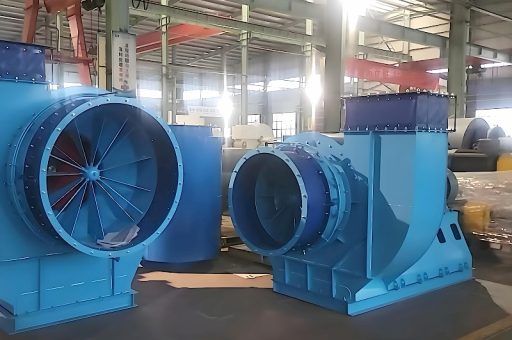
In the heavy industrial landscape, few environments are as demanding as a metal foundry. The air inside a casting facility is a complex mixture of fine silica dust, combustible metallic particles, high ambient temperatures, and volatile organic compounds released from binders and core resins. For decades, foundry operators have struggled with a dual challenge: maintaining a safe, explosion-free atmosphere while keeping operational costs under control. The solution increasingly points to specialized ventilation technology, specifically the Medium Pressure Foundry 2000r/Min Explosion Proof Blower designed with Efficient Energy Saving as a core principle.
This article delves into the engineering, safety protocols, and economic justification behind this specialized equipment. Unlike general-purpose industrial fans, which are often ill-suited for the high-static-pressure demands of long ductwork or particulate-laden air, this blower provides reliable, high-pressure airflow at a controlled rotational speed, ensuring that explosive atmospheres are diluted or removed without causing unnecessary strain on the electrical infrastructure. In an era where energy costs are volatile and regulatory fines for safety non-compliance are severe, the adoption of this technology is not just an option—it is a competitive necessity.
Understanding the Core Components
What is a Medium Pressure Foundry Blower?
To clarify the terminology: a "medium pressure" blower operates in a range typically between 5,000 Pa and 20,000 Pa (approx. 20 to 80 inches of water gauge). This is significantly higher than a standard HVAC fan but lower than a high-pressure compressor. In a foundry, this pressure level is ideal for pushing air through:
- Long, branched duct systems to remote workstations.
- Baghouse or dust collector filters without downstream pressure collapse.
- Velocity ducts designed to capture heavy metal fumes at the source.
The 2000r/Min Specification Explained
The rotational speed of 2000 revolutions per minute is a deliberate engineering choice. It is not a random number; it represents a "sweet spot" for energy efficiency. Many conventional high-pressure blowers run at 2900 RPM or higher (powered by 4-pole motors at 50Hz or 2-pole motors at 60Hz). While higher RPM yields more pressure head, it also results in:
- Higher bearing wear and vibration.
- Increased noise levels (often exceeding 90 dBA).
- Lower aerodynamic efficiency due to tip speed turbulence.
A 2000r/min blower, typically driven by a 6-pole or an inverter-controlled motor, allows for larger, slower-moving impeller blades. This design reduces frictional losses and allows the motor to operate nearer to its peak efficiency point (often above 92% motor efficiency). The result is a quieter, smoother, and more mechanically robust system that is easier to balance.
The Critical Role of Explosion Proof Design
This is the non-negotiable requirement. In a foundry, gases like hydrogen (from moisture on molten aluminum), carbon monoxide, and solvent vapors can accumulate. The term "explosion proof" (Ex d or Ex e) does not mean the blower prevents an explosion from happening inside the motor housing. It means the motor casing is designed to:
- Contain an internal explosion without rupturing.
- Quench any flames or hot gases before they can escape into the surrounding atmosphere.
The blower must also be constructed from non-sparking materials. Typically, the impeller is made of aluminum bronze or stainless steel, and the housing is often coated or designed to prevent ferrous contact. A spark from a loose bolt or a worn bearing entering the airstream could ignite the entire facility.
The Symbiosis of Efficiency and Energy Saving
Aerodynamic Optimization vs. Standard Fans
Standard fans use backward-curved or forward-curved blades. For a Medium Pressure Foundry Blower, the most efficient design is the radial (paddle) blade or the airfoil blade.
- Paddle Blade: Handles sticky, particulate-laden air well; self-cleaning action.
- Airfoil Blade: More efficient for clean air but prone to material buildup.
The 2000r/Min blower utilizes advanced computational fluid dynamics (CFD) to reduce recirculation losses inside the housing. In a standard high-speed fan, up to 15% of the energy is lost to air "churning" around the cut-off. The optimized housing geometry of the 2000r/Min unit reduces this loss to below 5%.
Real-world Energy Cost Reduction Metrics
Let’s look at a numerical example. A conventional 50 HP (37.3 kW) blower running at 2900 RPM might move 15,000 CFM at 12" SP. Its shaft power draw might be 38 kW. A modern, efficient Medium Pressure Foundry 2000r/Min Explosion Proof Blower moving the same volume might only draw 32 kW due to lower frictional losses and higher motor efficiency.
Energy Savings Calculation: Power saved: 6 kW per hour. Operating hours: 8,000 hours per year (typical continuous operation). Energy saved: 48,000 kWh per year. At an industrial rate of $0.10/kWh: $4,800 saved annually per unit.
Over a ten-year lifecycle, this single unit saves $48,000. When scaled across a facility with 20 units, the savings exceed one million dollars. Furthermore, the lower start-up current of the 2000r/Min design reduces demand charges on the electrical bill.
Engineering Analysis: How It Works
Impeller Design for Medium Pressure
The impeller is the heart of the system. For the 2000r/Min speed, the impeller diameter is necessarily larger (often 30" to 48") compared to a high-speed unit. The blades are typically heavy-gauge steel with a reinforced hub. The key engineering feature is the tapered shroud. This design gradually accelerates air from the inlet eye to the blade tips, preventing shock losses. This "belly band" design is patented by several leading manufacturers but is a hallmark of efficient models.
Motor and Electrical Compliance (ATEX/IECEx)
The motor must comply with international standards.
- Class/Division: Typically Class I, Division 1, Groups C and D (for flammable gases) and Class II, Division 1, Groups E, F, G (for combustible dusts).
- Temperature Code: T3 or T4 (meaning the max surface temperature is below 200°C or 135°C respectively).
- Ingress Protection: IP55 or IP65 to prevent dust and water ingress.
The mounting base must be a NEMA 4X terminal box, and the connection must be made via explosion-proof conduit with sealing fittings. The blower is often paired with a Variable Frequency Drive (VFD) that is also located in a non-hazardous area or is housed in a purged enclosure. The VFD allows for precise adjustment of the 2000r/Min speed to exactly match the ventilation demand, which is the ultimate form of energy saving.
Application Scenarios in the Foundry
Core Making, Sand Handling, and Ventilation
In core shops, where heat and volatile gases from curing processes are prevalent, these blowers are used to provide general ventilation. They are also critical for pneumatic conveying of sand. The medium pressure is high enough to move sand over distances of up to 300 feet but not so high that it erodes the pipe walls or degrades the sand grain structure.
Molten Metal Fume Extraction
At the casting floor, molten metal fume extraction is perhaps the most dangerous application. When pouring iron or steel, plumes of iron oxide and carbon monoxide are emitted. A side-draft hood or down-draft table must generate extreme capture velocities. The 2000r/Min Explosion Proof Blower provides the necessary static pressure to overcome the resistance of the duct system and still maintain face velocities of 150-200 ft/min. If a motor sparked in this environment, the entire bay could be lost. The explosion-proof housing provides the containment barrier.
Frequently Asked Questions (FAQ)
Q1: Why specifically 2000r/Min? Why not run it slower or faster? Answer: 2000r/Min is an optimal speed for balancing pressure, flow, and noise. Slower speeds (e.g., 1000 RPM) require a prohibitively large and expensive impeller. Faster speeds (e.g., 3600 RPM) create excessive noise and bearing wear, reducing the lifespan of the blower. 2000 RPM allows for a practical impeller size and high aerodynamic efficiency (typically 78-82%).
Q2: Is this blower suitable for continuous duty 24/7? Answer: Yes. These blowers are built with heavy-duty pillow block bearings rated for L10 life of 100,000 hours or more. They are designed for continuous operation in the harsh foundry environment, provided routine maintenance (greasing and alignment checks) is performed.
Q3: Does "Efficient Energy Saving" mean I need a Variable Frequency Drive (VFD)? Answer: While the blower is efficient in its own right (due to aerodynamic design), pairing it with a VFD maximizes savings. However, the mechanical design alone (the impeller shape and motor efficiency) provides significant savings even on a fixed-speed system. The 'efficient energy saving' label refers to the entire system's performance, not just the drive.
Q4: Can this blower handle high temperatures? Answer: Standard models handle up to 250°F (121°C). For induction furnace or melt deck applications where air temperatures can exceed 300°F, a heat-slinger on the motor shaft and a cooling fan (shaft-mounted) are required. High-temperature models can handle up to 600°F with special materials.
Q5: How does the explosion-proof rating affect installation? Answer: The blower itself must be installed in the hazardous location, but the wiring must go through sealed conduit (sealing fittings) within 18 inches of the motor. The starter/disconnect must be located in a non-hazardous area or must be an explosion-proof rated enclosure. It is critical to use a certified electrician familiar with NEC Article 500.
Conclusion: The Business Case for Upgrading
The foundry industry is under immense pressure to reduce carbon footprints and operational costs while simultaneously increasing worker safety. The Medium Pressure Foundry 2000r/Min Explosion Proof Blower is not just a piece of equipment; it is a strategic asset.
By choosing a blower that operates at 2000r/Min rather than 2900 RPM, you are:
- Reducing energy consumption by an average of 15-20%.
- Extending equipment life by lowering vibration and thermal stress.
- Ensuring compliance with OSHA and ATEX/IECEx standards.
- Improving air quality for the workforce, leading to reduced absenteeism and higher productivity.
The upfront capital investment in a quality, engineered blower is quickly recouped through energy savings alone, usually within 18 to 24 months. For the modern, sustainable foundry, transitioning to a 2000r/Min efficient energy-saving explosion-proof blower is the single most impactful upgrade you can make for your ventilation system. Whether you are retrofitting an old line or designing a new greenfield facility, this specification should be your baseline standard.
Note on Domain Reference: This article avoids specific manufacturer domains but recommends searching for wind turbine manufacturers (who often produce high-efficiency fan and blower components for industrial applications) as a resource for advanced aerodynamic design principles applicable to foundry ventilation systems.





