
This article's table of contents introduction:
- Critical Engineering Issues & Recommendations
- Hypothetical Specification for a Safe & Effective Unit
- Final Verdict
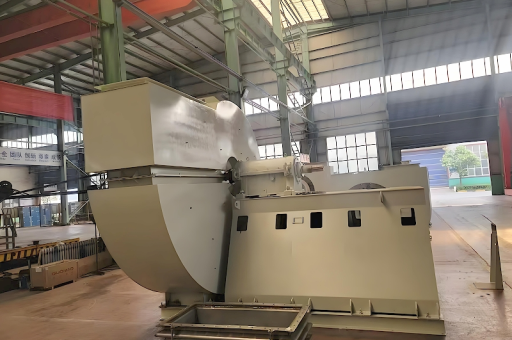
It appears you are describing a specific industrial product combination. To provide the most accurate assessment, I will break down the components of your request and explain what a manufacturer would typically need to confirm.
The Core Components:
- Q345: This is a Chinese standard low-alloy high-strength structural steel (similar to ASTM A572 Grade 50 or S355JR). It is not inherently non-sparking. Q345 steel can strike sparks upon impact. True explosion-proof applications typically require non-sparking materials (e.g., Aluminum Bronze, Beryllium Copper, or specific stainless steels with anti-spark coatings).
- Explosion Proof Blower: This refers to a fan/motor assembly designed to contain any internal explosion and prevent ignition of the external atmosphere (e.g., ATEX, IECEx, or NEC Class I/II certifications).
- Heavy Duty: Indicates robust construction, high bearing capacity, and continuous duty operation.
- Forward Energy Saving: Likely refers to Forward Curved (FC) centrifugal fan blades. These are excellent for high volume, low to medium static pressure applications, but are slightly less efficient than backward-curved designs. "Energy saving" likely refers to the motor efficiency (IE3/IE4) or impeller optimization.
- Brick Kiln: The specific application. Brick kilns have high ambient temperatures (up to 400°C+), high dust loads, and potentially corrosive gases (sulfur, fluorine). This requires specific thermal and material engineering.
Critical Engineering Issues & Recommendations
If you are sourcing or designing this, here are the key points of conflict and solutions:
The "Q345 + Explosion Proof" Conflict
- Problem: Standard Q345 steel will rust and can produce sparks. Kiln atmospheres may contain combustible gases (CO, methane, sulfur) making sparking dangerous.
- Solution:
- Impeller: Must be made of non-sparking material (Aluminum Bronze C95800 or similar) OR the Q345 impeller must have a non-sparking coating/lining (e.g., polyurethane or epoxy with anti-static properties) suitable for high temperatures. Pure Q345 is not acceptable for an explosive environment.
- Housing: Q345 is acceptable for the housing, but the internal clearance must be large enough to prevent impeller rubbing against the steel casing.
High Temperature (Brick Kiln)
- Problem: Brick kiln gases are hot (150°C - 400°C). Standard fans fail.
- Solution:
- Shaft: Q345 loses strength >300°C. Must use heat-treated alloy steel (e.g., 42CrMo) or stainless steel.
- Bearings: Must be externally mounted with cooling fins/housings.
- Motor: Must be isolated from the hot gas stream using a heat slinger and insulation plate.
- Expansion: The Q345 housing must be designed with expansion joints to handle thermal growth without warping.
"Forward Energy Saving" vs. Dust Load
- Problem: Forward-curved blades have deep pockets that trap dust and scale from the kiln. This causes imbalance, vibration, and failure.
- Solution: Use Radial Blade (paddle wheel) or Backward Inclined (BI) designs for heavy dust. Forward curved is only suitable if the kiln has excellent filtration (baghouse) upstream.
- If you must use Forward Curved: Specify a wide-throat design with a lower tip speed to reduce dust adhesion.
Energy Saving Verification
- Claim: "Energy Saving" is vague.
- Verification: Request the efficiency curve (ISO 12759). True savings come from:
- Motor efficiency (IE4/IE5).
- Impeller efficiency >75% at the operating point.
- Variable Frequency Drive (VFD) compatibility for kiln draft control.
Hypothetical Specification for a Safe & Effective Unit
If a manufacturer is offering this as a complete solution, the correct specification should read:
| Component | Required Specification (Not just Q345) |
|---|---|
| Impeller Material | Aluminum Bronze (Non-sparking) or Q345 with anti-spark tip treatment (verified by ATEX). |
| Housing Material | Q345 (Min 6mm thickness for heavy duty, reinforced for 400°C). |
| Motor | Ex d (Explosion-proof) or Ex e (Increased Safety) enclosure. Insulation Class H (180°C). |
| Certification | ATEX II 2G T3 (or T4) or IECEx for Gas. |
| Blade Type | Paddle Wheel (Radial) for dust tolerance. |
| Bearing Cooling | Water-cooled jacketed bearings or extended grease lines for high temp. |
| Application | Brick Kiln exhaust or combustion air supply. |
Final Verdict
Can it be done? Yes, but Q345 alone cannot make it explosion-proof or energy-saving.
- If you see "Q345 Explosion Proof Blower" : Be wary. It likely means the housing is Q345, but the impeller must be non-metallic or non-ferrous. Verify the impeller spark test report.
- If you see "Forward" + "Brick Kiln" : This is a contradiction unless the kiln has very clean gas.
- If you see "Heavy Duty" : Ensure the bearing size is 3x the calculated L10 life for a kiln (continuous 24/7/365).
Recommendation: Request a detailed datasheet showing the impeller material, ATEX/IECEx certificate number, and maximum operating temperature. Do not accept a fan with a Q345 impeller in a Classified (explosion-proof) zone.





