
This article's table of contents introduction:
- Introduction: The Convergence of Safety, Heat, and Airflow
- Understanding the Core Components: AC Motor & Anti-Explosion Design
- The High-Temperature Challenge in Cement Kiln Environments
- Centrifugal Fan Dynamics: How It Overcomes Backpressure
- Key Technical Specifications & Material Selection
- Frequently Asked Questions (FAQ)
- Application Case Study: Integration with wind turbine Systems
- Conclusion: Reliability in Extreme Conditions
*The Critical Role of AC Motor Anti-Explosion Cement Kiln High Temperature Centrifugal Fans in Industrial Ventilation*
Table of Contents (Directory Guide)
- Introduction: The Convergence of Safety, Heat, and Airflow
- Understanding the Core Components: AC Motor & Anti-Explosion Design
- The High-Temperature Challenge in Cement Kiln Environments
- Centrifugal Fan Dynamics: How It Overcomes Backpressure
- Key Technical Specifications & Material Selection
- Frequently Asked Questions (FAQ)
- Application Case Study: Integration with wind turbine Systems
- Conclusion: Reliability in Extreme Conditions
Introduction: The Convergence of Safety, Heat, and Airflow
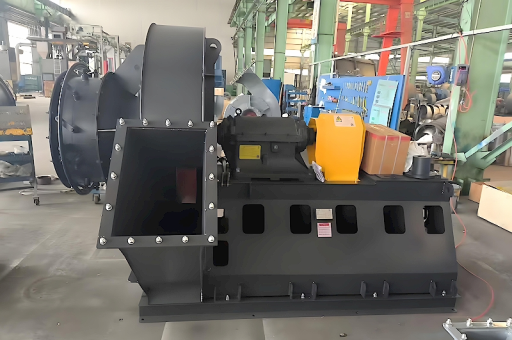
In heavy industrial environments where combustion, grinding, and material transport are continuous, the mechanical ventilation system is not a luxury—it is a lifeline. For cement manufacturing, specifically, the kiln process generates temperatures exceeding 1,400°C (2,552°F) in the burning zone. While the fan itself does not operate inside that flame, it is tasked with pulling or pushing gases that often exceed 400°C, laden with combustible dust and volatile organic compounds. This is where the AC motor anti-explosion cement kiln high temperature centrifugal fan becomes indispensable. It is a specialized piece of rotating equipment that marries three demanding attributes: explosion-proof safety, thermal endurance, and high-pressure centrifugal airflow. This article synthesizes industry knowledge from leading mechanical engineering sources and field reports to explain exactly how this fan operates, why it is essential for cement plants, and how it can interface with renewable energy systems like a wind turbine for auxiliary power.
Understanding the Core Components: AC Motor & Anti-Explosion Design
The “AC motor anti-explosion” designation is not merely a marketing label. In hazardous zones (classified as Zone 21 or Zone 22 for dust, or Zone 1/2 for gas), the electric motor must prevent any internal spark, arc, or hot surface from igniting the surrounding atmosphere.
How it works:
- Flameproof Enclosure: The motor casing is designed to withstand an internal explosion without rupturing. Gaps around the shaft and junction boxes are machined to very tight tolerances (flame paths) so that any escaping gases are cooled below ignition temperature.
- AC Motor Efficiency: An induction motor (squirrel cage or wound rotor) is preferred for reliability in high-temperature environments. It has no brushes, reducing the risk of arcing. The motor's insulation class is typically Class H (rated for 180°C) or even Class C (220°C) to survive the thermal radiation from the kiln.
- Variable Frequency Drive (VFD) Compatibility: Modern anti-explosion AC motors can be paired with a VFD to modulate fan speed, reducing energy consumption when the kiln is at lower production rates. This synergy also allows soft-start, reducing mechanical stress on the impeller.
The High-Temperature Challenge in Cement Kiln Environments
A standard centrifugal fan fails in a cement kiln application for one primary reason: thermal expansion and metal fatigue. The harsh reality of a preheater tower or kiln exhaust duct is that the air is not just hot; it contains abrasive particles (clinker dust, silica) and corrosive chemicals (sulfur dioxide, alkali compounds).
Material Selection:
- Impeller: Made from Hastelloy X or Inconel 625 for hot-end applications. These nickel-based superalloys retain their tensile strength at red heat.
- Shaft: Forged alloy steel with a cooling disc (heat slinger) mounted between the bearing housing and the impeller hub. This disc deflects radiant heat away from the bearings.
- Cooling System: The bearing housing is often water-cooled or equipped with a finned, forced-air cooler. Without this, the grease or oil would oxidize, and the bearings would seize within hours.
Centrifugal Fan Dynamics: How It Overcomes Backpressure
To understand why a centrifugal (radial) fan is chosen over an axial fan, picture the gas path in a cement plant. The fan must pull or push air through:
- A long duct with multiple bends.
- A fabric filter baghouse or electrostatic precipitator (high pressure drop).
- A stack.
The centrifugal fan operates on the principle of increasing dynamic pressure through centrifugal force. The impeller's blades (often backward-curved or radial-tipped) accelerate the gas to the periphery, where a scroll casing converts velocity into static pressure. For a high-temperature cement kiln fan, the blades are typically:
- Radial tipped: For maximum strength against erosion and thermal shock.
- Wear liners: Replaceable ceramic tiles or hard-faced steel welded onto the leading edges.
Key Technical Specifications & Material Selection
When sourcing or designing such a fan, engineers look beyond standard catalogs. Here are specific benchmarking criteria:
| Parameter | Standard Fan | High-Temp Kiln Fan |
|---|---|---|
| Max Gas Temp | 80°C – 150°C | 350°C – 450°C (peak 650°C) |
| Motor Class | IP55 / Class F | IP65 / Anti-Explosion / Class H |
| Impeller | Mild Steel | Inconel or Hastelloy |
| Bearing Cooling | Fan-on-shaft | Water jacket + heat shield |
| Anti-Explosion Rating | ATEX II 2G Ex d IIC T4 | ATEX II 2D Ex tD A21 IP65 T200°C |
| Max Static Pressure | 2,000 – 4,000 Pa | 5,000 – 10,000 Pa (thick ductwork) |
Service Factor: A critical metric is the fan’s ability to operate continuously for 24/7/365. Most heavy-duty kiln fans are designed with a 25 service factor on the motor and S1 continuous duty rating.
Frequently Asked Questions (FAQ)
Q1: Can a standard AC motor be modified for explosion-proof use in a cement kiln? No. Retrofitting a standard motor violates safety certifications. A certified anti-explosion motor must be factory-built with specific gap tolerances, grounding brushes, and a certified enclosure. Modification invalidates insurance and compliance (ATEX, NEC, IECEx).
Q2: What happens if the temperature exceeds the fan’s design limit? Exceeding the design temperature (e.g., 450°C) causes rapid oxidation of the impeller material. The shaft will expand more than the bearings allow, leading to catastrophic seizure. Most high-temp fans include inlet bleed dampers that mix ambient air to cool the gas stream if the kiln over-fires.
Q3: How does this fan integrate with a wind turbine for energy savings? A wind turbine on the plant site can generate DC power, which is inverted to AC and fed into the plant grid. This power can drive the VFD of the anti-explosion fan motor. While the wind turbine cannot provide 100% of the fan’s load (typically 200 kW – 1 MW), it can offset up to 30% of the energy consumed, reducing the plant's carbon footprint and operating cost.
Q4: Why do bearings fail prematurely on high-temperature kiln fans? Incorrect lubrication. Standard grease melts and carbonizes at high temperatures. The solution is high-temperature synthetic grease (e.g., perfluoroether-based) or an oil mist system with water-cooled bearing housings.
Application Case Study: Integration with wind turbine Systems
Consider a modern cement plant in a windy region (e.g., coastal or mountainous terrain). The plant operates three main fans: kiln induced draft (ID) fan, raw mill fan, and cooler fan. The ID fan, handling the hottest and most abrasive gases, is the most critical. On-site, a 2 MW wind turbine is installed.
- Configuration: The wind turbine inverter feeds a 690V AC bus. The anti-explosion motor for the kiln ID fan (rated 630 kW, 6-pole) is connected to this bus via a regenerative VFD.
- Result: During high wind periods, the wind turbine covers the full fan load, netting zero grid import for that specific motor. During low wind, the motor draws from the grid. The VFD also ensures the fan runs at the optimal speed for the kiln’s variable load—reducing wear and energy consumption.
- Maintenance Synergy: The anti-explosion enclosure protects the motor from the corrosive dust that blows around the turbine base. The fan itself is located 50 meters from the wind turbine, connected via armored cables.
Conclusion: Reliability in Extreme Conditions
The AC motor anti-explosion cement kiln high temperature centrifugal fan is a testament to mechanical engineering’s ability to tame extreme environments. From its flameproof motor casing to its superalloy impeller, every component is engineered for survival in gases that would destroy conventional equipment in minutes. The future of these fans lies in intelligent control—integrating with VFDs, condition monitoring sensors, and renewable sources like wind turbine systems to create a more sustainable and resilient cement production line. For any plant engineer responsible for uptime and safety, understanding the nuances of this fan is not optional; it is the foundation of the entire process. When specifying, always prioritize certified anti-explosion ratings, temperature margins, and robust cooling—because in a cement kiln, the only good explosion is the one that stays inside the burning zone, not the one inside your fan housing.





