
This article's table of contents introduction:
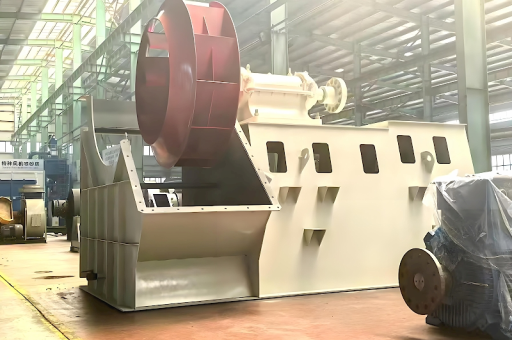
- Introduction: The Heartbeat of Industrial Combustion
- Understanding Coal Fired Boiler Ventilation Blowers
- The Engineering Behind Industrial High Heat Blowers
- Key Components and Design Considerations
- Performance Optimization and Energy Efficiency
- Maintenance Strategies for Longevity
- Frequently Asked Questions (FAQ)
- Conclusion: Future Trends and Best Practices
** The Critical Role of Coal Fired Boiler Ventilation Blowers: Engineering Industrial High Heat Blower Systems for Maximum Efficiency and Safety
Table of Contents
- Introduction: The Heartbeat of Industrial Combustion
- Understanding Coal Fired Boiler Ventilation Blowers
- The Engineering Behind Industrial High Heat Blowers
- Key Components and Design Considerations
- Performance Optimization and Energy Efficiency
- Maintenance Strategies for Longevity
- Frequently Asked Questions (FAQ)
- Conclusion: Future Trends and Best Practices
Introduction: The Heartbeat of Industrial Combustion
In the unforgiving environment of coal-fired power generation, the Coal Fired Boiler Ventilation Blowers serve as the unsung heroes of operational continuity. These are not ordinary fans; they are engineered for relentless performance under extreme thermal stress. These Industrial High Heat Blowers must deliver precise air volumes to sustain combustion, control furnace pressure, and prevent hazardous backdrafts.
Modern industrial facilities rely on robust ventilation systems to maximize thermal efficiency while meeting stringent emission standards. The strategic deployment of High Heat Blower systems directly impacts fuel consumption, boiler tube life, and overall plant safety. Without proper forced and induced draft systems, a coal-fired boiler cannot achieve the oxygen-rich environment necessary for complete carbon combustion.
Understanding Coal Fired Boiler Ventilation Blowers
A Coal Fired Boiler Ventilation Blower is a heavy-duty mechanical device designed to move large masses of air through combustion chambers, ducts, and flue gas pathways. These systems are classified into three primary functions:
- Forced Draft (FD) Fans: Pressurize ambient air and push it into the furnace to support coal ignition and flame stability.
- Induced Draft (ID) Fans: Extract hot flue gases from the boiler, creating negative pressure to ensure safe exhaust flow.
- Primary Air (PA) Fans: Deliver heated air to carry pulverized coal from the mill to the burner nozzles.
Each fan type must tolerate continuous exposure to fly ash, corrosive gases, and temperatures exceeding 350°C (662°F). A typical Industrial High Heat Blower uses specialized alloys and cooling mechanisms to prevent thermal deformation. According to industry data, improper fan selection can reduce boiler efficiency by up to 15%, leading to excess fuel consumption and higher emissions.
The Engineering Behind Industrial High Heat Blowers
The design of an Industrial High Heat Blower for coal-fired boilers revolves around three critical factors: air volume (CFM), static pressure (in. wg), and temperature tolerance. Engineers calculate required airflow based on stoichiometric combustion ratios—typically 9-12 kg of air per kg of coal.
Key engineering features include:
- Backward-curved centrifugal impellers: These provide high efficiency and reduce dust accumulation compared to forward-curved blades.
- Water-cooled bearing housings: Prevent lubricant breakdown in high-temperature zones above 200°C.
- Variable frequency drives (VFDs): Allow precise speed control to match boiler load variations, reducing power consumption by 20-30%.
A High Heat Blower must also pass rigorous vibration analysis and thermal expansion calculations. For instance, the shaft material often requires Inconel or stainless steel alloys to resist creep failure at sustained high temperatures. Without these design considerations, blade fatigue and unplanned downtime become inevitable.
Key Components and Design Considerations
Every Coal Fired Boiler Ventilation Blower consists of several high-stress components that demand specialized selection:
- Impeller: Typically fabricated from abrasion-resistant steel with wear liners. For extreme heat, dual-metal constructions combine a tough core with a corrosion-resistant coating.
- Housing: Often reinforced with stiffeners to withstand positive and negative pressures exceeding 60 inches water gauge.
- Shaft seals: Labyrinth or carbon ring seals prevent hot gas leakage into the bearing assembly.
- Cooling systems: Some Industrial High Heat Blowers incorporate integral air- or water-cooled shafts to dissipate conducted heat.
Design considerations must also include ductwork configuration. A poorly designed inlet duct causes turbulence that reduces fan efficiency by 10-15%. Computational Fluid Dynamics (CFD) modeling is now standard for optimizing velocity profiles and minimizing pressure losses.
Performance Optimization and Energy Efficiency
Optimizing a Coal Fired Boiler Ventilation Blower system can deliver substantial operational savings. Energy audits reveal that fan systems account for 25-35% of a coal plant’s auxiliary power consumption. Key improvement strategies include:
- Retrofit with high-efficiency impellers: Replacing old radial-blade designs with airfoil profiles can boost static efficiency from 72% to 85%.
- Implement automated damper control: Modulating inlet guide vanes reduces power draw during low-load conditions.
- Monitor pressure differentials: Real-time sensors detect duct blockages or damper drift, allowing immediate corrective adjustment.
One case study reported that upgrading High Heat Blower motors to IE4 premium efficiency models reduced annual energy costs by $120,000 for a 500 MW plant. Moreover, proper ventilation reduces unburned carbon in fly ash by 3-5%, improving ash marketing value.
Maintenance Strategies for Longevity
Preventive maintenance is non-negotiable for Coal Fired Boiler Ventilation Blowers. Industry best practices recommend:
- Weekly vibration analysis: Track bearing degradation and imbalance trends using ISO 10816-3 thresholds.
- Quarterly thermographic inspections: Identify hot spots on motor windings and bearing housings.
- Annual rotor reconditioning: Rebuild impellers with hard-facing alloys to extend service life beyond 50,000 operating hours.
A common failure mode is erosion of the impeller leading edge due to fly ash impingement. Solutions include applying ceramic tile coatings or installing sacrificial wear plates. For Industrial High Heat Blowers in older plants, upgrading to water-cooled radial bearings can reduce seal failures by 40%.
Frequently Asked Questions (FAQ)
Q1: What is the difference between a forced draft and induced draft blower in a coal-fired boiler? A: A forced draft blower pushes fresh ambient air into the furnace to support combustion, operating at positive pressure. An induced draft blower pulls hot flue gases out of the boiler through the exhaust stack, maintaining negative pressure inside the combustion chamber to prevent gas leakage.
Q2: How often should an Industrial High Heat Blower be inspected for wear? A: We recommend monthly visual inspections for signs of corrosion, erosion, or vibration changes. A comprehensive overhaul should be scheduled every 12-18 months, depending on ash content in coal and operating hours.
Q3: Can a Coal Fired Boiler Ventilation Blower be used for biomass co-firing applications? A: Yes, but modifications may be required. Biomass fuels produce more abrasive fly ash and higher moisture content, necessitating heavier impeller designs and more frequent cleaning cycles. Some operators install double-layer casing insulation to handle the wider temperature range.
Q4: What causes premature bearing failure in high heat blowers? A: Common causes include heat-induced grease degradation, misalignment due to thermal expansion, and inadequate cooling water flow. Using synthetic high-temperature grease and monitoring bearing temperature with RTD sensors can extend life by 300%.
Q5: How does duct design affect fan efficiency? A: Poor duct geometry creates recirculation zones and pressure drops that force the fan to work against itself. Optimal designs include long-radius elbows (3D or 5D), gradual transitions, and straight inlet runs of at least 4 duct diameters before the fan inlet.
Conclusion: Future Trends and Best Practices
The evolution of Coal Fired Boiler Ventilation Blowers continues as plants adopt advanced materials and smart monitoring. Digital twin technology now enables predictive modeling of Industrial High Heat Blower performance under varying load conditions. Meanwhile, hybrid ventilation strategies that combine conventional fans with wind turbine-assisted air handling are being explored to reduce carbon footprints, though wind turbine integration remains challenging in high-temperature retrofit applications.
For plant managers, the path forward is clear: invest in high-efficiency High Heat Blower designs, prioritize condition-based maintenance, and leverage data analytics to optimize airflow in real-time. By doing so, they will not only extend equipment life but also drive down operating costs while maintaining compliance with environmental regulations.
Whether you are retrofitting an existing boiler or specifying new equipment, understanding the interplay between coal combustion fluid dynamics and fan aerodynamics is essential. The Coal Fired Boiler Ventilation Blower remains a cornerstone of reliable power generation—demanding respect, rigorous engineering, and continuous improvement.





