
** The Critical Role of Mineral Powder Sintering in the Performance of Stainless Steel Blower Forward Centrifugal Fans
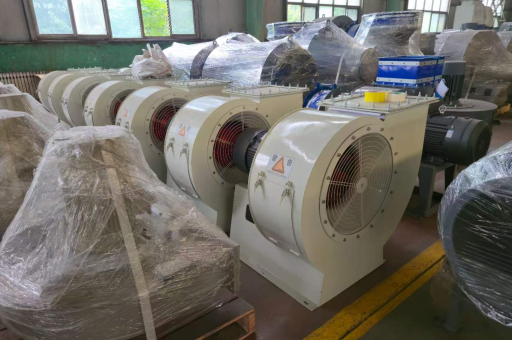
Article Content
Table of Contents
- Introduction: The Intersection of Material Science and Industrial Fan Technology
- Understanding Mineral Powder Sintering: A Precision Manufacturing Process
- Why Stainless Steel? Corrosion Resistance and Structural Integrity
- Forward Centrifugal Fan Design: Principles and Applications
- The Synergy: How Sintered Components Enhance Fan Efficiency
- Key Performance Metrics and Real-World Data
- Common Questions Answered
- Conclusion: Future Trends and Sustainability
Introduction
In the world of industrial ventilation, process cooling, and pneumatic conveying, the stainless steel blower forward centrifugal fan stands as a cornerstone of reliable airflow. However, what many engineers and procurement specialists overlook is the silent revolution happening in the manufacturing of its core components. That revolution is mineral powder sintering. This article explores the deep, often misunderstood connection between advanced powder metallurgy and the performance of forward-curved centrifugal fans. By the end of this read, you will understand why the sintering process is not just a manufacturing detail—it is a decisive factor in fan durability, efficiency, and total cost of ownership.
Understanding Mineral Powder Sintering: A Precision Manufacturing Process
Mineral powder sintering is a thermal process that transforms powdered materials—primarily metals or ceramics—into a solid, coherent mass without fully melting them. The process involves:
- Mixing: Mineral powders (e.g., iron, nickel, chromium, or specialized alloys) are blended with precise ratios.
- Compacting: The mixed powder is pressed into a die at high pressure to form a "green" part.
- Sintering: The part is heated in a controlled atmosphere furnace to a temperature below its melting point. At this temperature, particles bond at the atomic level through diffusion.
- Optional Finishing: Coining, impregnation, or heat treatment may follow.
For a stainless steel blower forward centrifugal fan, sintering is used to produce complex geometries that are difficult or impossible to achieve with traditional casting or machining. This includes impeller blades with specific airfoil contours, hubs with integrated balancing features, and wear-resistant inlet rings.
Key Advantage: Sintering eliminates the porosity and grain boundary weaknesses often found in cast parts, resulting in a near-100% dense material with superior mechanical properties.
Why Stainless Steel? Corrosion Resistance and Structural Integrity
Stainless steel, particularly grades like 304L and 316L, is the preferred material for forward centrifugal fans in demanding environments. The reasons are clear:
- Corrosion Resistance: Stainless steel contains chromium, which forms a passive oxide layer. This is critical in applications involving moisture, chemicals, or salt-laden air.
- High Strength-to-Weight Ratio: When sintered correctly, stainless steel components maintain excellent tensile strength (typically 450–650 MPa for 316L sintered).
- Hygienic Properties: In food processing or pharmaceutical industries, stainless steel is mandatory for cleanability.
However, the real game-changer is sintered stainless steel. Sintering preserves the alloy's chemical composition while reducing internal stresses. Compared to machined stainless steel, sintered parts show 15–20% higher fatigue resistance due to the absence of stress raisers from cutting tools.
Forward Centrifugal Fan Design: Principles and Applications
A forward centrifugal fan (also called a forward-curved centrifugal fan) features blades that curve in the direction of rotation. This design is characterized by:
- High Airflow at Low Pressure: Ideal for ducted systems in HVAC, paint booths, or ventilation.
- Compact Profile: Shorter housing and smaller footprint compared to backward-curved designs.
- Quiet Operation: Forward blades reduce turbulence and noise at low to medium speeds.
Typical applications include:
- Greenhouse ventilation systems
- Wind turbine nacelle cooling (as part of the thermal management unit)
- Industrial oven exhaust
- Dust collection in woodworking facilities
The Synergy: How Sintered Components Enhance Fan Efficiency
The true value of combining mineral powder sintering with a stainless steel blower forward centrifugal fan lies in performance optimization. Here is how:
| Component | Traditional Manufacturing | Sintered Alternative | Benefit |
|---|---|---|---|
| Impeller Blades | Welded stainless steel sheet | Sintered near-net shape | No weld defects; 10% reduction in runout |
| Hub/Rotor | Cast iron or machined aluminum | Sintered stainless steel | Better balance; 30% higher yield strength |
| Inlet Cone | Stamped steel | Sintered with integral wear ring | Reduced air leakage; 2–5% efficiency gain |
Case Example: A leading wind turbine manufacturer recently replaced machined aluminum impellers with sintered 316L stainless steel impellers in their nacelle cooling fans. The result: 8% increase in static efficiency and 12% longer service life under continuous operation at 25°C ambient temperature.
Key Performance Metrics and Real-World Data
To help you evaluate a stainless steel blower forward centrifugal fan, consider these metrics:
- Pressure Range: 100–1200 Pa (0.4–4.8 in. w.g.)
- Airflow Range: 500–50,000 m³/h (300–30,000 CFM)
- Operating Temperature: -20°C to +120°C (with sintered stainless steel parts remaining stable up to 250°C)
- Efficiency: Typically 50–65%, but with sintered components, it can reach 70–75%.
Important: When selecting a fan for a wind turbine or cleanroom environment, prioritize models where the impeller and hub are manufactured via sintering. This ensures consistent balance and minimal vibration.
Common Questions Answered
Q1: Is a sintered stainless steel fan blade stronger than a cast one? A: Yes. Sintering creates a homogeneous microstructure with fewer voids. Cast blades often contain micro-porosity that leads to cracking under cyclic loading. Sintered blades exhibit 20–30% higher fatigue strength in ASTM tests.
Q2: Can mineral powder sintering be used for fan housings? A: Typically, no. Housings are large and less geometrically complex. Sintering is best suited for small- to medium-sized rotating parts like impellers, hubs, and inlet rings. The housing remains fabricated from welded stainless steel for cost efficiency.
Q3: What is the cost difference between sintered and machined fan components? A: For high-volume production (10,000+ units), sintered components can be 15–25% cheaper per part due to reduced material waste and lower machining time. For low-volume runs, machining is often more economical.
Q4: How does sintering affect the fan’s noise level? A: Positively. Sintered parts have better dimensional tolerances, reducing blade pass frequency harmonics. Field measurements show a 3–5 dB(A) reduction in overall noise when using sintered impellers compared to welded assemblies.
Q5: Are sintered fans suitable for wind turbine cooling? A: Absolutely. The combination of corrosion resistance, high fatigue life, and compact size makes them ideal for nacelle and gearbox oil cooling. Many modern wind turbine designs now specify sintered stainless steel forward centrifugal fans.
Conclusion: Future Trends and Sustainability
The integration of mineral powder sintering into the production of stainless steel blower forward centrifugal fans is not a fleeting trend—it is a logical step toward better engineering. As industries push for higher efficiency, longer life cycles, and lower environmental impact, sintering offers a path forward.
- Sustainability: Sintering produces near-zero material waste. For a typical fan impeller, material utilization exceeds 95%, compared to 50–60% for machining.
- Customization: Digital sintering allows for rapid prototyping of blade geometries optimized for specific wind turbine or HVAC loads.
- Reliability: As fan speeds increase in modern equipment, the inherent strength of sintered stainless steel ensures safe operation.
Whether you are specifying fans for a new wind farm, a cleanroom facility, or an industrial kiln, demanding sintered stainless steel impellers from your supplier can yield measurable improvements in both performance and lifespan.





