
This article's table of contents introduction:
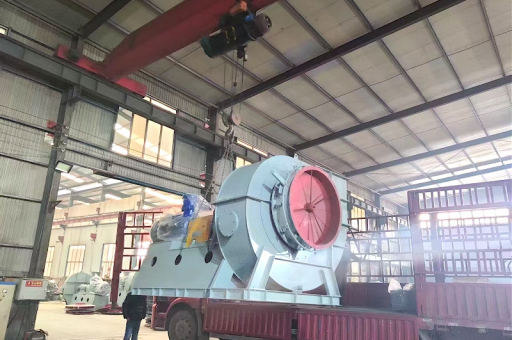
- What is a Forced Draft (FD) Fan?
- Typical Applications
- Key Specifications to Look For (When Ordering or Checking)
- Types of Three-Phase High Pressure Fans
- Important Features for "Forced Draught" Use
- Common Issues to Watch Out For
- Buying or Sourcing
This sounds like you are looking for information about a Forced Draft (FD) Fan, specifically a high-pressure, three-phase industrial air blower. This is a standard piece of equipment used in boilers, furnaces, and material handling systems.
Here is a breakdown of what this describes, its applications, and key specifications you should look for.
What is a Forced Draft (FD) Fan?
- Function: It pushes air into a system (like a boiler or furnace) to supply combustion air or create positive pressure. This is different from an ID (Induced Draft) fan which pulls air out.
- High Pressure: Standard ventilation fans move air, but "high pressure" fans are designed to overcome resistance from ductwork, filters, heat exchangers, or dense fuel beds (e.g., coal or biomass).
- Three Phase: Indicates the motor is three-phase (typically 380V, 415V, or 480V), which is required for industrial applications due to higher efficiency and torque compared to single-phase motors.
Typical Applications
- Boilers: Supplying combustion air for steam boilers or hot water generators.
- Pneumatic Conveying: Moving materials like pellets, sawdust, or grain through pipes.
- Drying Systems: Forced air in grain dryers, spray dryers, or textile dryers.
- Cement & Mining: Ventilation of kilns or crushing chambers.
- HVAC: High-static pressure systems in large commercial buildings.
Key Specifications to Look For (When Ordering or Checking)
| Specification | Description | Example |
|---|---|---|
| Airflow (CFM or m³/hr) | Volume of air moved. | 10,000 CFM or 17,000 m³/hr |
| Static Pressure (mmWC or Pa) | The resistance the fan must overcome. | 400 mmWC (approx. 4,000 Pa) |
| Motor Power (HP or kW) | Size of the three-phase motor. | 15 HP (11 kW) 415V 3 Phase |
| Impeller Type | Determines pressure and noise. | Forward Curved (high volume), Backward Inclined (high efficiency, non-clogging) |
| RPM | Fan speed (often belt-driven for adjustability). | 2900 RPM (direct drive) or 1450 RPM (belt drive) |
| Body Material | Corrosion resistance. | Mild Steel (standard), Stainless Steel (SS304/316), Aluminum |
| Inlet/Outlet Size | Ductwork connection dimensions. | 12" x 12" square or 16" round |
Types of Three-Phase High Pressure Fans
-
Centrifugal Forced Draft Fans (Most Common)
- Construction: Air enters axially and is discharged radially.
- Advantage: Can generate very high static pressure (up to 1,500+ mmWC).
- Sub-types:
- Backward Curved: Most efficient, handles dust better, lower noise.
- Forward Curved: Highest air volume for a given size, but less efficient.
-
Inline Mixed Flow Fans
- Construction: Air flows straight through (tube-axial), but the impeller is designed for higher pressure than standard axial fans.
- Advantage: Compact, can handle some pressure, but less than a centrifugal fan.
Important Features for "Forced Draught" Use
- Variable Speed Drive (VFD) Ready: Many industrial FD fans are controlled by a Variable Frequency Drive (VFD) to modulate air flow based on real-time demand (e.g., boiler load). Ensure the motor is inverter-duty rated.
- Bearing Quality: Heavy duty fans use pillow block bearings (SKF, NSK) designed for continuous operation.
- Vibration Monitoring: Often supplied with brackets for vibration sensors.
- Shaft Seal Prevents air leakage around the shaft where it exits the housing.
Common Issues to Watch Out For
- Overload: If the fan is running at a lower pressure than designed (e.g., dirty filter removed), the motor may draw too many amps and trip. Backward curved blades are "non-overloading" for this reason.
- Rust/Chemical Exposure: In a boiler room, FD fans draw in ambient air which may contain moisture or corrosive gases. SS304 or SS316 may be required.
- Balance: High pressure fans generate large centrifugal forces. Any imbalance will quickly destroy bearings.
Buying or Sourcing
When contacting a supplier, provide these details:
"I need a Forced Draft Centrifugal Fan for a boiler. Target: 50,000 m³/hr at 800 mmWC static pressure. Power source: 415V / 3 Phase / 50 Hz. Outlet angle: 0° (bottom horizontal). Impeller: Backward inclined."
Are you trying to:
- Find the best fan for a specific boiler/furnace size?
- Troubleshoot an existing fan that isn't delivering enough pressure?
- Select a correct motor for a fan you already have?





