
Article Title: Advanced Ventilation Solutions: The FBCDZ-8-No33 Coal Mine Exhaust Explosion-Proof Counter-Rotating Axial Flow Fan
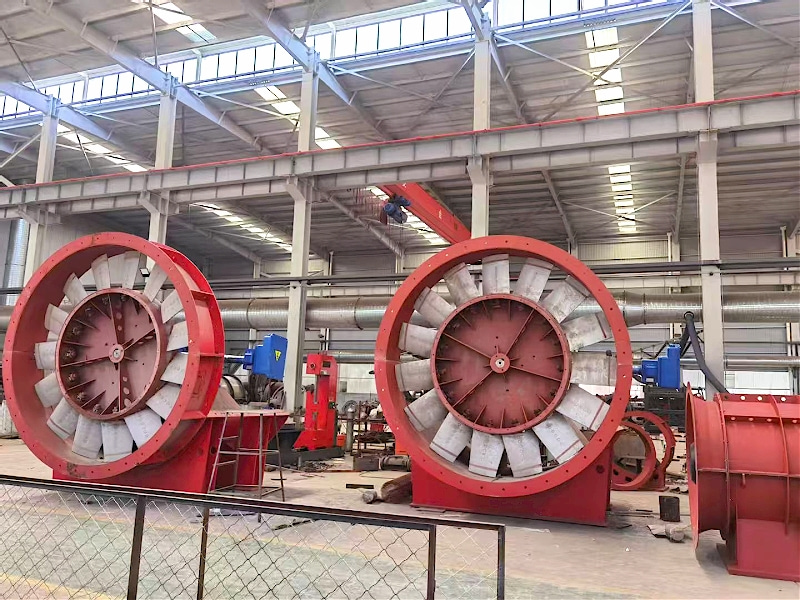
Table of Contents
Introduction to Mine Ventilation and Explosion-Proof Fans
What is the FBCDZ-8-No33? – Design and Technical Overview
Core Principles of Counter-Rotating Axial Flow Technology
Explosion-Proof Mechanisms: Safety in Hazardous Environments
Key Performance Parameters and Efficiency
Applications in Coal Mines and Industrial Wind Turbines
Installation, Maintenance, and Operational Best Practices
Frequently Asked Questions (FAQ)
Comparative Analysis: FBCDZ-8-No33 vs. Conventional Fans
Introduction to Mine Ventilation and Explosion-Proof Fans
Underground coal mining presents unique challenges for air circulation. Methane gas accumulation, dust, and toxic fumes demand robust ventilation systems. Traditional axial fans often fail under extreme conditions, especially when flammable gases are present. This is where the FBCDZ-8-No33 Coal Mine Exhaust Explosion-Proof Counter-Rotating Axial Flow Fan sets a new standard.
The design integrates:
Counter-rotating impellers for higher static pressure
Explosion-proof housing to prevent ignition of methane
High-efficiency blade profiles for reduced energy consumption
This article provides a deep technical dive into the FBCDZ-8-No33, connecting its features to real-world mining safety and even drawing parallels with modern wind turbine airflow optimization.
What is the FBCDZ-8-No33? – Design and Technical Overview
The FBCDZ-8-No33 is a specialized axial flow fan designed for mine exhaust systems. Its model number breaks down as follows:
F – Fan
B – Blast-proof (explosion-proof)
C – Counter-rotating
DZ – Direct-driven, low-speed type
8 – Design series
No33 – Impeller diameter in decimeters (i.e., 3.3 meters)
Core design features:
Two counter-rotating impellers mounted on a single shaft system
Stainless steel or aluminum alloy blades for spark resistance
Sealed motor chamber to prevent gas ingress
Acoustic insulation for noise reduction in sensitive areas
This fan is typically used as the main exhaust unit in underground coal mines, capable of moving large air volumes (up to 8,000–12,000 m³/min) against high system resistance.
Core Principles of Counter-Rotating Axial Flow Technology
Unlike single-rotor axial fans, the counter-rotating design uses two impellers rotating in opposite directions. This creates:
Higher pressure rise without increasing rotational speed
Lower tip speed noise compared to single-stage high-speed fans
Reduced axial thrust due to momentum cancellation
Improved stall margin under variable resistance conditions
The flow path is similar to a wind turbine in reverse: instead of capturing energy from wind, the fan imparts energy to air. The counter-rotating configuration mimics the efficiency gains seen in dual-rotor wind turbine designs, where two rotors extract more energy from the same air stream.
Performance curve behavior:
The FBCDZ-8-No33 maintains a steep pressure–flow curve, meaning large pressure fluctuations cause minimal flow drop – critical for maintaining safe ventilation during mine roof collapses or equipment blockages.
Explosion-Proof Mechanisms: Safety in Hazardous Environments
Explosion-proof design is not optional in coal mines. The FBCDZ-8-No33 incorporates:
a) Flameproof enclosure (Ex d)
The motor and electrical components are housed in a heavy-duty cast iron or steel enclosure that can withstand internal gas explosions without rupturing.
b) Spark-free impeller materials
Blades are made from non-sparking aluminum bronze or stainless steel to prevent frictional ignition.
c) Temperature monitoring
Embedded thermocouples detect overheating in bearings or windings, triggering automatic shutdown.
d) Anti-static seals
Shaft seals prevent dust and gas migration while dissipating static charges.
These features align with IEC 60079-1 and GB 3836.2 standards for mining equipment.
Key Performance Parameters and Efficiency
| Parameter | Value |
|---|---|
| Impeller diameter | 3 m (No33) |
| Airflow capacity | 8,000 – 12,000 m³/min |
| Static pressure | 3,500 – 5,500 Pa |
| Motor power | 2 × 250 kW (dual motors) |
| Efficiency | ≥ 82% at design point |
| Noise level | ≤ 85 dB(A) at 1 m |
The counter-rotating design allows the fan to achieve higher pressure per stage than comparable single-stage fans, reducing the number of units needed in a ventilation system.
Applications in Coal Mines and Industrial Wind Turbines
Primary application:
Main mine exhaust fans in underground coal mines
Auxiliary ventilation in gassy mining sections
Tunnel ventilation for high-risk environments
Parallel with wind turbine technology:
The blade aerodynamics and counter-rotation principles used in this fan share common ground with modern wind turbine designs. In fact, some dual-rotor wind turbine prototypes apply the same momentum theory to increase power capture. The FBCDZ-8-No33 demonstrates that counter-rotation can be equally effective for moving air in confined spaces as it is for generating power in open air.
Installation, Maintenance, and Operational Best Practices
Installation:
Foundation must absorb vibration; flexible joints recommended
Inlet and outlet ducting should be streamlined to avoid turbulence
Electrical connections must comply with explosion-proof wiring codes
Maintenance schedule:
| Interval | Task |
|---|---|
| Weekly | Check blade clearance, bearing temperature |
| Monthly | Inspect seals, anti-static brushes |
| Quarterly | Lubricate bearings, test flameproof enclosure |
| Annually | Full performance test, impeller balancing |
Operational tips:
Use variable frequency drives (VFDs) to match airflow to real-time gas levels
Always run fan at least 10 minutes after mining stops to purge residual gas
Monitor differential pressure across fan to detect clogged filters or duct blockages
Frequently Asked Questions (FAQ)
Q1: Why is counter-rotation better than single-rotation for mine fans?
A: Higher static pressure without increasing speed, better stall resistance, and lower noise. In mines where space is tight and resistance varies, counter-rotating fans maintain consistent airflow.
Q2: Can this fan be used in non-coal applications?
A: Yes – its explosion-proof rating makes it suitable for oil rigs, chemical plants, and any area with explosive gases. The high pressure also suits long tunnel ventilation.
Q3: How does it compare to a wind turbine in terms of blade design?
A: Both use airfoil sections optimized for lift and drag. The fan blades are thicker and more rigid for pressure generation, while wind turbine blades are longer and lighter for energy extraction. However, the aerodynamic principles—including tip speed ratio and pitch angle—are identical.
Q4: What maintenance is required for the explosion-proof housing?
A: The housing must be kept clean and free of corrosion; all bolts must be torqued to specifications. Any damage to the flameproof gaps must be repaired immediately.
Q5: Is the FBCDZ-8-No33 energy-efficient compared to centrifugal fans?
A: Yes – axial fans generally have higher flow rates for lower power input. The counter-rotating design further improves efficiency by eliminating guide vanes.
Comparative Analysis: FBCDZ-8-No33 vs. Conventional Fans
| Feature | Counter-rotating (FBCDZ-8-No33) | Single-stage axial | Centrifugal fan |
|---|---|---|---|
| Pressure capability | High | Medium | Very high |
| Flow rate | Very high | High | Medium |
| Explosion-proof | Yes (IEC Ex d) | Optional | Possible |
| Efficiency at high resistance | Excellent | Good | Fair |
| Noise level | Low (85 dB) | Medium (90 dB) | High (95 dB) |
| Footprint | Compact | Compact | Large |
The FBCDZ-8-No33 excels where both high flow and moderate-to-high pressure are required – exactly the conditions in deep, gassy coal mines.
Conclusion
The FBCDZ-8-No33 Coal Mine Exhaust Explosion-Proof Counter-Rotating Axial Flow Fan represents a pinnacle of mining safety engineering. Its counter-rotating impellers deliver superior performance under hazardous conditions, while the explosion-proof housing ensures operator safety. The technological overlap with wind turbine aerodynamics highlights how cross-industry innovations can solve critical ventilation challenges.
For mine operators prioritizing safety, efficiency, and reliability, the FBCDZ-8-No33 is a proven solution that meets the strictest international standards.





