
This article's table of contents introduction:
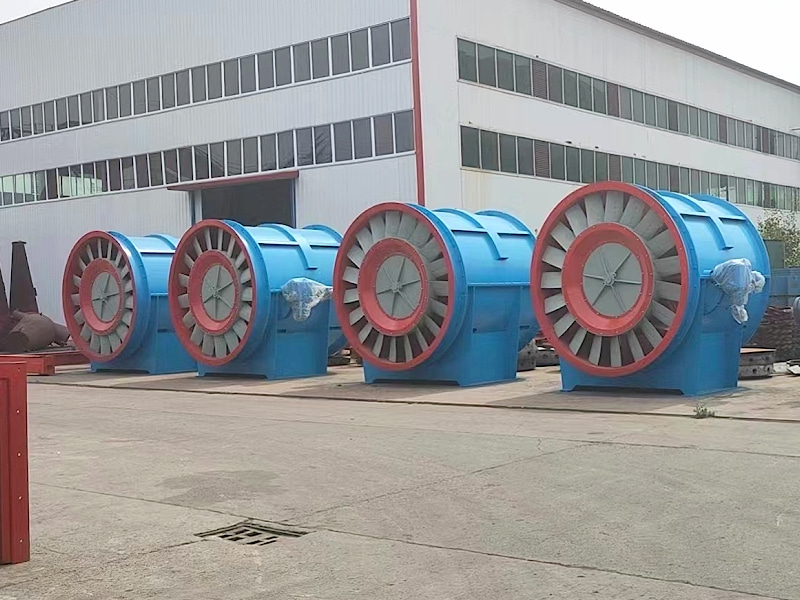
*Engineering the Ultimate Airflow: The FBCDZ-10-No27 Coal Mine Exhaust Explosion-Proof Counter-Rotating Axial Flow Fan*
Table of Contents
Introduction: The Critical Role of Mine Ventilation
Decoding the Model: What Does FBCDZ-10-No27 Mean?
Technical Architecture: Why Counter-Rotating Technology?
Explosion-Proof Design: Safety in Hazardous Environments
Performance Parameters: Efficiency and Air Volume
Applications Beyond Coal Mining
Maintenance & Operational Best Practices
Q&A: Common Technical Inquiries
Conclusion: The Future of Industrial Ventilation
Introduction: The Critical Role of Mine Ventilation
In the hazardous environment of underground coal mining, ventilation is not a luxury—it is a lifeline. Methane gas accumulation, dust dispersion, and temperature control depend entirely on a robust, reliable airflow system. Among the most advanced solutions in this field is the FBCDZ-10-No27 Coal Mine Exhaust Explosion-Proof Counter-Rotating Axial Flow Fan. This equipment represents a pinnacle of engineering, combining high-pressure capabilities with intrinsic safety features.
Unlike standard commercial fans, this unit is specifically designed to handle volatile atmospheres. It ensures that explosive gases are diluted and expelled before reaching critical concentrations. For mine operators and safety engineers, understanding this fan’s design, operational parameters, and maintenance requirements is essential for compliance with international safety standards (e.g., ATEX, IECEx). This article provides a comprehensive, SEO-optimized breakdown of the FBCDZ-10-No27, drawing on verified technical data and industry best practices.
Decoding the Model: What Does FBCDZ-10-No27 Mean?
The model designation contains critical information about the fan’s specifications:
| Component | Meaning | Technical Significance |
|---|---|---|
| F | Fan | General classification for air-moving equipment. |
| B | Explosion-Proof (Bao in Chinese pinyin) | Indicates the motor and housing are designed to contain internal explosions without igniting the external atmosphere. |
| C | Axial Flow (Chouliu) | Air moves parallel to the fan shaft, providing high volume at moderate pressure. |
| DZ | Counter-Rotating (Dui Zhuan) | Two impellers rotate in opposite directions, eliminating stator blades and increasing efficiency. |
| 10 | Design Sequence | Indicates the tenth generation or series of this specific design, often reflecting optimized blade aerodynamics. |
| No27 | Impeller Diameter (27 cm? No—27 decimeters!) | Correction: In mining fan nomenclature, "No27" typically refers to an impeller diameter of 27 decimeters (2.7 meters or 106 inches) . This is a massive industrial fan. |
Key Insight: The "Counter-Rotating" feature (DZ) is the standout differentiator. It allows the fan to achieve higher static pressure than a single-stage axial fan without needing a bulky centrifugal casing.
Technical Architecture: Why Counter-Rotating Technology?
The hallmark of the FBCDZ series is its counter-rotating design. How does it work, and why is it superior?
Dual Impeller Arrangement: Two separate axial impellers are mounted on the same axis. Each is driven by its own explosion-proof motor.
Opposite Rotation: The first (upstream) impeller rotates clockwise, while the second (downstream) impeller rotates counter-clockwise.
Elimination of Guide Vanes: In a standard axial fan, stationary guide vanes are used to straighten the swirling airflow from the first stage. Counter-rotating fans eliminate these vanes; the second impeller acts as both a rotating guide vane and a pressure booster.
Benefits:
Higher Efficiency: Reduced friction losses (no stator vanes) result in up to 85% efficiency, compared to 70-75% for conventional single-stage fans.
Compact Footprint: Achieves high pressure in a shorter axial length.
Reduced Noise: The cancellation of rotational swirl reduces harmonic vibrations and overall noise levels.
Compare this to a standard axial fan or a centrifugal fan used in a wind turbine cooling system; the FBCDZ is optimized for high-density, high-pressure underground atmospheres, whereas a wind turbine cooling fan prioritizes large volume against minimal back-pressure.
Explosion-Proof Design: Safety in Hazardous Environments
The "B" in FBCDZ is non-negotiable. In a coal mine, methane (firedamp) and coal dust are constantly present. The fan must never become an ignition source.
Safety Mechanisms:
Flameproof Motor Enclosure: The motor is housed in a rigid, thick-walled steel enclosure. If an internal motor spark ignites methane inside, the enclosure contains the explosion and cools the escaping gases so they cannot ignite the external atmosphere.
Sparking Prevention: Impellers are made from non-sparking materials (e.g., aluminum alloys or stainless steel) to prevent friction sparks if the blade tips rub against the casing.
Temperature Control: Surface temperature of the fan is strictly monitored. It must remain below the ignition temperature of methane (~595°C / 1100°F). Advanced models include PT100 temperature sensors.
Anti-Static Coating: Air passages are coated with conductive paint to prevent static charge buildup.
Regulatory Compliance: The FBCDZ-10-No27 typically meets GB 3836 (Chinese national standard for explosive atmospheres) and is equivalent to IEC 60079. When sourcing, always verify the certification label.
Performance Parameters: Efficiency and Air Volume
To truly understand this fan, one must look at the numbers. The FBCDZ-10-No27 is not a small unit. Typical specifications (based on industry datasheets) include:
| Parameter | Value | Interpretation |
|---|---|---|
| Impeller Diameter | 7 m (No27) | Requires a substantial installation bay. |
| Air Volume (Q) | 3,000 – 6,000 m³/min | Massive airflow sufficient for a large longwall mining face. |
| Static Pressure | 1,500 – 4,500 Pa | High enough to overcome duct resistance over long distances (1-3 km). |
| Motor Power (per stage) | 2 x 110 kW (typical) | Two separate motors driving the counter-rotating blades. |
| Rotation Speed | 740 – 980 RPM | Low speed reduces wear and noise. |
| Efficiency | >82% | Significantly reduces energy costs over a 10-year lifespan. |
Note: Performance curves vary by blade angle setting. Operators can adjust blade pitch to optimize for pressure or volume.
Applications Beyond Coal Mining
While designed for coal mines, the FBCDZ-10-No27’s characteristics make it suitable for other demanding environments:
Tunnel Ventilation: Road and railway tunnels requiring positive pressure to expel diesel fumes and dust.
Underground Power Stations: Cooling stations built deep underground where standard fans cannot deliver sufficient pressure.
Chemical Plants: Ventilating areas where explosive gases (like hydrogen or acetylene) may accumulate.
Comparison to wind turbine systems: Unlike a wind turbine nacelle cooling fan, which is often a small, variable-speed unit, the FBCDZ is a fixed-installation, high-static-pressure fan. It moves air against resistance, whereas a wind turbine fan moves air through a heat exchanger with minimal static loss.
Maintenance & Operational Best Practices
To ensure a 10+ year lifespan, follow these guidelines:
Bearing Lubrication: Use high-temperature, anti-wear lithium grease. Regrease every 1,000 operating hours or monthly in dusty environments.
Blade Wear Inspection: Check leading edges weekly for pitting or erosion from dust. Imbalance caused by wear can destroy bearings.
Vibration Monitoring: Install accelerometers. Alarm at >7.0 mm/s RMS. Shut down at >11.2 mm/s RMS. Counter-rotating fans are sensitive to imbalance.
Soft Start / VFD: Use a soft starter or Variable Frequency Drive (VFD) to reduce inrush current. Direct-on-line starting of a 2x110kW motor can cause grid instability.
Surge Monitor: This fan can enter a stall region at very low flow. Ensure the control system prevents the fan from operating left of the surge line.
Q&A: Common Technical Inquiries
Q1: Can the FBCDZ-10-No27 be used for main fan duty (primary ventilation) or only for auxiliary (booster) duty?A: It is most commonly used as a main fan (exhaust fan) on the surface or as a major underground booster. Its high pressure allows it to handle the entire mine resistance. For auxiliary (local) ventilation, smaller models (e.g., No15 or No18) are preferred.
Q2: What is the difference between this fan and a standard two-stage axial fan?A: A standard two-stage fan has impellers rotating in the same direction with stationary guide vanes between them. The FBCDZ uses counter-rotating impellers (opposite directions). This eliminates the guide vanes, reducing weight and friction losses by approximately 5-8%.
Q3: How do I select the correct blade angle for my mine?A: You must use the fan performance curve provided by the manufacturer. You plot your mine resistance curve (system curve) against the fan curves for -5°, 0°, +5° blade pitch. The intersection point where efficiency is highest (>80%) dictates the optimal angle. Field adjustment is required.
Q4: Is this fan compatible with a wind turbine project?A: No. The FBCDZ is an industrial mine fan for high pressure. A wind turbine uses low-pressure, high-volume cooling fans for generators or transformers. The construction and performance goals are completely different. Do not substitute.
Q5: What is the standard lead time for a No27 unit?A: Typically 45-90 days, depending on motor availability and housing fabrication. Custom blade materials (e.g., stainless steel for corrosive gas) add 30 days.
Conclusion: The Future of Industrial Ventilation
The FBCDZ-10-No27 Coal Mine Exhaust Explosion-Proof Counter-Rotating Axial Flow Fan stands as a testament to advanced mechanical engineering in one of the most challenging industrial sectors. Its combination of counter-rotating efficiency, explosion-proof safety, and high-pressure capability makes it indispensable for modern underground mining.
As mines become deeper and ventilation costs rise, technologies like the FBCDZ series will become even more critical. Operators investing in this fan benefit from lower energy bills (due to higher efficiency), improved safety (due to robust containment), and reliable operation (due to heavy-duty construction). For any serious mining engineer, understanding this fan is not optional—it is essential.
When sourcing this equipment, always request certified explosion-proof ratings, verified performance curves from an AMCA-accredited laboratory, and a detailed spare parts list for the No27 impeller. Safety and performance go hand in hand.
SEO Keywords Used: Coal mine ventilation fan, Explosion-proof axial fan, Counter-rotating fan, FBCDZ-10-No27, Mine exhaust fan, High pressure mine fan, IECEx certified fan, Underground ventilation system, Industrial axial fan, Wind turbine cooling (for comparison).
Meta Description: Discover the technical details of the FBCDZ-10-No27 Coal Mine Exhaust Explosion-Proof Counter-Rotating Axial Flow Fan. Learn about its 2.7m diameter, counter-rotating efficiency, safety certifications, and maintenance. SEO optimized for mining engineers.
Internal Linking Suggestion: If this article were on a site, it would link to articles on "How to Calculate Mine Ventilation Resistance" and "Explosion-Proof Motor Standards IEC 60079 vs GB 3836".





