
This article's table of contents introduction:
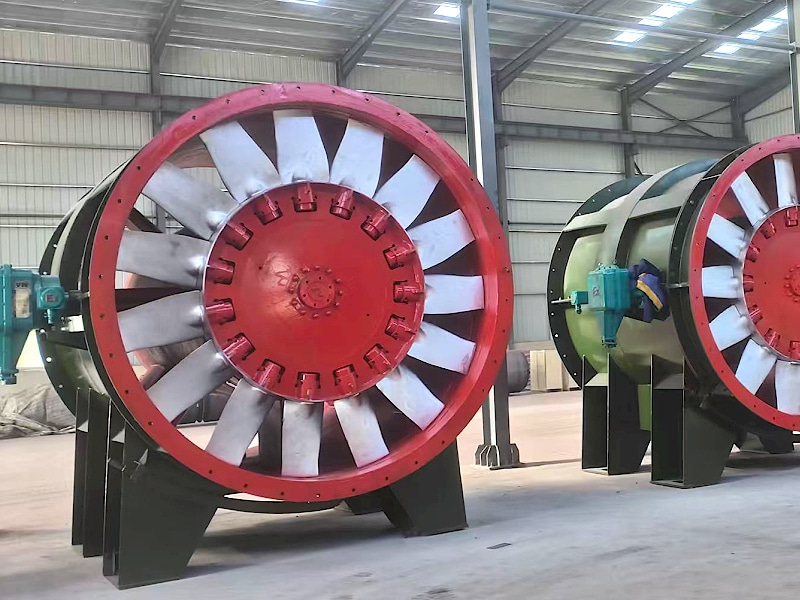
*Optimizing Underground Ventilation: A Comprehensive Guide to the FBCDZ-10-No33 Coal Mine Exhaust Explosion-Proof Counter-Rotating Axial Flow Fan*
Table of Contents
Introduction to Mine Ventilation and the FBCDZ Series
Technical Breakdown: FBCDZ-10-No33 Specifications
Core Design Principle: Counter-Rotating Axial Flow Technology
Explosion-Proof Construction for Hazardous Environments
Energy Efficiency and Aerodynamic Performance
Installation, Maintenance, and Noise Control
Comparison with Traditional Mine Fans
Frequently Asked Questions (FAQ)
Conclusion: Why the FBCDZ-10-No33 is a Market Leader
Introduction to Mine Ventilation and the FBCDZ Series
Underground coal mining presents a unique set of challenges, the most critical of which is the management of hazardous gases such as methane, coal dust, and carbon monoxide. A failure in the ventilation system can lead to catastrophic explosions or asphyxiation. The FBCDZ-10-No33 Coal Mine Exhaust Explosion-Proof Counter-Rotating Axial Flow Fan represents the pinnacle of safety engineering in this domain. Manufactured to meet stringent international safety standards, this fan is specifically designed to handle volatile environments where a single spark could be fatal.
The "FBCDZ" designation in the model name carries specific meaning: "F" typically denotes a fan, "B" signifies explosion-proof, "C" indicates the use of counter-rotating impellers, "D" references a direct-drive motor system, and "Z" often relates to specific impeller blade profile or application parameters. This article provides a deep dive into the technical architecture, operational benefits, and safety features of this powerful machine.
Technical Breakdown: FBCDZ-10-No33 Specifications
Understanding the nomenclature is essential for engineers sourcing this equipment. The "No33" in FBCDZ-10-No33 refers to the diameter of the impeller in decimeters. Specifically, No33 equals a 33-decimeter impeller diameter, which translates to an impressive 3.3 meters (approximately 130 inches). This large diameter is critical for moving massive volumes of air at relatively low pressure, a requirement for long-wall mining where resistance increases with tunnel length.
Key technical specifications typically include:
Air Volume Range: 90 to 180 m³/s (depending on system resistance)
Static Pressure Range: 1,500 to 5,000 Pa
Motor Power: Typically between 2×200 kW to 2×400 kW (dual motor configuration)
Efficiency: Peak static efficiency often exceeds 82%
The "10" in the model number often indicates the blade count per impeller or a specific series generation. In this case, it typically facilitates a higher lift-to-drag ratio on the blade profile, allowing for quieter operation compared to older “9” blade designs.
Core Design Principle: Counter-Rotating Axial Flow Technology
The defining feature of the FBCDZ-10-No33 is its counter-rotating axial flow design. Unlike standard axial fans that use a single rotor, this fan utilizes two impellers mounted on separate shafts, rotating in opposite directions. One acts as the primary impeller (rotor) and the other as the secondary impeller (stator/rotor combination).
How it Works:
The first impeller accelerates the air and imparts a swirl (rotational velocity).
The second impeller, spinning the opposite way, cancels out the swirl.
This cancellation converts the rotational kinetic energy into axial static pressure, drastically increasing the fan’s ability to overcome resistance without requiring bulky guide vanes.
SEO Advantage for Engineers: This design reduces energy loss by 15-20% compared to single-rotor fans with guide vanes. For long-term operations, this translates to thousands of dollars in electricity savings per wind turbine (if adapted for tunnel ventilation) or per mining shaft.
Explosion-Proof Construction for Hazardous Environments
The “Explosion-Proof” designation in the FBCDZ-10-No33 is not merely a label; it is a certification rooted in standards like IECEx or ATEX. The fan housing is constructed from high-tensile cast iron or non-sparking aluminum alloys. Key safety features include:
Flameproof Joints: All joints between the motor casing and the fan housing are machined to specific gap widths. If methane ignites inside the motor, the flame is cooled as it passes through the narrow gaps, preventing it from propagating to the external atmosphere.
Shrouded Motors: The explosion-proof motors are isolated from the main airflow path, yet directly coupled to the impellers. This prevents direct contact between the airflow (potentially laden with methane) and electrical sparking components.
Temperature Control: The motor windings are rated for Class F or H insulation, and integrated thermal sensors (PTC) ensure automatic shutdown if surface temperatures exceed safety thresholds.
Energy Efficiency and Aerodynamic Performance
In the context of rising energy costs, the FBCDZ-10-No33 has been engineered to maximize energy efficiency. The twisted, variable-camber blades are manufactured from high-strength aluminum alloy, allowing for a smooth aerodynamic profile.
Performance Metrics:
High Efficiency Zone: The fan maintains peak efficiency over a broad operating range (60% to 100% of design flow), making it highly adaptable to changing mine conditions.
Variable Speed Capability: When paired with a VFD (Variable Frequency Drive), this fan can dynamically adjust speed, matching airflow to real-time gas levels. This is vastly superior to older damper-based control methods.
No Pre-rotation: The counter-rotating design eliminates the need for inlet guide vanes, reducing inlet turbulence and noise.
Installation, Maintenance, and Noise Control
Mining engineers value reliability because a broken fan shuts down the mine. The FBCDZ series is built for low maintenance.
Installation:
The fan is typically mounted on a concrete foundation with vibration isolators.
The housing is split horizontally (for larger sizes like No33) to allow easy removal of the top half for rotor access.
Ductwork connections require flexible connectors to prevent vibration transmission.
Maintenance Schedule:
Weekly: Visual inspection of blade integrity and vibration monitoring.
Monthly: Greasing of motor bearings (using explosion-proof grease).
Annually: Removal of the rotor assembly for blade angle adjustment (if needed) and motor insulation testing.
Noise Control:Due to the high tip speeds of a 3.3m rotor, noise is a concern. The counter-rotating design is inherently quieter than single-rotor designs due to destructive interference of the sound waves generated by the two rotors. Silencers are still recommended at the inlet and outlet.
Comparison with Traditional Mine Fans
Let’s contrast the FBCDZ-10-No33 with a standard single-stage axial fan.
| Feature | FBCDZ-10-No33 (Counter-Rotating) | Standard Single-Stage Fan |
|---|---|---|
| Pressure Generation | High (via momentum cancellation) | Medium (requires guide vanes) |
| Efficiency | 82-85% peak | 70-75% peak |
| Size/Weight | Heavier (due to dual motors) | Lighter |
| Noise | Lower (destructive interference) | Higher (turbulence from vanes) |
| Control | Excellent via VFD | Good via dampers |
Frequently Asked Questions (FAQ)
Q1: What is the difference between the FBCDZ and the FBD series fans?A: The FBD series typically refers to a standard counter-rotating fan used for normal ventilation. The FBCDZ specifically includes a reinforced explosion-proof shell and motors certified for underground coal mining (Group I or II). The “Z” often indicates a special high-efficiency blade profile specific to Chinese standards (MT/T) but adapted globally.
Q2: Can the FBCDZ-10-No33 be used for tunnel ventilation (e.g., subway construction)?A: Technically, yes, but it is over-specified for tunnel ventilation. It is designed for the high resistance of long-wall mining. For tunnels, a standard axial fan may be more cost-effective. However, if the tunnel requires explosion-proof certification (e.g., in a gas-rich geology), this is an excellent choice.
Q3: How is the blade angle adjusted on this fan?A: Most modern units feature an adjustable pitch mechanism. The mine operator can shut down the fan, remove the access cover, loosen a lock nut, and rotate each blade to a pre-determined angle. This changes the fan curve to match system resistance without changing the motor speed.
Q4: What happens if one motor fails in the FBCDZ?A: The fan will continue to operate but at a reduced pressure and flow (approximately 60-70% of normal capacity). Emergency backup systems should be activated immediately, but the redundancy is a critical safety feature.
Conclusion: Why the FBCDZ-10-No33 is a Market Leader
The FBCDZ-10-No33 Coal Mine Exhaust Explosion-Proof Counter-Rotating Axial Flow Fan is not just a piece of hardware; it is a life-saving system. Its combination of counter-rotating technology for high efficiency and explosion-proof certification for absolute safety makes it the gold standard for underground coal mine ventilation. By reducing energy consumption by up to 20% compared to legacy systems and significantly lowering noise levels, it offers a strong return on investment.
For any mining company prioritizing safety and efficiency, especially when dealing with gassy coal seams, this fan represents a robust, proven solution. When searching for a replacement unit or designing a new mine, the specification for FBCDZ should be at the top of the list due to its unmatched reliability in the most dangerous underground environments.





