
The Ultimate Guide to 4-72-14D Centrifugal Fan: Performance, Applications, and Maintenance
Table of Contents
- Introduction to the 4-72-14D Centrifugal Fan
- Key Specifications and Design Features
- Operating Principle and Performance Curve
- Common Applications and Industries
- Installation and Safety Considerations
- Maintenance and Troubleshooting Tips
- Frequently Asked Questions (FAQ)
- Conclusion: Why Choose the 4-72-14D
Introduction to the 4-72-14D Centrifugal Fan
The 4-72-14D centrifugal fan is an industrial-grade air-moving device widely recognized for its robust construction, high efficiency, and versatility in handling moderate to large volumes of air at moderate static pressures. Fan manufacturers and engineers often specify this model when a balance between airflow, noise control, and energy consumption is required. The “4-72” design series is a standard in HVAC, dust collection, and general ventilation systems across factories, warehouses, and commercial facilities.
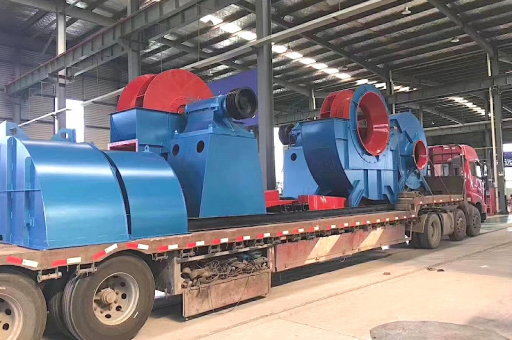
This specific variant, the 14D, denotes a 14-inch diameter impeller and a direct-drive configuration (D), meaning the fan wheel is mounted directly on the motor shaft without pulleys or belts. This eliminates belt slippage, reduces maintenance, and ensures consistent speed under variable load conditions. The 4-72-14D is commonly powered by standard three-phase induction motors, typically operating at 1750 or 3490 RPM depending on the application.
Why does this fan matter? As industries push for energy efficiency and reliability, the 4-72-14D delivers a proven solution for continuous-duty operations. In this article, we will dissect its technical specifications, operating principles, installation requirements, maintenance best practices, and answer the most common questions engineers and facility managers ask.
Key Specifications and Design Features
Impeller Design
The 4-72-14D features a forward-curved centrifugal impeller made from heavy-gauge steel or optional stainless steel for corrosive environments. The forward-curved blades (also called “squirrel cage” design) generate moderate pressure while moving large volumes of air. The 14-inch diameter wheel provides an airflow capacity ranging from approximately 2,000 to 4,000 CFM (cubic feet per minute), depending on the motor speed and system resistance.
Direct Drive (D Configuration)
Unlike belt-driven fans, the direct-drive 4-72-14D provides:
- Zero slip: Motor speed equals fan speed.
- Reduced component wear: No belts or pulleys to replace.
- Lower noise level: Fewer moving parts.
- Simpler alignment: No need for belt tension adjustments.
Motor Specifications
Most 4-72-14D units come with a TEFC (Totally Enclosed Fan Cooled) motor rated 1 to 3 horsepower, single-phase or three-phase (three-phase recommended for industrial use). The motor enclosure protects against dust, moisture, and debris, making it suitable for indoor and sheltered outdoor installations.
Casing and Inlet Ring
The fan housing is constructed from welded steel plate with a spun inlet ring to ensure smooth air entry and minimize turbulence. The scroll design gradually accelerates the air, converting kinetic energy into static pressure. A standard inlet guard prevents accidental contact with the rotating impeller.
Performance Table (Typical)
| Motor RPM | Static Pressure (in. w.g.) | Airflow (CFM) |
|---|---|---|
| 1750 | 5 | 3,500 |
| 1750 | 0 | 3,100 |
| 1750 | 5 | 2,600 |
| 3490 | 0 | 4,200 |
| 3490 | 0 | 3,400 |
These values are approximate and vary by exact configuration and installation conditions.
Operating Principle and Performance Curve
How a Centrifugal Fan Works
Air enters the fan axially through the inlet and is captured by the rotating impeller. Centrifugal force throws the air outward into the scroll casing, where the increasing cross-sectional area converts velocity energy into static pressure. The 4-72-14D’s forward-curved blades produce a high flow coefficient, meaning at low static pressures, it can move large air volumes efficiently.
Performance Curve Analysis
The fan’s performance curve plots airflow (CFM) against static pressure (in. w.g.). The 4-72-14D exhibits a relatively flat curve at low pressure and a steep drop as pressure increases. This behavior is ideal for systems with varying duct lengths or filters that accumulate dirt over time.
Key takeaway: For optimal efficiency, operate the 4-72-14D near its best efficiency point (BEP), typically around 1.0 to 1.5 in. w.g. static pressure. Operating too far left (high pressure) can cause motor overload, while operating far right (low pressure) wastes energy.
Common Applications and Industries
The 4-72-14D centrifugal fan is a workhorse in environments requiring continuous, reliable ventilation. Common applications include:
- HVAC systems: General building ventilation, exhaust, and make-up air in commercial facilities.
- Dust collection: Fume extraction and particulate capture in woodworking, welding, and chemical processing.
- Agriculture: Ventilation in livestock housing, greenhouses, and grain drying.
- Manufacturing: Cooling of machinery, motor-generator sets, and assembly lines.
- Clean rooms: Moderate airflow for filtered rooms (with HEPA filter systems).
- Spray booths: Paint and coating exhaust where flammable vapor control is critical (when constructed with explosion-proof motors).
Case example: A mid-sized woodworking shop installed a 4-72-14D to replace an aging belt-driven fan. The direct-drive design reduced maintenance downtime by 30% and lowered noise levels by 4 dB, improving worker comfort.
Installation and Safety Considerations
Mounting
The fan can be mounted in horizontal or vertical orientation. For horizontal discharge, ensure the outlet is unobstructed. Vertical mount requires a rain hood for outdoor use. The fan base must be bolted to a vibration-absorbing pad or concrete foundation.
Ductwork
- Inlet duct: Keep straight, unobstructed inlet runs (at least 2 duct diameters) to avoid turbulence.
- Outlet duct: Use smooth transitions and gradual elbows to minimize pressure loss.
- Filters: If adding filters, place them downstream to protect the impeller.
Electrical Connections
- Verify voltage and phase match motor nameplate.
- Use a proper disconnect switch and fuses sized to motor full-load amps.
- Ground all metal parts per local codes.
Safety Guards
Always install:
- Inlet and outlet guards (provided with unit).
- A lockout/tagout system during maintenance.
Maintenance and Troubleshooting Tips
Regular Maintenance Schedule
| Interval | Task |
|---|---|
| Weekly | Listen for abnormal noise or vibration. Inspect inlet guard. |
| Monthly | Check motor amperage to ensure it’s below nameplate rating. |
| Quarterly | Clean impeller blades and housing. Inspect motor bearings. |
| Annually | Lubricate motor bearings (if applicable). Check electrical connections for corrosion. |
Common Troubleshooting
Problem: Excessive vibration
- Cause: Unbalanced impeller due to dust buildup or blade damage.
- Solution: Clean impeller with compressed air or a brush. Replace if blades are bent.
Problem: Motor overheating
- Cause: Overloaded motor (too high static pressure) or blocked inlet/outlet.
- Solution: Measure static pressure and compare with fan curve. Remove obstructions.
Problem: Low airflow
- Cause: Dirty filters, duct leaks, or incorrect motor speed.
- Solution: Inspect and clean filters. Seal duct joints. Verify motor RPM with a tachometer.
Problem: Noise increase
- Cause: Worn bearings or loose mounting bolts.
- Solution: Tighten bolts. Replace bearings if necessary.
Frequently Asked Questions (FAQ)
Q1: Can the 4-72-14D be used for outdoor applications? Yes, but you must install a weatherproof cover over the motor and inlet. The standard steel housing is corrosion-resistant indoors but will require a protective coating (e.g., epoxy paint or galvanized finish) for outdoor exposure.
Q2: What is the maximum ambient temperature this fan can handle? Standard motor insulation is Class F (155°C). The fan itself can operate in air temperatures up to 140°F (60°C) continuously. For higher temperatures, request special high-temperature motors and impellers.
Q3: How do I select the correct motor horsepower for my system? Use the fan performance curve. If your system requires 3,000 CFM at 1.2 in. w.g., the brake horsepower (BHP) might be around 1.5 HP. Choose a motor with a service factor of at least 1.15. Consult a fan manufacturer for precise sizing.
Q4: Can I convert a direct-drive to a belt-drive? No, the 4-72-14D housing is not drilled for belt-drive mounting. If you need variable speed later, use a VFD (Variable Frequency Drive) on the direct-drive motor instead.
Q5: What maintenance is required for a direct-drive fan? Much less than belt-driven. Primarily check motor bearing lubrication (if sealed), clean impeller quarterly, and verify motor current annually.
Q6: Is this fan explosion-proof? Standard models are not. If used in flammable environments (e.g., paint booths, grain dust), you must specify an explosion-proof motor and non-sparking impeller (aluminum or stainless steel). Always consult safety standards (NFPA 70, OSHA).
Conclusion: Why Choose the 4-72-14D
The 4-72-14D centrifugal fan stands out for its simplicity, reliability, and predictable performance in moderate-pressure ventilation applications. Its direct-drive design eliminates belt maintenance while the forward-curved impeller handles large air volumes without excessive noise. For facility managers and engineers seeking a low-maintenance, cost-effective solution for continuous ventilation, dust extraction, or HVAC needs, this fan remains a top recommendation.
Whether you are retrofitting an aging system or designing a new facility, understanding the specifications, installation requirements, and troubleshooting steps outlined here will help you maximize the lifespan and efficiency of your 4-72-14D. Visit your local fan supplier or check technical brochures at fan for detailed performance curves and customized configurations.
Always consult the manufacturer’s manual and local codes before installation or modification.





