
This article's table of contents introduction:
- Table of Contents
- Introduction: The Role of Large Coal Fired Boiler Fans
- Types of Boiler Fans in Thermal Power Plants
- Key Performance Factors for Boiler Fan Systems
- Common Challenges and Failure Modes
- Best Practices for Maintenance and Reliability
- Energy Efficiency and Modernization Strategies
- Frequently Asked Questions (FAQ)
- Conclusion
Optimizing Large Coal Fired Boiler Fans in Thermal Power Plants: Efficiency, Maintenance, and Reliability
Table of Contents
- Introduction: The Role of Large Coal Fired Boiler Fans
- Types of Boiler Fans in Thermal Power Plants
- 1 Forced Draft (FD) Fans
- 2 Induced Draft (ID) Fans
- 3 Primary Air (PA) Fans
- Key Performance Factors for Boiler Fan Systems
- Common Challenges and Failure Modes
- Best Practices for Maintenance and Reliability
- Energy Efficiency and Modernization Strategies
- Frequently Asked Questions (FAQ)
- Conclusion
Introduction: The Role of Large Coal Fired Boiler Fans
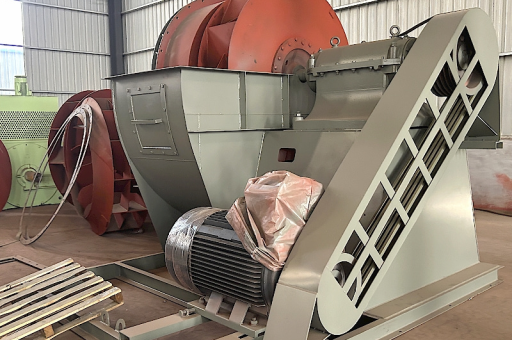
In a thermal power plant, the combustion process inside a large coal fired boiler depends critically on a steady and controlled supply of air. Large coal fired boiler fans are the primary mechanical equipment that deliver combustion air and remove flue gases from the boiler. Without these fans, the boiler cannot achieve proper fuel combustion, heat transfer, or emission control. In a typical 500–1000 MW coal plant, these fans consume between 1.5% and 3% of the total plant auxiliary power. Therefore, optimizing their performance directly reduces operating costs, improves plant availability, and enhances environmental compliance. This article provides a comprehensive guide to the types, functions, operational challenges, and best practices for managing large coal fired boiler fans in thermal power plants.
Types of Boiler Fans in Thermal Power Plants
1 Forced Draft (FD) Fans
FD fans supply ambient air to the boiler’s air preheater and then to the burner system. They operate under positive pressure on the air side. In large coal fired units, FD fans are typically centrifugal or axial flow designs. A single fan failure can reduce boiler load by up to 50%, so redundancy is common. Modern FD fans use variable frequency drives (VFDs) to match air flow precisely to load demand, reducing energy waste.
2 Induced Draft (ID) Fans
ID fans pull flue gas from the boiler through the air preheater, electrostatic precipitator (ESP), and flue gas desulfurization (FGD) system, then discharge it to the stack. These fans must handle hot, corrosive, and dust-laden gases. In large coal plants, ID fans are often centrifugal with backward-curved blades to handle high flow and pressure. Severe blade erosion and unbalanced rotors are frequent issues unless advanced protection systems are installed.
3 Primary Air (PA) Fans
PA fans provide air to transport and dry pulverized coal from the mill to the burner. They operate at higher pressure than FD fans but at lower flow. PA fan reliability is directly linked to mill performance and combustion stability. A PA fan trip can cause immediate flame instability, requiring rapid load reduction or burner management intervention.
Key Performance Factors for Boiler Fan Systems
- Flow and Pressure Matching – Fans must operate at the system resistance curve. Off-design operation reduces efficiency significantly.
- Vibration and Bearing Health – Excessive vibration from erosion debris, misalignment, or bearing wear accounts for over 40% of unscheduled fan outages.
- Temperature and Corrosion Resistance – ID fans often operate at gas temperatures above 150°C and face sulfuric acid condensation in the cold-end segments.
- Aerodynamic Stability – Stall or surge events can cause catastrophic damage to axial fans, especially during rapid load changes.
Common Challenges and Failure Modes
- Blade erosion – Dust particles in flue gas accelerate ID fan blade wear. This is most severe in plants with low ESP efficiency or bypass conditions.
- Shaft and bearing fatigue – Large rotating masses (up to 20 tons) impose extreme cyclic loads. Bearing failures lead to long repair downtimes.
- Misalignment and foundation issues – Boiler expansion and thermal cycle cause foundation creep, altering fan alignment.
- Variable load wear – Frequent load cycling in modern grids increases wear on fan motors and drives compared to base-load operation.
Best Practices for Maintenance and Reliability
- Predictive maintenance – Use vibration analysis, thermography, and oil analysis to detect incipient bearing or gearbox failures.
- Inlet guide vane (IGV) control upgrade – Replace outdated damper control with IGV or VFD for precise air flow regulation, reducing energy consumption by 10–20%.
- Erosion protection – Install ceramic or tungsten carbide coatings on ID fan blades, and use wear-resistant liners in critical inlet zones.
- Redundancy planning – Maintain proper standby fan auto-start logic to avoid boiler trip in the event of a fan failure.
- Periodic alignment checking – After every major outage or boiler expansion modification, verify shaft and coupling alignment with laser alignment tools.
Energy Efficiency and Modernization Strategies
Replacing old dampers with modern variable speed drives (VFDs) on FD and ID fans can reduce motor power consumption by 15–25%, offering payback periods of 1–2 years in many plants. Also, installing automated inlet guide vanes (IGVs) on centrifugal fans eliminates unnecessary resistance. In addition, optimizing ductwork geometry reduces pressure drop across the fan system, further lowering energy demand. For large coal fired boiler fans, retrofitting an advanced control algorithm that coordinates fan speed with furnace draft can maintain stable combustion while minimizing auxiliary power usage.
Frequently Asked Questions (FAQ)
Q1: What is the main difference between FD and ID fans in a thermal power plant?
A: FD fans supply combustion air to the boiler under positive pressure, while ID fans extract flue gases from the boiler, maintaining a slight negative furnace pressure for safety.
Q2: Why is variable speed drive (VFD) more efficient than dampers for boiler fan control?
A: Dampers control flow by adding resistance, wasting energy. VFDs match motor speed to the required flow, eliminating resistance losses and reducing power consumption significantly.
Q3: How often should large boiler fans be inspected?
A: Critical fans (FD, ID, PA) should have daily vibration and temperature checks, weekly oil sampling on large bearing systems, and major overhaul inspections every 2–3 years or after 10,000–15,000 operating hours.
Q4: Can a single ID fan trip cause a boiler stoppage?
A: Yes, if the remaining ID fan cannot handle 100% boiler flow. Most large plants are designed with one 100% standby ID fan, allowing safe load reduction without shutdown.
Q5: What are the most common parts to fail in large boiler fans?
A: Bearings, shaft seals, blade tips, and inlet vanes are most failure-prone. Bearing failures account for roughly 50% of forced outages.
Conclusion
Large coal fired boiler fans are indispensable assets in thermal power plants. Their reliability, efficiency, and maintenance strategies directly affect boiler availability, plant operating costs, and emission control. By understanding the specific roles of FD, ID, and PA fans, addressing common failure modes such as erosion and bearing fatigue, and adopting modern retrofits like VFDs and predictive maintenance tools, plant operators can significantly improve overall performance. As coal plants continue to operate in an increasingly flexible and cost-competitive grid environment, optimizing these fan systems is not just beneficial—it is essential for safe and profitable power generation.





