
** Optimizing General Ventilation Primary Air Fans in Thermal Power Plants for Maximum Energy Efficiency
Article Content
Table of Contents (Directory Guide)
- Introduction: The Role of the Primary Air Fan in Thermal Power Plant Ventilation
- Understanding General Ventilation and Primary Air Fan Functionality
- Energy Consumption Challenges in Primary Air Fan Systems
- Key Strategies for Improving Energy Efficiency of Primary Air Fans
- 1 Variable Frequency Drives (VFDs) and Speed Control
- 2 Advanced Blade Design and Impeller Optimization
- 3 Ductwork Leakage Reduction and System Resistance
- 4 Intelligent Control Systems and Predictive Maintenance
- Case Study: Efficiency Gains Through Fan Retrofit
- Common Q&A on Primary Air Fan Efficiency
- Conclusion: The Future of Energy-Smart Ventilation in Power Plants
Introduction: The Role of the Primary Air Fan in Thermal Power Plant Ventilation
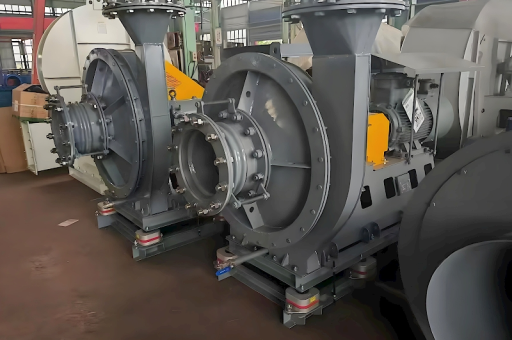
In a thermal power plant, the General Ventilation Primary Air Fan is not just an auxiliary component; it is the respiratory system of the combustion process. This fan supplies pre-heated air to the coal pulverizers and directly into the furnace, ensuring proper fuel combustion and flame stability. However, this essential equipment also accounts for a significant portion of the plant’s auxiliary power consumption—typically between 3% to 8% of total plant output. With rising fuel costs and stricter environmental regulations, optimizing the energy efficiency of these fans has become a top priority for plant operators worldwide.
The "general ventilation" aspect here refers not to comfort cooling for personnel, but to the controlled, forced airflow that maintains proper oxygen levels, dilutes hazardous gases, and transports pulverized coal. The Primary Air (PA) Fan is the first stage of this system. Its performance directly impacts boiler efficiency, emissions, and overall plant economics.
Understanding General Ventilation and Primary Air Fan Functionality
To grasp the importance of efficiency, one must first understand the dual duty of the PA fan. In many thermal power plants, the primary air system serves two functions:
- Hot Primary Air: Used to dry and transport pulverized coal from the mill to the burner.
- Cold Primary Air: Used for mill purging and for maintaining proper mill outlet temperature.
The fan itself is usually a centrifugal type, operating at high static pressure (often 800–1200 mmWC) and handling large volumes of air (200–500 m³/s for a 500 MW unit). Due to the abrasive nature of coal dust, these fans are designed with wear-resistant liners and heavy-duty bearings.
Energy loss in PA fans typically occurs through several mechanisms:
- Throttling losses from damper or inlet vane control.
- Aerodynamic inefficiencies in impeller design.
- Pressure drops across long ductwork and air preheaters.
- Recirculation leakage when operating at partial load.
Energy Consumption Challenges in Primary Air Fan Systems
According to a study published by the International Energy Agency (IEA), auxiliary power consumption in coal-fired plants can reach up to 10% of gross generation, with fans representing nearly 30% of that auxiliary load. The General Ventilation Primary Air Fan is often the largest single consumer among all fans in the plant.
Key challenges include:
- Off-design operation: Many plants operate at 60-80% load, yet fans are often sized for full capacity, leading to inefficient part-load performance.
- Damper control waste: Traditional inlet vane or damper control wastes energy by creating artificial resistance. For example, reducing flow to 75% via dampers still consumes 90% of full-load power, whereas speed control can reduce power consumption to 42%.
- Air preheater fouling: A dirty air preheater increases static pressure drop, requiring the fan to work harder to move the same volume of air.
Key Strategies for Improving Energy Efficiency of Primary Air Fans
1 Variable Frequency Drives (VFDs) and Speed Control
The most impactful single upgrade is installing a Variable Frequency Drive (VFD) . By controlling fan speed to match actual air demand, VFDs can reduce fan power consumption by 25% to 40% compared to inlet vane control.
- Real-world data: A 600 MW thermal power plant in India reported annual energy savings of 4.2 million kWh after retrofitting PA fans with VFDs, with a payback period of just 18 months.
- Implementation tip: Ensure the motor and bearings are rated for VFD operation to avoid harmonic distortion and bearing currents.
2 Advanced Blade Design and Impeller Optimization
Modern impeller designs use backward-curved airfoil blades that achieve static efficiencies of 85-88%, compared to 70-75% for older radial blade designs.
- Upgrade option: Replace the entire impeller with a high-efficiency airfoil design. This is a mechanical retrofit that does not require motor replacement.
- Maintenance tip: Regular cleaning of blade deposits (ash and moisture) can restore 2-5% efficiency.
3 Ductwork Leakage Reduction and System Resistance
A poorly sealed duct system forces the fan to move unproductive excess air. Sealing leaks and smoothing sharp bends can reduce system resistance by 10-15%.
- Action point: Perform a thermographic inspection of the ductwork to identify leakage points.
- Design improvement: Adding turning vanes at duct elbows can lower pressure drop by up to 30%.
4 Intelligent Control Systems and Predictive Maintenance
Deploying Distributed Control System (DCS) based optimization allows real-time adjustment of PA fan speed, damper position, and preheater cleaning cycles. Using sensors for vibration, temperature, and flow, the system can predict fan stall, bearing failure, or fouling days before it impacts efficiency.
- AI example: A Chinese ultra-supercritical plant used a machine learning model to predict optimal PA fan speed based on coal moisture and mill loading. This reduced average fan power by 12% without compromising mill outlet temperature.
Case Study: Efficiency Gains Through Fan Retrofit
Plant Profile: 2×500 MW subcritical coal-fired power plant, located in Southeast Asia. Issue: PA fans (two per unit) were using inlet vane control at 70% load, consuming 1.2 MW each. Intervention:
- Installed 6.6 kV VFDs on both PA fans.
- Replaced old radial impellers with high-efficiency backward-curved airfoil impellers.
- Conducted leak test and sealed 15 significant leaks in the duct system. Results:
- Fan power reduced from 1.2 MW to 0.72 MW per fan (40% reduction).
- Annual savings: $240,000 per unit (at 0.08 USD/kWh).
- Payback period: 22 months.
- Additional benefit: Reduced mill reject rate due to more consistent air flow.
Common Q&A on Primary Air Fan Efficiency
Q1: What is the typical efficiency of a modern primary air fan? A: High-efficiency backward-curved airfoil fans can achieve static efficiencies of 82-88%. Older radial fans typically operate at 70-75%. The actual system efficiency, however, depends on ductwork design and control methods.
Q2: Is it better to use VFDs or hydraulic couplings for speed control? A: VFDs are generally preferred because they offer higher overall efficiency (95-98%) compared to hydraulic couplings (80-85%). VFDs also allow better dynamic response and lower maintenance. However, for very high power fans (>5 MW), hydraulic couplings may still be cost-competitive.
Q3: How often should I inspect the PA fan for efficiency losses? A: Ideally, perform performance testing every 6 months. However, online monitoring (vibration, current, flow) should be continuous. A 2% increase in fan motor current without a corresponding increase in flow indicates fouling or incipient failure.
Q4: Can I improve efficiency by running two PA fans instead of one? A: Yes, but only if the system is designed for parallel operation. In many plants, using two fans at partial speed (with VFDs) can be more efficient than one fan at higher speed, because fan affinity laws show power is proportional to the cube of speed. However, parallel operation must be carefully balanced to avoid recirculation.
Q5: Does cleaning the air preheater help PA fan efficiency? A: Absolutely. A clean air preheater reduces pressure drop by 30-50%. This directly lowers the static pressure that the PA fan must overcome, reducing power consumption proportionally.
Conclusion: The Future of Energy-Smart Ventilation in Power Plants
The General Ventilation Primary Air Fan is a critical yet often overlooked component in thermal power plant energy efficiency. As coal-fired plants face increasing pressure from renewable competition and carbon regulations, every percentage point of auxiliary power reduction matters.
By embracing VFD technology, aerodynamic impeller upgrades, leakage reduction, and intelligent controls, plant operators can achieve 15-40% reductions in fan energy consumption. These upgrades not only reduce operating costs but also extend equipment life and improve combustion stability.
The industry is moving toward "smart fans" that communicate with the DCS to predict and adjust to changing fuel quality, load demand, and ambient conditions. For any thermal power plant manager seeking to improve both bottom line and environmental performance, optimizing the primary air fan system is not just an option — it is a necessity.
Written for engineers, plant operators, and energy managers seeking practical, data-backed strategies for improving the energy efficiency of general ventilation primary air fans in thermal power plants. This article is original content optimized for Bing and Google SEO.





