
This article's table of contents introduction:
- What the Name Means (Deconstructed)
- Key Features & Advantages of Backward Curved (Backward Inclined) Blades
- Why Choose Stainless Steel (SS304/SS316)?
- Typical Applications
- Potential Drawbacks (Compared to other types)
- Summary Comparison
- How to Specify One
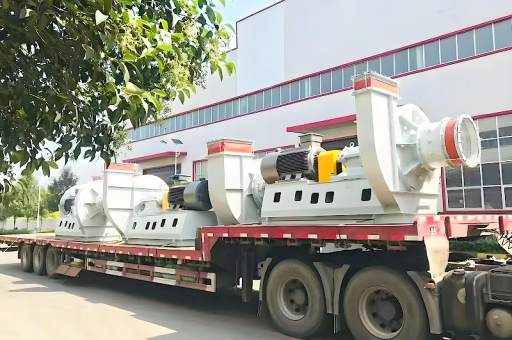
It seems you are looking for information on a Stainless Steel Single Inlet Centrifugal Blower with Backward Curved Blades.
This is a very specific and high-performance type of industrial fan. Here is a breakdown of what that description means, its key features, typical applications, and why you would choose this configuration.
What the Name Means (Deconstructed)
- Stainless Steel: The material. Usually SS304 (standard food/chemical grade) or SS316/L (for corrosive chemicals, coastal environments).
- Why? Provides corrosion resistance, high-temperature tolerance, and hygiene.
- Single Inlet: Air enters the fan wheel (impeller) from one side only.
- Why? Standard for most applications. The motor is usually mounted on the opposite (non-inlet) side. Compare to "Double Inlet" (used in air handling units where air comes from both sides).
- Centrifugal: The method of moving air. Air enters axially (along the shaft) and is expelled radially (outward, 90 degrees).
- Why? Generates high pressure compared to axial fans.
- Backward Curved Blade: The shape of the fan blades. The blades curve away from the direction of rotation.
- Why? This is the most critical feature for efficiency and performance.
Key Features & Advantages of Backward Curved (Backward Inclined) Blades
This is the "premium" blade design:
- High Efficiency: The clean aerodynamic shape allows air to slip off the blade efficiently. Non-overloading power characteristic prevents motor burnout (unlike forward-curved "squirrel cage" fans).
- Non-Overloading Power Curve: The motor power draw peaks at a certain point and then drops. This means if a filter gets clogged (increasing static pressure), the motor draws less current, preventing overheating.
- High Static Pressure: Excellent for overcoming resistance from ductwork, filters, heat exchangers, or scrubbers.
- Low Noise: Generally quieter than forward-curved or radial blade designs due to less turbulence.
- Medium to High Speed: Operates at higher RPMs, making them suitable for direct drive systems.
Why Choose Stainless Steel (SS304/SS316)?
You would choose this material over carbon steel (which is cheaper) or aluminum for:
- Corrosion Resistance: Handling moist air, acidic fumes, salt spray, or chemical vapors.
- High Temperatures: Good for exhaust air above 200°F (93°C) up to 800°F+ (special design).
- Hygiene: Non-porous, easy to clean. Required for food processing, pharmaceuticals, and cleanrooms. Stainless steel will not rust or flake.
- Spark Resistance: While not spark-proof, stainless steel is non-ferrous and safer than carbon steel in environments with flammable dust.
Typical Applications
This specific combination (Stainless Steel + Single Inlet + Backward Curved) is often found in demanding industrial environments:
- Chemical Processing: Exhaust for corrosive vapors (fume hoods, scrubber systems).
- Food & Beverage: Exhaust from ovens, fryers, dryers, and conveying systems where sanitation is critical.
- Pharmaceutical: Cleanroom HVAC, tablet coating machine exhaust, dust collection for potent compounds.
- Wastewater Treatment: Aeration, digester gas handling (often with explosion-proof motors).
- Industrial Ovens & Dryers: Recirculation or exhaust of hot, moist, potentially corrosive air.
- Semiconductor Manufacturing: Exhaust for toxic or corrosive process gases (acid exhaust).
- Marine & Offshore: Bilge ventilation, engine room ventilation where salt corrosion is severe.
Potential Drawbacks (Compared to other types)
- Cost: Stainless steel is significantly more expensive than carbon steel.
- Size: For the same airflow and pressure, a backward curved fan is often physically larger than a forward curved fan.
- Start-up: They have high inertia (heavy blades and a large wheel). They require a higher starting torque than forward curved fans.
- Foreign Material: The blades can be brittle and are more easily damaged by debris than a radial paddle-wheel design.
Summary Comparison
| Feature | Forward Curved (Squirrel Cage) | Backward Curved/Inclined |
|---|---|---|
| Efficiency | Low to Medium | High |
| Pressure Capability | Low to Medium | Medium to High |
| Power Curve | Overloading | Non-Overloading |
| Noise | Medium | Lower |
| Start-up Torque | Low | High |
| Typical Material | Steel, Galvanized | Stainless, Steel, Aluminum |
| Cost | Low | Highest |
How to Specify One
When ordering or looking for a blower with this description, you will need to provide:
- Airflow (CFM / m³/h)
- Static Pressure (in. w.g. / Pa) - The resistance it needs to overcome.
- Gas Temperature (°F / °C) - Determines motor and material limits.
- Gas Composition (Moisture, Chemicals) - Determines if SS304 or SS316 is needed.
- Mounting Arrangement (e.g., Arrangement 4 - belt drive, Arrangement 1 - direct drive).
- Motor Requirements (Horsepower/kW, Voltage, Phase, Enclosure (TEFC, Explosion-Proof).
If you have a specific model or part number, I can help analyze its specifications. If you are looking for a supplier, tell me your country/region and I can provide general recommendations.





