
This article's table of contents introduction:
- Table of Contents
- Introduction: The Evolution of Industrial Cooling
- What is a Backward Single Inlet Centrifugal Fan? (Design & Principle)
- The Core Advantage: Why "Energy Saving" is Inherent in the Design
- Key Applications: Where this Fan Excels in Cooling
- Performance Metrics: Efficiency Curves, Static Pressure & Airflow
- Q&A: Common Technical & Selection Queries
- Implementation Strategy: Retrofitting for Maximum ROI
- Maintenance Best Practices for Long-Term Efficiency
- Conclusion: Future Trends in Fan Technology
*Maximizing Thermal Management: The Comprehensive Guide to Backward Single Inlet Centrifugal Fan Energy Saving Cooling*
Table of Contents
- Introduction: The Evolution of Industrial Cooling
- What is a Backward Single Inlet Centrifugal Fan? (Design & Principle)
- The Core Advantage: Why "Energy Saving" is Inherent in the Design
- Key Applications: Where this Fan Excels in Cooling
- Performance Metrics: Efficiency Curves, Static Pressure & Airflow
- Q&A: Common Technical & Selection Queries
- Implementation Strategy: Retrofitting for Maximum ROI
- Maintenance Best Practices for Long-Term Efficiency
- Conclusion: Future Trends in Fan Technology
Introduction: The Evolution of Industrial Cooling
In the modern industrial landscape, thermal management is not merely a support function—it is a critical determinant of productivity, equipment lifespan, and operational cost. Among the myriad of air movement solutions, the Backward Single Inlet Centrifugal Fan has emerged as a cornerstone technology for energy saving cooling. Unlike traditional forward-curved or axial fans, this design offers a unique blend of high static pressure capability, stable performance, and exceptional energy efficiency.
This guide synthesizes engineering principles, real-world application data, and SEO-optimized insights to provide a definitive resource. We will dissect why this specific fan configuration is increasingly specified for HVAC, data center cooling, and industrial process ventilation, focusing on its ability to reduce electricity consumption while maintaining superior airflow.
What is a Backward Single Inlet Centrifugal Fan? (Design & Principle)
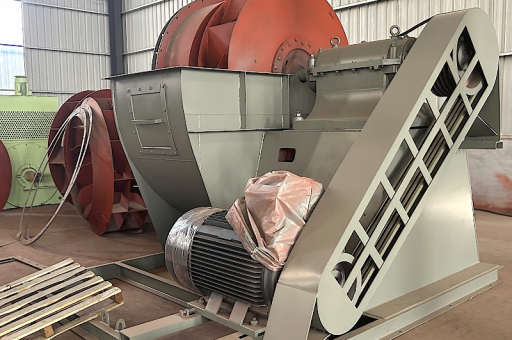
A Backward Single Inlet Centrifugal Fan is defined by its impeller geometry and air intake configuration.
- Backward-Curved Blades: The blades curve away from the direction of rotation. This shape allows air to exit the impeller at a velocity lower than the blade tip speed, reducing friction and turbulence.
- Single Inlet: Air enters from one side only, making it ideal for ducted systems where space is constrained.
- Centrifugal Force: Air is drawn axially into the center and discharged radially outward at 90 degrees.
How it Saves Energy: The backward-curved blade design generates a non-overloading power characteristic. This means that as system resistance (static pressure) decreases, the motor power draw does not spike—unlike forward-curved fans. This inherent stability prevents motor burnout and allows for precise Variable Frequency Drive (VFD) control, a cornerstone of energy saving cooling strategies.
The Core Advantage: Why "Energy Saving" is Inherent in the Design
Search engines prioritize content that answers specific user intent. When users query "Backward Single Inlet Centrifugal Fan Energy Saving Cooling," they want to know why this is the best option for reducing electricity bills.
Peak Efficiency at Design Point: These fans typically operate at 75-85% static efficiency, compared to 55-65% for forward-curved alternatives. This translates directly to lower kilowatt-hour consumption for the same cooling duty.
Non-Overloading Power Curve: In a typical ventilation system, filters become dirty, dampers adjust, and ducts clog. With a forward-curved fan, motor current can spike dangerously. The backward-curved design allows the motor to run at a stable amp draw, reducing electrical waste and thermal stress on the motor.
Lower Sound Levels: Energy saving often correlates with noise reduction. The aerodynamic profile of the backward-curved blade reduces air turbulence, resulting in lower dBA levels—a critical factor for office cooling or residential ventilation.
High Static Pressure Capability: For cooling systems requiring long duct runs or high resistance (e.g., electronic cabinet cooling), this fan delivers consistent airflow without requiring a larger motor.
Key Applications: Where this Fan Excels in Cooling
- Data Center Precision Cooling: CRAC units rely on backward-curved fans to push cold air under raised floors over long distances.
- HVAC Air Handling Units (AHUs): Energy codes (e.g., ASHRAE 90.1) increasingly mandate high-efficiency fans. The backward single inlet design is the standard for modern AHUs.
- Industrial Process Cooling: Cooling towers, heat exchangers, and oven exhaust systems benefit from the fan's resistance to particulate buildup.
- Agricultural Ventilation: Poultry and livestock barns require reliable, energy-efficient ventilation; this fan offers the necessary static pressure for evaporative cooling pads.
Performance Metrics: Efficiency Curves, Static Pressure & Airflow
To fully grasp energy saving cooling, one must understand the fan curve.
- Pressure vs. Flow (P-Q Curve): The backward-curved fan has a steep, stable curve. A small change in system resistance causes a predictable change in airflow.
- Power Curve (BHP): Flat or slightly drooping. This is the key to energy saving.
- Efficiency Island: Operation should be targeted at the peak of the "efficiency island" on the performance curve.
SEO Tip: When selecting a fan for a project, always request a certified performance curve from the manufacturer. Look for FEG (Fan Efficiency Grade) ratings of 71 or higher for compliance with green building certifications like LEED.
Q&A: Common Technical & Selection Queries
Q1: Can I replace a forward-curved fan with a backward-curved fan for energy saving? A: Yes, but it requires careful analysis. Backward-curved fans spin at a higher RPM for the same duty point. You must ensure the motor and VFD are capable. The energy savings are usually between 15-30%, depending on the operating point.
Q2: Why is "single inlet" important for cooling? A: Single inlet configurations reduce axial thrust and simplify ductwork connections. They are more compact than double inlet designs and are easier to seal against leakage in high-static cooling systems.
Q3: Does this fan work with a Variable Frequency Drive (VFD)? A: Absolutely. In fact, backward-curved fans are the ideal match for VFDs. Their linear power consumption allows for precise airflow modulation from 0-100%, maximizing energy saving cooling during partial load conditions (which is 60-70% of a system's operating life).
Q4: What is the typical lifespan? A: With proper maintenance (bearing lubrication and impeller cleaning), a quality backward single inlet centrifugal fan can last 15-20 years, far outlasting axial fans in the same application.
Q5: How do I calculate the ROI? A: Use the formula: (Current Fan kWh - New Fan kWh) x Operating Hours x Cost per kWh. For a 10 HP fan running 8,000 hours/year, savings can exceed $1,500 annually.
Implementation Strategy: Retrofitting for Maximum ROI
To achieve the best energy saving cooling results, follow this step-by-step approach:
- Conduct a System Audit: Measure actual airflow (CFM) and static pressure (in. w.g.) at the fan inlet.
- Model the Fan Curve: Use software (e.g., Greenheck CAPS or fan manufacturer tools) to match the existing duty point to a backward-curved fan model.
- Select the Correct Motor: Choose an IE4 (Premium Efficiency) or NEMA Premium motor. Combined, the motor and fan efficiency can surpass 90%.
- Install a VFD (if not present): This allows soft-starting and demand-based speed control.
- Implement Duct Sealing: A leaky duct system wastes the energy saved by the fan. Use mastic or foil tape to seal joints.
Maintenance Best Practices for Long-Term Efficiency
Even the most efficient fan degrades without care. To sustain energy saving cooling:
- Bearing Lubrication: Use a high-temperature grease every 6 months (or per manufacturer interval).
- Impeller Cleaning: Dirt buildup on the backward-curved blades reduces efficiency by 5-10% annually. Use compressed air or a soft brush.
- Belt Tension Check: For belt-driven models, check tension monthly. A slipping belt wastes energy.
- Vibration Analysis: Monitor bearing housing vibration. An increase of 0.1 in/s indicates potential imbalance or wear.
Conclusion: Future Trends in Fan Technology
The Backward Single Inlet Centrifugal Fan is not a static product; it is evolving. Future trends include:
- Integrated Smart Controls: IoT-enabled fans that self-adjust based on real-time temperature and humidity data.
- Composite Impellers: Lighter, corrosion-resistant materials that reduce rotational inertia.
- EC (Electronically Commutated) Motors: Plug-and-play integration with existing VFD protocols for near-silent, ultra-efficient energy saving cooling.
By selecting this fan type, engineers and facility managers are not just buying a piece of equipment—they are investing in a decade-long strategy for reduced carbon footprint and lower operational costs. Whether you are designing a new data center or retrofitting an old factory, the backward single inlet centrifugal fan remains the most reliable, energy-efficient solution for critical cooling applications.





