
This article's table of contents introduction:
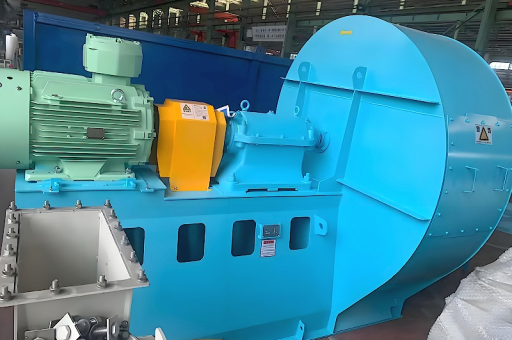
- Application: Cement Kiln Cooling
- Material: Stainless Steel (304 or 316)
- Type: Centrifugal Blower
- Color: Green
- Common Specifications for such a blower:
- Potential Issues & Solutions:
- If you are looking to purchase or troubleshoot:
It appears you are describing a specific type of industrial fan used in a cement plant. Let’s break down the key terms to provide you with the most accurate information.
Here is the technical breakdown of a Cement Kilns Cooling Stainless Steel Centrifugal Blower (Green) :
Application: Cement Kiln Cooling
- Purpose: In a cement plant, this blower is typically used for forced draft or induced draft cooling. It pushes air through a clinker cooler (e.g., a grate cooler or rotary cooler) to rapidly cool the hot clinker (1400°C) coming out of the kiln.
- Why it's critical: Rapid cooling sets the crystal structure of the clinker (essential for cement quality) and recovers heat that is sent back to the kiln.
Material: Stainless Steel (304 or 316)
- Why stainless? This is not a standard material for most cement plant fans (which are usually carbon steel). Stainless steel implies the blower is designed for:
- High humidity or condensation: When hot air cools, it creates acidic condensate (from sulfur or chlorine in the fuel).
- Corrosive gases: If the plant burns alternative fuels (tires, waste, biomass), the gases can be very corrosive.
- High temperature resistance: Stainless steel maintains strength better than carbon steel at elevated temperatures (e.g., 400°C - 600°C for the impeller).
Type: Centrifugal Blower
- Design: Uses a rotating impeller to draw air in axially and discharge it radially at high pressure.
- Blades: Usually backward-curved (high efficiency, non-overloading) or radial (for handling dusty/gritty air) for cement dust.
- Drive: Usually connected to a motor via a coupling (direct drive) or V-belts (pulley drive).
Color: Green
- Standard Industrial Color: Most industrial blowers are painted green (often RAL 6011 or a similar shade) for corrosion protection and identification.
- Note: If the blower is made of stainless steel, it is rarely painted green. It would be bare metal or a clear protective coat.
- Possibility A: The housing is painted green, but the impeller is stainless steel.
- Possibility B: It is a fiberglass-reinforced plastic (FRP) blower painted green to look like stainless steel (used for extreme corrosion resistance).
- Possibility C: It is a standard carbon steel blower with a stainless steel liner or coating.
Common Specifications for such a blower:
| Parameter | Typical Value |
|---|---|
| Airflow | 10,000 – 200,000 m³/hr (depending on kiln size) |
| Static Pressure | 500 – 1,500 mmWG (approx. 5 – 15 kPa) |
| Temperature | Up to 450°C (inlet) or 150°C (cooling) |
| Motor | Typically 50 kW – 500 kW, 3-phase, 50/60 Hz |
| Impeller Material | Stainless Steel 304 or 316L (for high temp/corrosion) |
| Housing Material | Carbon steel (painted green) or Stainless Steel |
Potential Issues & Solutions:
- Erosion (dust): Cement dust is abrasive. Often, the impeller is coated with hard-facing (tungsten carbide) or lined with wear-resistant plates.
- Bearing failures: High temperature and dust. Solutions: forced grease lubrication, external cooling fins, or water-cooled bearing housings.
- Imbalance: Dust buildup on the blades. Solutions: self-cleaning blade design (backward-curved with smooth surfaces) or a cleaning port.
If you are looking to purchase or troubleshoot:
- Purchase: Search for "cement clinker cooler centrifugal fan stainless steel" or "high temperature centrifugal blower for kiln".
- Troubleshoot: Check the VFD (Variable Frequency Drive) for speed control, inspect the bearing temperature (should be <90°C), and listen for vibration.
- Maintenance: Clean the impeller regularly and check the inlet box for dust accumulation.
Is there a specific parameter (e.g., airflow, pressure, material grade) you are trying to find for this blower? I can provide a more precise datasheet or manufacturer recommendation.





