
This article's table of contents introduction:
- Table of Contents
- Introduction: Why Airflow is Critical in Cement & Metallurgy
- The Design Philosophy Behind SWSI and Forward Curved Fans
- Key Performance Characteristics of the Forward Air Exhaust Centrifugal Fan
- Material Selection: Surviving High Temperature and Abrasion
- Installation & Ductwork: Optimizing Fan Efficiency
- Common Operational Challenges & Solutions
- Frequently Asked Questions (FAQ)
- Conclusion: Selecting the Right Fan for Your Plant
** Mastering Industrial Airflow: The Role of SWSI Metallurgy Cement Fan Forward Air Exhaust Centrifugal Fan in Heavy-Duty Applications
Article Summary: This comprehensive guide explores the SWSI Metallurgy Cement Fan, focusing on the Forward Air Exhaust Centrifugal Fan design. We delve into its unique aerodynamic principles, critical applications in cement and metallurgy, maintenance best practices, and answer common engineering questions. Optimized for SEO, this article provides actionable insights for facility engineers and procurement managers.
Table of Contents
- Introduction: Why Airflow is Critical in Cement & Metallurgy
- The Design Philosophy Behind SWSI and Forward Curved Fans
- Key Performance Characteristics of the Forward Air Exhaust Centrifugal Fan
- Material Selection: Surviving High Temperature and Abrasion
- Installation & Ductwork: Optimizing Fan Efficiency
- Common Operational Challenges & Solutions
- Frequently Asked Questions (FAQ)
- Conclusion: Selecting the Right Fan for Your Plant
Introduction: Why Airflow is Critical in Cement & Metallurgy
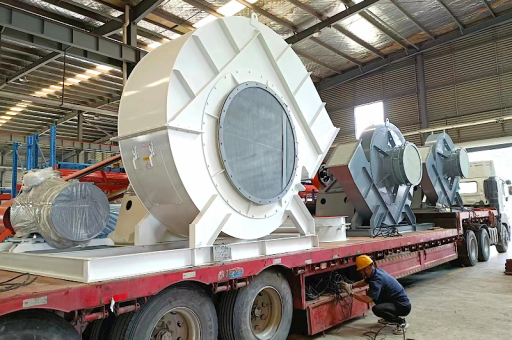
In heavy industries like metallurgy and cement manufacturing, controlling air movement is not a luxury—it is a necessity. The SWSI Metallurgy Cement Fan Forward Air Exhaust Centrifugal Fan represents a specialized solution designed to handle the most punishing conditions: high temperatures up to 400°C, dust-laden air, and continuous 24/7 operation.
- Metallurgy: Requires precise air supply for combustion in furnaces and exhaust of hot gases.
- Cement: Demands robust dust removal from kilns, clinker coolers, and grinding mills.
The term "SWSI" stands for Single Width, Single Inlet. This design is preferred where space is limited and the fan needs to be compact yet deliver high pressure. When combined with a "Forward Curved" impeller, the fan offers unique advantages in static pressure and airflow stability.
The Design Philosophy Behind SWSI and Forward Curved Fans
Understanding the physics of a centrifugal fan is essential. In a Forward Air Exhaust Centrifugal Fan, the blades curve in the direction of rotation. This is the opposite of backward-curved blades.
How it works:
- Air enters axially through the SWSI inlet.
- The impeller spins, flinging air outward via centrifugal force.
- Forward curved blades accelerate the air to a higher velocity because the air exits the impeller tip at a speed greater than the tip speed itself.
Key engineering metrics:
- Airflow Rate: Typically measured in CFM or m³/h. For a cement kiln exhaust, this can exceed 500,000 m³/h.
- Static Pressure: The forward curved design can generate high static pressure (e.g., 2000–6000 Pa) at a lower rotational speed compared to backward curved fans.
- Noise: Generally quieter than radial fans, making them suitable for indoor installations where noise regulations apply.
Key Performance Characteristics of the Forward Air Exhaust Centrifugal Fan
When evaluating a SWSI Metallurgy Cement Fan Forward Air Exhaust Centrifugal Fan, you should monitor these four performance curves:
| Parameter | Characteristic | Implication for Cement/Metallurgy |
|---|---|---|
| Pressure Curve | Steep & Drooping | Risk of stall if operating near the left side of the curve. |
| Power Curve | Overloading at low flow | Motor must be sized to handle peak power at low damper positions. |
| Efficiency | 65-78% (typical for forward curve) | Lower than backward curve, but acceptable for constant volume systems. |
| Abrasion Resistance | Low tip speeds reduce wear | Forward curved fans generally handle moderate dust loads better than high-speed alternatives. |
Pro Tip: Always specify a "Pre-Whirl" damper or inlet vane control for the SWSI configuration. This allows you to adjust airflow without wasting energy.
Material Selection: Surviving High Temperature and Abrasion
The "Metallurgy Cement Fan" designation implies extreme conditions. Here’s how manufacturers engineer durability:
- Impeller Material: For temperatures up to 250°C, standard carbon steel (Q235) is common. For 350–400°C, use Q345R or 16MnR high-tensile steel. For corrosive flue gases, consider 304L or 316L stainless steel.
- Shaft & Bearings: Double-row spherical roller bearings with thermocouples for continuous temperature monitoring. Grease lubrication for moderate temps; oil mist for extreme heat.
- Housing: Reinforced with stiffening ribs to prevent vibration. The SWSI housing is typically spiral-designed to convert kinetic energy into pressure efficiently.
Abrasion Protection:
- Wear liners at the impeller tips and scroll cut-off.
- Hardfacing or ceramic coating on leading edges.
- Replaceable liners for high-wear zones (e.g., the volute tongue).
Installation & Ductwork: Optimizing Fan Efficiency
A poorly installed fan will never perform to its data sheet. Follow these rules for a SWSI Metallurgy Cement Fan Forward Air Exhaust Centrifugal Fan:
- Inlet Ductwork: The SWSI inlet requires a straight duct length equal to 2–3 times the inlet diameter before the fan. Avoid elbows directly at the inlet—they cause uneven flow and vibration.
- Outlet Ductwork: Install a transition piece that gradually expands. A sudden expansion creates turbulence and pressure loss.
- Foundation: Use inertia base with vibration isolators. For fans above 100 kW, install a tachometer and vibration probes (velocity & acceleration).
- Dampers: If using a forward curved fan, never operate it with the damper fully closed. The power consumption will spike, potentially burning out the motor.
Common Operational Challenges & Solutions
Even the best Forward Air Exhaust Centrifugal Fan will encounter issues. Here are the top three:
- Challenge 1: Impeller Imbalance due to Dust Accumulation
- Solution: Install a purge-air system on the backplate. Periodic cleaning using compressed air during shutdown.
- Challenge 2: Overheating Bearings
- Solution: Check lubricant intervals. In cement plants, dust ingress contaminates grease. Use a sealed bearing housing or continuous grease purging.
- Challenge 3: Vibration from Surging
- Solution: Do not operate the fan near the "stall region" (left side of the pressure curve). Install a variable frequency drive (VFD) to maintain stable flow.
Frequently Asked Questions (FAQ)
Q1: Can I use a backward curved fan instead of a forward curved fan in cement applications? A: Yes, but backward curved fans have a different power characteristic (non-overloading). Forward curved is often chosen where lower speed and quieter operation are preferred, such as in baghouse exhaust systems.
Q2: What is the lifespan of an SWSI Forward Centrifugal Fan in a metallurgy plant? A: With proper maintenance (periodic bearing replacement, impeller rebalancing, and coating), the fan housing can last 10–15 years. Impellers typically need overhaul after 3–5 years in abrasive environments.
Q3: Should the fan be placed before or after the filter? A: For a Forward Air Exhaust Centrifugal Fan handling clean air, place it after the filter (forced draft). For dirty exhaust (e.g., kiln exhaust), place it before the filter (induced draft) but specify a high-abrasion impeller.
Q4: How do I calculate the required HP for my fan? A: Use the formula: Power (kW) = Airflow (m³/s) × Pressure (Pa) / (1000 × Efficiency). Then add a safety factor of 10–15% for forward curved fans due to the overloading risk.
Conclusion: Selecting the Right Fan for Your Plant
The SWSI Metallurgy Cement Fan Forward Air Exhaust Centrifugal Fan is a proven workhorse for industries requiring high static pressure and stable airflow in confined spaces. When specifying a fan for your next project:
- Prioritize material grade to match your operating temperature.
- Install proper inlet ducting to avoid performance derating.
- Monitor power consumption—spikes indicate operational issues.
For sourcing, look for manufacturers who supply fan, motor, and baseplate as a unified assembly. Provide them with your air density, temperature, and particulate load data for a precise selection.
Final Thought: The success of a cement or metallurgy line often depends on this single piece of rotating equipment. Invest in quality, maintain it rigorously, and it will keep your plant running for decades.





