
This article's table of contents introduction:
- Core Components
- How the System Works (The Power Flow)
- Why Use a V-Belt Drive for a Cement Blower?
- Common Applications in a Cement Plant
- Critical Maintenance Points for This System
- Typical Failure Modes
- Summary of the System
Based on your query, it sounds like you are describing a specific piece of industrial equipment used in cement manufacturing. Let's break down the components and the likely configuration.
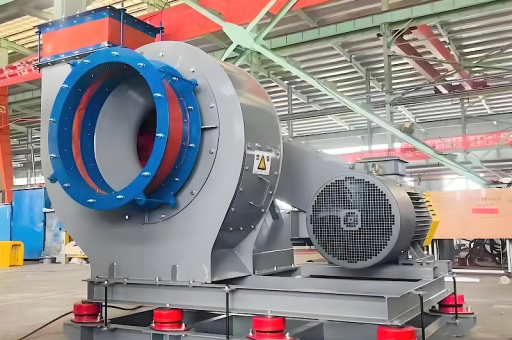
Here is a detailed explanation of the "Medium Pressure Forced Draught Fan V Belt Driving Cement Blower" system.
Core Components
This system is a mechanical drive train with three main parts:
- Medium Pressure Forced Draught (FD) Fan: This is the driver. In a cement plant, an FD fan is used to push air into the system (e.g., the kiln, preheater, or cooler) to support combustion. "Medium Pressure" (typically 2000-7000 Pa or 8-28 inches w.g.) indicates it's moving a large volume of air against moderate resistance, common in coal mills or clinker coolers.
- V-Belt Drive: This is the transmission system. It connects the fan's motor shaft to the driven shaft. Key advantages in this application include:
- Vibration Damping: Belts absorb shock loads and torsional vibrations better than direct couplings.
- Speed Adjustment: By changing pulley diameters, you can change the fan speed (RPM) without changing the motor speed. This is crucial for process control.
- Overload Protection: Belts can slip temporarily if a jam occurs, protecting the motor and fan from damage.
- Cement Blower: This is the driven equipment. It's a positive displacement blower (like a Roots-type or screw type) or a high-pressure centrifugal fan. Its purpose is to convey powdered cement pneumatically.
- Function: It creates high-pressure air (often 1-1.5 bar / 15-22 psi) to fluidize and transport cement powder from storage silos to loading stations (trucks, ships, trains).
How the System Works (The Power Flow)
- Electric Motor spins the FD Fan.
- The FD Fan draws ambient air, increases its pressure moderately, and pushes it into the system.
- This forced air is ducted to the inlet of the Cement Blower or directly into a vessel (like a fluidizing airslide).
- A pulley on the FD fan shaft connects via V-belts to a larger pulley on the Cement Blower shaft.
- The Cement Blower then takes this medium-pressure air and compresses it further to the high pressure needed to push cement powder through a pipeline.
Why Use a V-Belt Drive for a Cement Blower?
This specific arrangement (V-belt driving a blower from a fan) is less common than a direct motor drive, but it is used for specific reasons:
- Variable Speed Control (Key Reason): The final blower speed is critical for the conveying capacity (tons/hour). A V-belt drive allows for a simple speed adjustment by changing pulleys.
- Space Constraints: The fan and blower might need to be positioned on different levels or in a specific orientation where a direct inline coupling is physically impossible.
- Soft Start: A belt drive provides a smooth, low-stress start, reducing electrical inrush current on the motor and mechanical stress on the blower's rotors, which suffer from high starting torque.
Common Applications in a Cement Plant
- Cement Mill Baghouse: A medium pressure FD fan pulls dusty air from the mill through filters. The air is then sent to a smaller blower to convey the collected cement dust.
- Clinker Cooler: A forced draft fan pushes air up through the hot clinker. The same fan (via belt drive) powers a small blower that sends cooler spillage or recycled dust back to the process.
- Storage & Loading: One motor powers a fan for fluidizing air in the silo, and the same motor, via a belt, drives a compressor/blower for bulk truck loading.
Critical Maintenance Points for This System
| Component | Critical Issue | Why it matters in Cement |
|---|---|---|
| V-Belts | Abrasive Wear & Stretch | Cement dust is highly abrasive. Belts can glaze, crack, or lose tension quickly. Regular tension checks are vital. |
| Pulleys | Groove Wear | Dust embeds in the pulley grooves, causing belt slippage and uneven wear. Grooves must be cleaned and inspected. |
| FD Fan Bearings | Heat and Dust Ingress | The fan bearings handle medium pressure but are exposed to hot air. Grease contamination is common. |
| Blower Rotors | Internal Wear & Clearance | The blower's clearances (e.g., timing gears, rotor-to-casing) wear out from cement dust contamination. Proper inlet filtration is critical. |
Typical Failure Modes
- Belt Slippage: Causes a sudden loss of blower speed and pressure, leading to a "cement line plug" (a major blockage in the conveying pipe). This is a critical alarm.
- Blower Overload: If the belts are too tight or the blower internal clearances close up, the FD fan motor can overload.
- Misalignment: The primary cause of premature belt failure. The fan and blower shafts must be perfectly parallel.
Summary of the System
"A medium pressure centrifugal fan (FD Fan) is used as a power source. It is connected via a V-belt drive to a positive displacement blower, which then compresses the air to the high pressure needed to pneumatically convey cement powder."
This is a robust, if somewhat old-school, design. It’s less energy-efficient than a dedicated motor-driven blower with a VFD, but it is very simple, rugged, and easy to maintain in a dusty cement plant environment.
Are you troubleshooting a specific problem with this system (e.g., belt wear, pressure loss, high temperature)? If so, please provide more details, and I can offer more targeted advice.





