
This article's table of contents introduction:
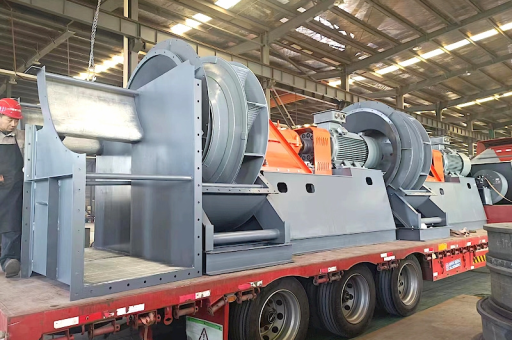
- What is an Induced Draft (ID) Fan in a Boiler?
- Why High Efficiency is Critical for Boiler ID Fans
- Key Design Features of a High-Efficiency Industrial Boiler ID Fan
- How to Achieve & Maintain High Efficiency in Practice
- Summary: ID Fan vs. High-Efficiency ID Fan
- Final Recommendation
It appears you are looking for information on Industrial Ventilation ID (Induced Draft) Fans for Boilers, specifically focusing on High Efficiency.
Here is a detailed breakdown of what these fans are, why efficiency matters, and how they are optimized in modern industrial settings.
What is an Induced Draft (ID) Fan in a Boiler?
In a boiler system, the ID fan is located at the end of the air path (downstream of the boiler, economizer, and pollution control equipment).
- Function: It creates a slight negative pressure (vacuum) inside the furnace and flue gas ductwork. This "sucks" the hot flue gases (products of combustion) out of the boiler and pushes them out of the chimney (stack).
- The "ID Fan" vs. "FD Fan" Dynamic:
- FD Fan (Forced Draft): Pushes fresh air into the boiler (at the front).
- ID Fan (Induced Draft): Pulls exhaust gases out of the boiler (at the back).
Why High Efficiency is Critical for Boiler ID Fans
Boilers are massive energy consumers. The ID fan is a major auxiliary load (typically 2-5% of the boiler's total power output). High efficiency here directly translates to:
- Lower Electricity Costs: The fan motor is often a large (hundreds to thousands of HP) electric motor. A 5-10% efficiency gain can save tens of thousands of dollars annually.
- Reduced Carbon Footprint: Lower power consumption means fewer emissions from the power grid (if purchased) or less fuel consumed by on-site generation.
- Improved Boiler Reliability: A high-efficiency, properly designed fan operates closer to its Best Efficiency Point (BEP), reducing vibration, wear on bearings, and risk of stall.
- Handling Dirty, Hot, Abrasive Gas: Boiler flue gas is not clean air. It contains fly ash, sulfur compounds, and high temperatures. High-efficiency designs must balance aerodynamic performance with durability against erosion and corrosion.
Key Design Features of a High-Efficiency Industrial Boiler ID Fan
A standard fan is not efficient enough for modern boiler applications. High-efficiency ID fans utilize advanced design principles:
Airfoil (Backward-Curved) Blades
- The Standard: Older industrial fans often used Radial or Forward-Curved blades.
- High-Efficiency Standard: Backward-Curved Airfoil (BCA) or Backward-Inclined (BI) blades.
- Why it's better:
- Peak Efficiency: BCA fans can achieve 85-92% static efficiency vs. 60-75% for radial fans.
- Non-Overloading Power Curve: As gas volume increases, the motor power draw flattens out, preventing motor overload.
- Lower Noise: Smoother air flow generates less turbulence and noise.
Aerodynamic Inlet Cone (Bell-Mouth Inlet)
- Function: Smoothly accelerates gas into the impeller eye with minimal turbulence.
- Benefit: Eliminates flow separation at the inlet, which can reduce efficiency by 5-10% and cause vibration. A precision-machined inlet cone is critical for high efficiency.
Variable Speed Drives (VFDs)
- The Old Way: Inlet vanes or dampers to control flow.
- The High-Efficiency Way: Variable Frequency Drives (VFDs) on the motor.
- Why it's better: Fan power is proportional to the cube of the speed.
- Example: Reducing speed by 20% reduces power consumption by ~50%.
- Result: Precise control of boiler draft with massive energy savings during part-load operation (which is most of the time).
Wear-Resistant Construction (Erosion Protection)
- Challenge: Fly ash in flue gas erodes blades at high velocity, changing the aerodynamic profile and quickly destroying efficiency.
- High-Efficiency Solution:
- Hardfacing: Welding wear-resistant alloys (Stellite, Tungsten Carbide) on the leading edge of blades.
- Replaceable Liners: Using wear plates or ceramic tiles on the fan housing and inlet cone.
- Thicker Blade Roots: Structurally robust to maintain shape under erosion.
High-Temperature Materials
- Challenge: Boiler exhaust is 150°C to 400°C (300°F to 750°F). Expansion and stress can warp blades.
- High-Efficiency Solution: Using Corten steel (weathering steel) or stainless steel for the impeller to maintain structural integrity and aerodynamic shape at temperature.
How to Achieve & Maintain High Efficiency in Practice
| Factor | Action for High Efficiency | Common Pitfall (Low Efficiency) |
|---|---|---|
| Selection | Use fan selection software to ensure the fan's Best Efficiency Point (BEP) matches the boiler's normal operating flow & pressure. | Oversizing the fan (e.g., "we need 200k CFM max") so it runs at 60% speed for most of its life, pulling it far from BEP. |
| Control | Install a VFD for speed control. | Using inlet guide vanes which create a vortex and reduce efficiency at part load. |
| Ductwork | Design smooth, straight inlet duct runs with no sharp elbows for at least 3-5 diameters. | Poor ductwork causing "swirl" or "inlet distortion" at the fan inlet can drop efficiency by 10-15%. |
| Maintenance | Clean blades regularly (fly ash build-up changes blade shape). Inspect for erosion of leading edge. | Running a fan with dirty blades (loss of efficiency), off-balance vibration (bearing wear), or eroded tips (higher clearance losses). |
| Monitoring | Use real-time efficiency monitoring (Flow, Pressure, Power, Temperature -> calculate fan efficiency). | Running the fan "blind" until it fails or electricity bill spikes. |
Summary: ID Fan vs. High-Efficiency ID Fan
| Feature | Standard ID Fan | High-Efficiency ID Fan |
|---|---|---|
| Blade Type | Radial or Forward-Curved | Backward-Curved Airfoil |
| Max Efficiency | 60-75% | 85-92% |
| Flow Control | Inlet Vanes / Dampers | Variable Frequency Drive (VFD) |
| Material | Carbon Steel | Corten / Stainless Steel + Wear Protection |
| Part-Load Efficiency | Poor (vane losses) | Excellent (cubic power reduction) |
| Noise Level | Higher | Lower |
| Reliability (with erosion) | Good | High (with proper hardfacing) |
Final Recommendation
For a modern high-efficiency boiler, look for an Induced Draft Fan with:
- Backward-Curved Airfoil (BCA) impeller.
- Stainless steel or Corten steel construction with Tungsten Carbide hardfacing on the blade leading edges.
- A Variable Frequency Drive (VFD) for precise draft control and energy savings.
- A proven manufacturer with experience in your specific fuel type (coal, biomass, gas, oil) and ash loading.
Investing in a high-efficiency ID fan typically yields a payback period of 1-3 years purely from electricity savings, and it extends the life of the fan itself.





