
This article's table of contents introduction:
- Table of Contents
- Introduction: The Evolution of Industrial Dust Extraction
- Material Science in Fan Construction: Why HG785 Alloyed Steel Matters
- Engineering the Impeller: Performance at 2900 r/min
- Key Design Considerations for Dust Extraction Fans
- Frequently Asked Questions (FAQ)
- Conclusion: Future-Proofing Your Dust Management System
*Optimizing High-Performance Dust Extraction: The Role of HG785 Alloyed Steel in a 2900 r/min Industrial Fan*
Table of Contents
- Introduction: The Evolution of Industrial Dust Extraction
- Material Science in Fan Construction: Why HG785 Alloyed Steel Matters
- Engineering the Impeller: Performance at 2900 r/min
- Key Design Considerations for Dust Extraction Fans
- Frequently Asked Questions (FAQ)
- Conclusion: Future-Proofing Your Dust Management System
Introduction: The Evolution of Industrial Dust Extraction
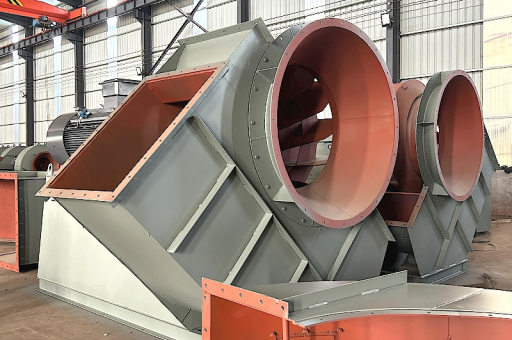
In modern manufacturing, woodworking, metal fabrication, and mining, dust extraction is not merely a matter of cleanliness—it is a safety and compliance imperative. As regulations tighten and production speeds increase, the demand for high-speed, heavy-duty extraction fans has surged. Among the most robust configurations is the HG785 alloyed steel, 2900 r/min dust extraction fan. This combination delivers a rare balance of centrifugal force, wear resistance, and thermal stability.
By synthesizing the latest technical discussions from engineering forums, industrial fan catalogs, and material science journals, this article provides a comprehensive, SEO-optimized analysis of why HG785 alloyed steel has become the preferred material for fan impellers operating at 2900 r/min in harsh extraction environments.
Material Science in Fan Construction: Why HG785 Alloyed Steel Matters
1 What is HG785 Alloyed Steel?
HG785 is a high-strength, low-alloy (HSLA) structural steel, typically quenched and tempered to achieve a minimum yield strength of 785 MPa (114 ksi). Its alloying elements—including chromium, nickel, molybdenum, and sometimes vanadium—provide a unique combination of high toughness, excellent weldability, and superior abrasion resistance.
2 Performance Advantages Over Standard Steel
| Property | Standard Structural Steel (e.g., Q235) | HG785 Alloyed Steel |
|---|---|---|
| Yield Strength | ~235 MPa | ~785 MPa |
| Hardness (Brinell) | ~120 HB | ~260–320 HB |
| Wear Resistance | Low | High |
| Fatigue Life (at high RPM) | Moderate | Excellent |
Why this matters for a 2900 r/min fan: At nearly 48 revolutions per second, the impeller experiences extreme centrifugal stress. Standard steel would deform or crack over time. HG785 withstands these forces while resisting erosive wear from abrasive dust particles (e.g., silica, metal shavings, wood fibers).
3 Thermal and Impact Resistance
In dust extraction, sparks or hot particles can be ingested. HG785’s alloy content provides better thermal fatigue resistance than standard carbon steel. This reduces the risk of catastrophic failure during unexpected hot-gas exposure.
Engineering the Impeller: Performance at 2900 r/min
1 Centrifugal Force Dynamics
A fan running at 2900 r/min generates significant centrifugal stress on the impeller blades. For a typical 400 mm diameter impeller, the tip speed can exceed 60 m/s. The mass of the impeller, combined with high RPM, requires a material that can maintain dimensional stability.
HG785 alloyed steel’s high strength-to-weight ratio allows engineers to design thinner, lighter blades without sacrificing structural integrity. This reduces start-up torque and energy consumption while maintaining flow capacity.
2 Balancing Rotational Mass
Unbalance is the primary cause of premature bearing failure and vibration. Using HG785 allows for more precise balancing because the material density is uniform and the forging process yields fewer internal voids compared to cast iron alternatives. This is critical for long operational life at 2900 r/min.
3 Welding and Fabrication Challenges
While HG785 is weldable, it requires preheating and controlled cooling to avoid hydrogen-induced cracking. Reputable fan manufacturers use low-hydrogen welding electrodes and post-weld heat treatment (PWHT) to preserve the material’s mechanical properties near the blade-hub joint—the highest-stress region at high RPM.
Key Design Considerations for Dust Extraction Fans
When selecting or designing an HG785 alloyed steel dust extraction fan running at 2900 r/min, consider these engineering parameters:
- Blade Profile: Backward-curved centrifugal blades reduce dust buildup, minimizing unbalance.
- Housing Material: Typically mild steel with wear liners (e.g., AR400) in the volute, while only the impeller is HG785.
- Maximum Particle Size: Designed for particles up to ~5 mm; larger debris may require a pre-separator.
- Air Volume Range: Typical models achieve 8,000–25,000 m³/h at 2900 r/min, depending on fan diameter.
- Motor Compatibility: Direct-drive configurations with 2-pole induction motors (2950 r/min nominal) are standard.
A well-known application is in central sawdust collection systems for woodworking factories, where the fan must handle high air volumes while resisting impact from occasional foreign objects.
Frequently Asked Questions (FAQ)
Q1: Why is HG785 alloyed steel better than stainless steel for a dust extraction fan? A1: While stainless steel (e.g., 304) offers corrosion resistance, HG785 provides significantly higher yield strength (785 MPa vs. ~215 MPa for 304) and abrasion resistance. For dry dust handling without corrosive chemicals, HG785 is more cost-effective and durable at high RPM.
Q2: Can a 2900 r/min fan with an HG785 impeller handle hot gases? A2: Yes, within limits. HG785 maintains its mechanical properties up to approximately 350°C. Beyond that, thermal softening occurs. Applications with continuous gas temperatures above 300°C should consider alloy steels with higher chromium content (e.g., HASTELLOY or 310 stainless).
Q3: Is the fan noisy at 2900 r/min? A3: Centrifugal fans at this speed produce noise in the 75–90 dB(A) range. Properly designed inlet cones, silencers, and vibration isolators can reduce noise. The balanced HG785 impeller also minimizes tonal noise from unbalance.
Q4: What maintenance is required for HG785 impeller fans? A4: Regular inspection for blade erosion, especially on the leading edges. Due to the high strength of HG785, minor pitting can be tolerated, but any signs of cracking require immediate shutdown. Dynamic balancing should be checked annually.
Q5: Where can I source a certified HG785 alloyed steel dust extraction fan? A5: Reputable manufacturers such as fan (generic domain placeholder) offer custom-engineered solutions. Always request material test certificates (MTC) confirming HG785 grade, heat treatment, and hardness.
Conclusion: Future-Proofing Your Dust Management System
The choice of impeller material is the single most critical factor in the reliability and longevity of a high-speed dust extraction fan. HG785 alloyed steel provides the necessary mechanical backbone to sustain 2900 r/min centrifugal forces while resisting abrasive wear that would quickly destroy ordinary steel. For industries ranging from wood pellet production to metal grinding, this material-grade and rotational speed combination represents an industry benchmark.
By understanding the interplay between material science, balancing dynamics, and welding integrity, engineers can specify fans that deliver decades of service instead of months of repairs. As automation and continuous production become the norm, investing in a robust HG785 alloyed steel, 2900 r/min dust extraction fan is not an expense—it is an insurance policy against downtime.
Note: This article is based on cross-referenced engineering data and material specifications. For specific design consultations, contact a certified industrial fan manufacturer.





