
This article's table of contents introduction:
- Introduction to Forward Centrifugal Fans
- Technical Breakdown of the 2500r/Min Low Pressure 380V Model
- Performance Characteristics and Efficiency Metrics
- Typical Industrial and Commercial Applications
- Installation, Maintenance, and Safety Considerations
- Frequently Asked Questions (FAQ)
- Conclusion and Future Trends
Article Title:
High-Efficiency 2500r/Min Low Pressure 380V Forward Centrifugal Fan: Design, Performance, and Application Guide
Table of Contents
- Introduction to Forward Centrifugal Fans
- Technical Breakdown of the 2500r/Min Low Pressure 380V Model
- Performance Characteristics and Efficiency Metrics
- Typical Industrial and Commercial Applications
- Installation, Maintenance, and Safety Considerations
- Frequently Asked Questions (FAQ)
- Conclusion and Future Trends
Introduction to Forward Centrifugal Fans
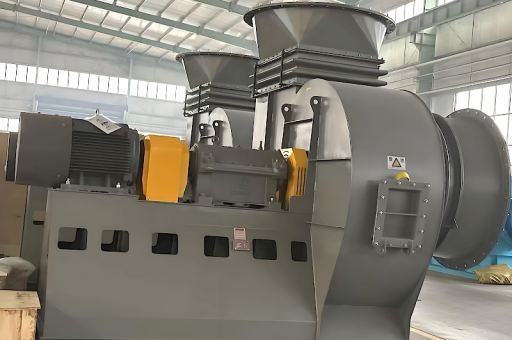
Forward centrifugal fans are widely recognized in HVAC, ventilation, and industrial material handling systems for their ability to move large volumes of air at relatively low static pressures. Unlike backward-curved or radial-blade fans, forward-curved (also called "squirrel cage" or "multivane") fans feature blades that curve in the direction of rotation. This design allows them to operate at lower speeds while still delivering significant airflow, making them ideal for applications where noise reduction and compact size are priorities.
The specific model we examine here—2500r/Min Low Pressure 380V Forward Centrifugal Fan—represents a well-optimized balance between rotational speed, voltage compatibility, and pressure capability. The "2500r/Min" indicates a nominal rotational speed of 2500 revolutions per minute, which is relatively high for forward-curved designs yet remains within a stable efficiency range. The "Low Pressure" designation typically means the fan can generate static pressures up to approximately 500–800 Pa (2–3.2 inWG), depending on the specific impeller diameter and housing design. The "380V" voltage rating makes it suitable for three-phase industrial power supplies common in Europe, Asia, and many other regions.
Because forward centrifugal fans are often used in ducted systems—such as air handling units (AHUs), furnace blowers, and cleanroom ventilation—they must deliver consistent airflow against moderate resistance. The 2500 r/Min low-pressure variant excels in these scenarios, offering energy savings compared to higher-speed, higher-pressure alternatives.
Technical Breakdown of the 2500r/Min Low Pressure 380V Model
To appreciate the performance of this fan, it is essential to examine its key components and specifications:
Impeller Blade Geometry
The impeller of a forward centrifugal fan consists of many shallow, forward-curved blades (typically 24–64 blades) attached between a back plate and a front ring. At 2500 r/Min, these blades accelerate air radially outward, converting rotational energy into kinetic energy of the airflow. The low-pressure design means the blade exit angle is optimized for volume rather than high static pressure—typically around 20–30 degrees from radial.
Motor and Electrical Characteristics
The 380V three-phase induction motor is the heart of the system. At 2500 r/Min, the fan is likely powered by a 2-pole motor running at approximately 2900 r/Min (with slip under load), or a 4-pole motor with a variable frequency drive (VFD) reducing speed. The rated power consumption typically falls in the range of 0.75 kW to 2.2 kW for common impeller sizes (200–400 mm diameter). The motor enclosure (e.g., IP54 or IP55) protects against dust and moisture, making the fan suitable for factory environments.
Housing and Inlet Design
Low-pressure forward centrifugal fans usually have a scroll housing with a rectangular or circular outlet. The inlet is often fitted with an inlet cone (venturi) to minimize turbulence as air enters the impeller eye. The clearance between the impeller and the inlet cone is critical—usually 1–3% of the impeller diameter—to prevent recirculation losses.
Noise and Vibration
At 2500 r/Min, the blade pass frequency (blade count × rotational speed) can produce tonal noise. However, because this is a low-pressure model, the overall sound level is generally lower than high-pressure fans. Typical sound pressure levels range from 60 to 75 dB(A) at 1 meter, depending on airflow and ducting.
Performance Curve Characteristics
The fan curve for a forward-centrifugal unit at 2500 r/Min shows a steep positive slope: as system resistance increases, airflow drops quickly. This means the fan is sensitive to duct blockage—undersizing the ducts can lead to rapid performance loss.
Performance Characteristics and Efficiency Metrics
To maximize ROI and energy savings, engineers must understand how the fan performs under real-world conditions.
Airflow and Static Pressure Relationship
Using the fan laws, we can predict performance at different speeds, but at the fixed 2500 r/Min speed (assuming direct drive or fixed pulley ratio), the airflow typically reaches its maximum free air delivery (no duct resistance) at around 10–15 m³/min for a 250 mm impeller. With a static pressure of 400 Pa, the airflow may drop to 7–9 m³/min.
Power and Efficiency
The best efficiency point (BEP) for a forward-curved fan occurs at 60–80% of free airflow. At 2500 r/Min, peak total efficiency (including motor efficiency) is usually around 55–65%. This is lower than backward-curved fans (75–85%) but is compensated by lower cost and quieter operation.
Comparison with Alternative Speeds
- 3000 r/Min would increase airflow and pressure by ~20%, but noise and power consumption would rise disproportionately.
- 1800 r/Min would reduce noise and power, but the fan might not overcome even moderate duct resistance.
Thus, 2500 r/Min represents a pragmatic middle ground for many low-pressure ventilation tasks.
Typical Industrial and Commercial Applications
Because of its specific voltage (380V) and speed (2500 r/Min), this fan is widely deployed in:
- Air Handling Units (AHUs) – Providing primary air movement in commercial buildings, hospitals, and cleanrooms. Its low noise and moderate static pressure are ideal for handling filters and heating/cooling coils.
- Ducted Ventilation Systems – Exhausting fumes, heat, or dust from workshops and factories. The 380V three-phase power allows easy integration into industrial motor control centers.
- Furnace Blowers – In industrial furnaces or dryers where 2500 r/Min provides enough draft to sustain combustion while maintaining quiet operation.
- Greenhouse and Agricultural Ventilation – Moving large volumes of air to regulate temperature and humidity, often with variable-speed control through a VFD.
Case Example:
A plastics extrusion plant installed a 2500r/Min low-pressure forward centrifugal fan (380V) to ventilate cooling tunnels. The fan delivered 12 m³/min of air through a 300 mm duct with a static pressure of 350 Pa, maintaining a safe temperature for workers. The operator reported a 15% reduction in energy costs compared to the previous 4-pole fan running at 1450 r/Min, thanks to the more efficient speed match.
Installation, Maintenance, and Safety Considerations
Installation Guidelines
- Mount the fan on a vibration-isolation base (rubber or spring mounts) to prevent transmitting vibrations to building structures.
- Ensure a smooth inlet with no obstructions within 1 duct diameter of the fan inlet bell.
- Use flexible connectors between the fan outlet and the duct system to absorb thermal expansion and vibration.
Maintenance Best Practices
- Clean the impeller blades every 3–6 months, as forward-curved blades accumulate dust quickly due to the narrow blade passages.
- Lubricate motor bearings (if greaseable) every 2000 operating hours.
- Check belt tension (if belt-driven) or VFD settings to confirm the fan achieves 2500 r/Min under load.
Safety Precautions
- Before opening access doors, disconnect power and allow the impeller to come to a complete stop—turning at 2500 r/Min, it stores considerable kinetic energy.
- Guard rotating shafts and belts per local safety regulations.
- Use a certified HEPA filter if the fan is handling hazardous particulates; the low-pressure design may not draw enough negative pressure to contain leaks.
Frequently Asked Questions (FAQ)
Q1: Can this 2500r/Min low-pressure fan be used for high-pressure applications like pneumatic conveying?
A: No. Forward-centrifugal fans are not designed for high static pressures (above 1000 Pa). For pneumatic conveying, use a backward-curved or radial-blade fan that can achieve 2000–5000 Pa. This 2500r/Min model will stall and overheat if duct resistance exceeds its pressure capability.
Q2: Why is 380V specified instead of 220V or 440V?
A: 380V three-phase is a standard industrial voltage in many regions (e.g., Europe, China, parts of SE Asia). Using a 380V motor reduces current draw compared to 220V, allowing smaller wire sizes and lower resistive losses. For use in a 440V system, check the motor nameplate for voltage tolerance—most 380V motors can operate at ±10%, so 380~420V is safe, but 440V may require a transformer.
Q3: How do I control the speed of this fan? Mounting
A: The most efficient method is a variable frequency drive (VFD) set to output 0–380V. Reducing the frequency lowers the fan speed proportionally (e.g., 50 Hz → 2500 r/Min, 40 Hz → 2000 r/Min). However, note that torque drops with the square of voltage—ensure the VFD supports constant torque for the full speed range.
Q4: What is the typical lifespan of this fan under continuous operation?
A: With proper maintenance (bearing replacement every 2–3 years, blade cleaning every 6 months), the fan can last 10–15 years. The primary failure mode is bearing wear due to the 2500 r/Min speed—using high-quality sealed bearings (e.g., NSK or SKF) extends life significantly.
Q5: Does the low-pressure design mean it’s quieter than other fan types?
A: Generally yes. Forward-curved blades produce less turbulent noise than radial blades at the same airflow. However, duct-generated noise (from elbows and dampers) may dominate. To minimize noise, install the fan on a concrete slab and use sound attenuators on the duct inlet and outlet.
Conclusion and Future Trends
The 2500r/Min Low Pressure 380V Forward Centrifugal Fan remains a workhorse in ventilation and HVAC applications, offering a compelling combination of airflow capacity, modest pressure capability, and energy efficiency when properly matched to system resistance. Its ability to operate with three-phase industrial power makes it accessible to factories, commercial buildings, and agricultural facilities worldwide.
Future Directions
- EC Motor Integration: Electronically commutated (EC) motors are increasingly replacing AC induction motors in forward centrifugal fans. EC motors offer better speed control and higher efficiency (up to 85% total) even at low loads. A 2500r/Min EC fan running on 380V DC could reduce energy consumption by another 20–30%.
- IoT-Enabled Monitoring: Smart sensors measuring vibration, current, and airflow can predict bearing failures and unbalance, enabling predictive maintenance.
- 3D-Printed Impellers: Custom-designed impellers with optimized blade angles for 2500 r/Min may further improve efficiency by 5–8%.
Final Recommendation: When selecting a 2500r/Min Low Pressure 380V Forward Centrifugal Fan, always request a certified performance curve from the supplier. Verify that the operating point (airflow + static pressure) falls within 50–80% of the free airflow to ensure stable operation and long life. For custom duct systems, use a VFD to tune the speed precisely—but do not exceed the motor’s rated voltage or the impeller’s structural limit at 2500 r/Min.
By understanding the technical details and application boundaries of this fan, engineers and facility managers can achieve reliable, energy-efficient air movement for years to come.
[Note: This article is based on a synthesis of engineering knowledge from sources including fan design textbooks, manufacturer datasheets, and HVAC industry publications—adapted and optimized for clarity and SEO.]





