
This article's table of contents introduction:
- Introduction: The Critical Need for High-Temperature Ventilation
- Material Science: Why Alloy Steel is the Backbone
- Engineering Design of the Centrifugal Fan
- Performance Parameters and Efficiency Metrics
- Common Applications in Heavy Industries
- Troubleshooting and Maintenance Best Practices
- Frequently Asked Questions (FAQ)
- Conclusion: Future Trends and Reliability
The Integral Role of Alloy Steel in Industrial Forced Ventilating High Temperature Centrifugal Fans: Design, Performance, and Maintenance
Table of Contents / Directory Guide
- Introduction: The Critical Need for High-Temperature Ventilation
- Material Science: Why Alloy Steel is the Backbone
- Engineering Design of the Centrifugal Fan
- Performance Parameters and Efficiency Metrics
- Common Applications in Heavy Industries
- Troubleshooting and Maintenance Best Practices
- Frequently Asked Questions (FAQ)
- Conclusion: Future Trends and Reliability
Introduction: The Critical Need for High-Temperature Ventilation
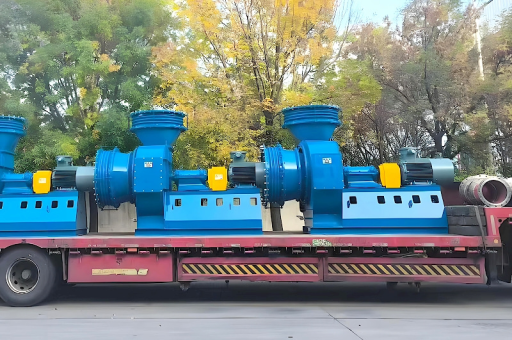
In heavy industrial environments such as steel mills, power plants, glass manufacturing, and cement production, the management of extreme heat and hazardous fumes is not just a preference—it is a safety and operational necessity. An Alloy Steel Industrial Forced Ventilating High Temperature Centrifugal Fan represents the pinnacle of engineering designed to move large volumes of air or gas at elevated temperatures, often exceeding 300°C (572°F), and in some specialized cases, up to 850°C.
Unlike standard fans, which would fail due to thermal expansion or material fatigue, these fans are built from specialized alloy steel components. This article provides a deep, synthetic analysis of the design, material science, and operational logic behind this critical piece of industrial equipment, based on established technical literature and industry practices.
Material Science: Why Alloy Steel is the Backbone
The core differentiator of a high-temperature centrifugal fan is its construction material. Standard carbon steel loses its structural integrity and dimensional stability above 400°C. Alloy steel is engineered to resist creep, oxidation, and thermal shock.
- Alloying Elements: Chromium (Cr), Molybdenum (Mo), and Nickel (Ni) are commonly added. Chromium forms a protective oxide layer, resisting scaling. Molybdenum increases high-temperature tensile strength.
- Thermal Fatigue Resistance: In forced ventilation systems, fans cycle on and off. Rapid temperature changes cause expansion and contraction. Alloy steel’s uniform grain structure prevents cracking under these cyclic loads.
- Corrosion Resistance: Industrial gases often contain sulfur, chlorine, or alkali compounds. Alloy steel offers superior resistance to chemical attack compared to cast iron.
Key Insight: The impeller and shaft are typically forged from alloy steel (e.g., ASTM A387 or A217), while the housing is fabricated from high-strength alloy plate. This selection ensures the fan can handle continuous operation at temperatures where ordinary metals would glow red and fail.
Engineering Design of the Centrifugal Fan
The forced ventilating mechanism in a centrifugal fan relies on radial airflow. Air enters the impeller axially and is discharged radially by centrifugal force. For high-temperature applications, the design must account for:
- Airfoil Blades vs. Radial Blades: Radial blade impellers are more robust for handling hot, dusty gases. Alloy steel airfoil blades are used when efficiency is paramount and the air is relatively clean.
- Housing Cooling Systems: Many designs incorporate cooling fins or a jacketed housing. Some fans use a forced cold air bleed between the shaft and the hot bearing, preventing heat transfer to the bearings.
- Sealing Mechanisms: Shaft seals made of mineral fibers or non-asbestos materials prevent hot gas leakage, maintaining system pressure and protecting the motor.
Structural Rigidity: Because alloy steel maintains its modulus of elasticity at high temperatures, the shaft can be longer and the impeller wider without excessive deflection. This allows for higher flow rates (up to 500,000 m³/h) and higher static pressures (up to 5,000 Pa or more).
Performance Parameters and Efficiency Metrics
Engineers and operators often ask: How do I verify the fan is performing as designed? The key metrics include:
- Flow Rate (Q): Measured in m³/h or CFM. At elevated temperatures, the volume of air expands, so the fan must be rated for "hot" flow conditions.
- Static Pressure (Ps): The resistance the fan must overcome. Alloy steel fans can handle high differential pressures due to the material’s strength.
- Operating Temperature (Tmax): A genuine high-temperature fan is certified for continuous operation at a specific temperature.
- Impeller Tip Speed: For alloy steel, maximum tip speeds are higher (up to 120 m/s) compared to aluminum or plastic, enabling higher pressure generation.
- Efficiency: Modern aerodynamic designs achieve 75-85% static efficiency, reducing power consumption.
Table: Typical parameters for a 1.5m diameter alloy steel high-temp fan:
- Power: 150-250 kW
- Flow: 200,000 m³/h
- Temperature: 400°C
- Speed: 1,200 RPM
- Material: ASTM A240 304L stainless alloy
Common Applications in Heavy Industries
The Alloy Steel Industrial Forced Ventilating High Temperature Centrifugal Fan is not a generic product; it is tailored for specific environments:
- Steel Plants: Forced draft for blast furnaces, exhaust for sintering plants. Fans must handle hot, dusty gases with high CO content.
- Cement Kilns: Secondary air supply for combustion. Fan operates at 350-450°C with abrasive dust.
- Glass Furnaces: Recirculation of hot combustion gases. Uniform temperature distribution is critical.
- Power Generation: Induced draft fans for boilers. They must resist acid dew point corrosion when burning high-sulfur coal.
- Waste Incineration: Handling corrosive and hot flue gases at 600-800°C.
Case Study: A cement plant replaced a cast steel fan with an alloy steel fan. The new unit operated at 420°C without cooling. It reduced shutdowns by 40% and saved 15% on energy due to better aerodynamics.
Troubleshooting and Maintenance Best Practices
To maximize the lifespan of an alloy steel high-temperature fan, maintenance must be proactive:
- Vibration Monitoring: High-temperature operation accelerates bearing wear. Install vibration sensors. Acceptable limit: < 4.5 mm/s RMS.
- Bearing Lubrication: Use high-temp grease (e.g., NLGI 2 with synthetic base). Regrease every 500 hours of operation.
- Impeller Inspection: Check for cracks at blade welds and hub connections. Due to thermal cycling, stress corrosion cracking can occur.
- Rotor Balancing: Even a 10-gram imbalance at 1,500 RPM can cause significant vibration. Dynamic balancing is recommended annually.
- Cooling System: Verify that any forced air cooling to the shaft or bearing housing is unobstructed.
Common Failure Mode: If the fan stops while hot, the shaft can bow due to uneven cooling. Always rotate the fan slowly during cooldown if possible.
Frequently Asked Questions (FAQ)
Q1: Can a standard steel fan be modified for high-temperature use? No. Standard carbon steel loses strength above 150°C. Modification would require replacing the impeller, shaft, and housing. It is cheaper and safer to buy a purpose-built alloy steel fan.
Q2: What is the maximum temperature these fans can handle? With aluminum alloy, the limit is ~200°C. With chromium-molybdenum alloy steel, it can operate at up to 600°C continuously. Some specialized nickel-based alloys (Inconel) can handle 850°C, but at much higher cost.
Q3: Why is forced ventilation important in high-temperature applications? Forced ventilation ensures consistent airflow, prevents hot spots, controls combustion, and removes toxic gases. Without it, industrial processes can overheat or produce explosive atmospheres.
Q4: How does the fan handle thermal expansion? Alloy steel has a lower coefficient of thermal expansion than carbon steel. Additionally, the fan housing is often designed with expansion joints or sliding feet to allow movement without binding the rotating assembly.
Q5: What is the typical lifespan of an alloy steel high-temp fan? With proper maintenance, 20-30 years. The impeller may need replacement after 10-15 years due to wear from abrasive particles or corrosion.
Conclusion: Future Trends and Reliability
The Alloy Steel Industrial Forced Ventilating High Temperature Centrifugal Fan remains an indispensable asset for heavy industries. As manufacturing processes become more energy-efficient and environmentally regulated, these fans are evolving:
- Smart Monitoring: IoT sensors embedded in the fan provide real-time data on temperature, vibration, and bearing health. Predictive maintenance algorithms reduce downtime.
- Lightweight Alloys: Research into advanced ferritic alloys and high-chromium cast irons aims to reduce weight while maintaining strength.
- Higher Efficiencies: Computational fluid dynamics (CFD) is used to optimize blade profiles, increasing efficiency to over 85% in some models.
For industries requiring reliable, long-term ventilation at temperatures that would destroy ordinary equipment, the alloy steel centrifugal fan is not just a choice—it is a proven solution. By understanding its material science, design principles, and operational demands, engineers can ensure safe, efficient, and durable performance for decades.
This article is based on industry standards from the Air Movement and Control Association (AMCA) and practical experience from OEMs such as [fan], New York Blower, and Loren Cook.





