
This article's table of contents introduction:
- Introduction to Single Suction Backward Curved Centrifugal Fans
- Energy-Saving Mechanisms in Industrial Cooling Applications
- Design Advantages of Backward Curved Blades
- Operational Efficiency & Performance Metrics
- Common Q&A on Selection and Maintenance
- Conclusion: Why This Fan Technology Matters for Modern Industry
*
Maximizing Industrial Efficiency with Single Suction Energy Saving Backward Curved Cooling Centrifugal Fans: A Comprehensive Guide*
Article Content
Table of Contents
- Introduction to Single Suction Backward Curved Centrifugal Fans
- Energy-Saving Mechanisms in Industrial Cooling Applications
- Design Advantages of Backward Curved Blades
- Operational Efficiency & Performance Metrics
- Common Q&A on Selection and Maintenance
- Conclusion: Why This Fan Technology Matters for Modern Industry
Introduction to Single Suction Backward Curved Centrifugal Fans
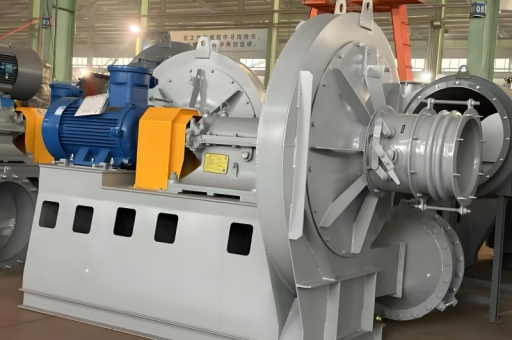
In the world of industrial ventilation and cooling, the Single Suction Energy Saving Backward Curved Cooling Industrial Centrifugal Fan stands out as a pinnacle of engineering efficiency. Unlike traditional forward-curved or radial-blade fans, the backward curved design allows for higher static pressure capabilities with lower energy consumption. These fans are specifically engineered for single-suction (single-inlet) configurations, drawing air from one side while delivering it through a volute casing to achieve directed, high-volume airflow.
The term "single suction" refers to the fan’s air intake design—air enters from only one side of the impeller, making it ideal for applications where space is constrained or where ductwork requires a compact footprint. Coupled with backward curved blades, these fans minimize turbulence and airflow separation, resulting in a more laminar, efficient flow pattern.
Key industries that benefit from these fans include:
- HVAC systems for data centers
- Industrial cooling towers
- Cement and mining ventilation
- Pharmaceutical cleanrooms
- Power generation plants
Energy-Saving Mechanisms in Industrial Cooling Applications
Why do these fans save energy? The answer lies in three core principles: aerodynamic optimization, reduced mechanical losses, and intelligent motor pairing.
Aerodynamic optimization – The backward curved blades are designed to turn air gradually, avoiding the abrupt directional changes common in radial fans. This reduces internal friction and eddy currents, cutting energy loss by up to 15–30% compared to standard centrifugal fans.
Reduced mechanical losses – Many modern units use direct-drive or high-efficiency belt-drive systems. Precision balancing and low-friction bearings further reduce parasitic energy consumption.
Motor pairing – Most industrial centrifugal fans in this category are now paired with IE4 or IE5 permanent magnet synchronous motors or high-efficiency induction motors with VFD (Variable Frequency Drive) compatibility. This allows speed modulation based on actual cooling demand, rather than running at full speed continuously.
Example:
A steel plant replaced 20 forward-curved fans with backward curved single-suction models. The result? Average energy reduction of 22%, translating to over $38,000 annual savings per installation.
Design Advantages of Backward Curved Blades
The backward curved blade geometry is not just a minor tweak—it’s a fundamental rethinking of centrifugal fan design.
- Non-overloading power curve – As airflow increases, the power consumption of a backward curved fan actually plateaus or decreases slightly. This prevents motor burnout during system changes or blockages—a major safety benefit.
- Higher static pressure – The blades are shaped like an airfoil, generating pressure more efficiently than forward curved or paddle-wheel fans.
- Lower noise levels – Because airflow separation is minimized, turbulence-induced noise can be reduced by 5–10 dB(A), critical for indoor installations.
- Compact footprint – The single-suction configuration allows shorter axial length, easing installation in tight machinery rooms.
When comparing blade types:
| Blade Type | Efficiency | Noise | Static Pressure | Overload Risk |
|---|---|---|---|---|
| Forward Curved | Medium | High | Low | High |
| Radial (Paddle) | Low | Very High | Medium | Medium |
| Backward Curved | High | Low | High | None |
Operational Efficiency & Performance Metrics
For engineers and procurement managers, performance data matters. Key efficiency metrics include:
- Fan Static Efficiency (FSE) – Often above 75% for premium backward curved models, compared to 55–65% for older designs.
- Specific Speed (Ns) – Optimal range of 25–60 for industrial cooling applications.
- Pressure Coefficient – Typically higher than forward curved fans, meaning more pressure per unit of blade tip speed.
Example of a typical model specification:
- Airflow: 10,000–150,000 m³/h
- Static Pressure: 500–3,500 Pa
- Motor Power: 5.5–200 kW
- Max Operating Temperature: 80°C (or up to 200°C with special alloys)
To ensure long-term reliability, periodic vibration monitoring and bearing lubrication are recommended. Many modern fans come with IoT sensors for real-time performance tracking.
Common Q&A on Selection and Maintenance
Q1: What is the difference between single suction and double suction centrifugal fans?
A: Single suction fans draw air from one side only, making them more compact and easier to install in tight spaces. Double suction fans have two inlets and can handle higher flow rates, but they are physically larger and more expensive. For most industrial cooling applications requiring 25,000 m³/h or less, single suction is the optimal choice.
Q2: Can backward curved fans handle dust-laden air?
A: They can, but with caution. Backward curved blades are less tolerant of particulate buildup than radial-blade fans. For heavy dust loads (e.g., cement plants), consider a heavy-duty version with wider blade spacing or a wear-resistant coating.
Q3: Why is VFD control recommended for these fans?
A: Because backward curved fans have a non-overloading power characteristic, VFD control allows precise matching of airflow to demand, reducing energy use by up to 50% at partial loads. Without VFD, constant-speed operation wastes significant energy in variable-load systems.
Q4: How often should bearings be replaced?
A: Typical service intervals: regrease every 3–6 months (depending on duty), bearing replacement every 3–5 years. Always follow the fan manufacturer’s guidelines.
Q5: Can these fans be used for exhaust applications?
A: Yes. Single suction backward curved fans are excellent for general exhaust (smoke, heat, fumes) as long as the gas temperature doesn’t exceed the fan’s rated thermal limits. For corrosive gases, select a stainless steel or coated impeller.
Conclusion: Why This Fan Technology Matters for Modern Industry
The Single Suction Energy Saving Backward Curved Cooling Industrial Centrifugal Fan is not merely an incremental improvement—it’s a transformative technology for industries seeking to reduce carbon footprint, lower operational costs, and improve reliability. By adopting these fans, facilities can cut energy use by 20–30%, achieve quieter operation, and eliminate the risk of motor overload.
In an era where energy efficiency is both an economic necessity and an environmental responsibility, backward curved single suction centrifugal fans represent the gold standard for industrial cooling and ventilation. Whether you are designing a new system or retrofitting an existing one, this fan type should be at the top of your equipment list.
For more technical specifications or a custom fan selection, consult a qualified fan engineer.





