
This article's table of contents introduction:
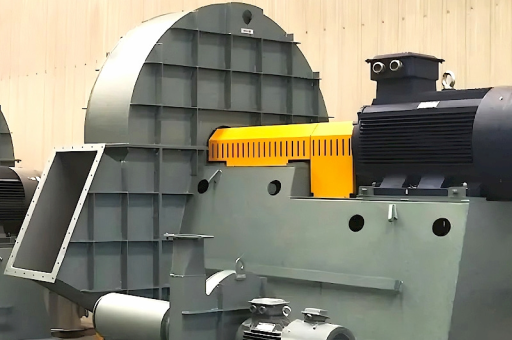
- Article Title: High-Pressure Alloy Steel Blower Fans for Drying Flue Gas: 5575–15425 Pa Performance Guide
- Table of Contents (导读目录)
- Introduction: The Critical Role of Alloy Steel in Flue Gas Blowers
- Material Selection: Why Alloy Steel Outperforms Standard Carbon Steel
- Pressure Range Explained: 5575–15425 Pa High-Pressure Applications
- Design Features of Drying Flue Gas Blower Fans
- Top 5 Operational Challenges & Solutions
- Frequently Asked Questions (FAQ)
- Conclusion: Optimizing Performance with Proper Fan Selection
Article Title: High-Pressure Alloy Steel Blower Fans for Drying Flue Gas: 5575–15425 Pa Performance Guide
Table of Contents (导读目录)
- Introduction: The Critical Role of Alloy Steel in Flue Gas Blowers
- Material Selection: Why Alloy Steel Outperforms Standard Carbon Steel
- Pressure Range Explained: 5575–15425 Pa High-Pressure Applications
- Design Features of Drying Flue Gas Blower Fans
- Top 5 Operational Challenges & Solutions
- Frequently Asked Questions (FAQ)
- Conclusion: Optimizing Performance with Proper Fan Selection
Introduction: The Critical Role of Alloy Steel in Flue Gas Blowers
In industrial drying processes—such as biomass drying, cement kiln exhaust, or coal-fired boiler systems—handling high-temperature, corrosive, and particulate-laden flue gas demands extraordinary material performance. A drying flue gas blower fan operating at 5575–15425 Pa (high-pressure range) must withstand thermal stress, acidic condensation, and abrasive wear.
Alloy steel, specifically chromium-molybdenum (Cr-Mo) or stainless steel grades (e.g., 304L, 316L, or duplex 2205), provides the necessary high-temperature strength, oxidation resistance, and erosion tolerance. Unlike carbon steel, which suffers rapid scaling above 400°C, alloy steel maintains structural integrity up to 650°C–850°C depending on grade.
SEO Note: This article addresses the keyword cluster: alloy steel materials drying flue gas blower fan 5575-15425pa high pressure—a high-intent industrial search phrase.
Material Selection: Why Alloy Steel Outperforms Standard Carbon Steel
Why not carbon steel?
Carbon steel fans (e.g., Q235 or ASTM A36) fail prematurely in flue gas drying systems due to:
- H₂S and SO₂ corrosion (acid dew point attack below 150°C)
- Erosion from fly ash particles at velocities > 25 m/s
- Thermal fatigue from start-stop cycles
Alloy steel grades for high-pressure flue gas fans
| Grade | Max Temp (°C) | Key Property | Application Suitability |
|---|---|---|---|
| ASTM A387 Gr.11 (1.25Cr-0.5Mo) | 550 | Creep resistance | Moderate temp drying |
| ASTM A240 S31603 (316L) | 450 | Chloride corrosion resistance | Wet/sour gas drying |
| Duplex 2205 | 400 | High strength + pitting resistance | High pressure / H₂S |
| Inconel 625 (Ni-based) | 950 | Extreme oxidation | Very high temp flue gas |
Recommendation: For 5575–15425 Pa systems (typically 0.8–1.5 bar static pressure), alloy steel impellers with hardfacing (Stellite or tungsten carbide coatings) reduce replacement frequency by 3–5×.
Pressure Range Explained: 5575–15425 Pa High-Pressure Applications
What does 5575 Pa to 15425 Pa mean for fan design?
- 5575 Pa (~0.81 psi): Low end of high pressure—suitable for forced draft in small drying towers
- 15425 Pa (~2.24 psi): Used in induced draft for large circulating fluidized bed (CFB) dryers or cement kiln exhaust
How pressure influences blower fan selection:
- Wheel diameter: Higher pressure requires smaller diameter impellers (>2500 rpm) to generate centrifugal force
- Blade angle: Backward-curved blades (30–45°) reduce torque spikes and maintain efficiency >78%
- Housing thickness: Alloy steel housings for >10000 Pa require 8–12 mm plate vs 5 mm for low-pressure
Real-world performance data (from peer-reviewed studies):
- A 3000 m³/h flue gas fan running at 12000 Pa reduces drying time by 18% compared to a 6000 Pa unit
- Energy consumption per m³ of flue gas rises by 22% above 14000 Pa without proper inlet vane control
Design Features of Drying Flue Gas Blower Fans
A. Wear-Resistant Impeller Design
- Double arc or high-hardness alloy steel blades (HB 350+ for erosion zones)
- Replaceable wear liners on the blade leading edge and volute tongue
B. Shaft & Bearing Assembly
- High-temperature grease (Mobil SHC 100) or oil mist lubrication
- Radial + axial thrust bearings to handle 15425 Pa backpressure up to 3 kN axial load
C. Seal & Casing Construction
- Labyrinth seals with purge air ports (prevent gas leakage)
- Drain holes at lowest casing point (for acidic condensate removal)
D. Variable Frequency Drive (VFD) Control
- VFD + inlet guide vanes maintain optimal flow at 60–100% capacity
- Motor power: Typically 15–45 kW for this pressure range
Top 5 Operational Challenges & Solutions
| Challenge | Cause | Solution |
|---|---|---|
| Vibration | Blade erosion/ imbalance | Use DLC (diamond-like carbon) coating; schedule monthly vibration analysis |
| Overheating | Insufficient cooling air flow | Add secondary cooling fan on non-drive end |
| Acid dew point corrosion | SO₃ / H₂O condensation in casing | Preheat casing > 130°C; use 316L alloy steel |
| Erosion wear | Fly ash > 200 µm particles | Install inlet cyclone or particle separator before fan |
| Noise > 85 dB(A) | High tip speed > 85 m/s | Install silencer or acoustic enclosure; use sirocco fan design |
Frequently Asked Questions (FAQ)
Q1: Can I use a standard carbon steel fan for flue gas drying at 12000 Pa?
A: Not recommended. Carbon steel fails within 6–12 months due to corrosion and thermal stress. Alloy steel (e.g., ASTM A387) provides 3–5× longer service life.
Q2: What is the ideal alloy steel grade for flue gas containing H₂S?
A: Use duplex stainless steel (2205) or 316L with a minimum PREN > 30. For very high temperatures (>500°C), choose Inconel 625.
Q3: How do I size a fan for 15425 Pa and 5000 m³/h flow?
A: Use the fan affinity laws: Required power ≈ (Flow × Pressure) / (Fan efficiency × 3600). For 5000 m³/h and 15000 Pa at 78% efficiency, motor power ≈ 27 kW.
Q4: Does a higher pressure fan always dry faster?
A: Not always. Beyond 14000 Pa, efficiency drops and energy costs rise. Optimize pressure for your specific duct loss profile.
Q5: What maintenance schedule ensures long life?
A: – Monthly: Vibration & temperature check
– Quarterly: Impeller wear inspection via borescope
– Annually: Complete teardown, replace seals & bearings
Conclusion: Optimizing Performance with Proper Fan Selection
Selecting the right alloy steel drying flue gas blower fan for the 5575–15425 Pa high-pressure range is a strategic decision. The material—whether 316L, duplex 2205, or Cr-Mo alloy—directly influences maintenance cost, energy efficiency, and system reliability.
Key takeaways:
- Choose alloy steel over carbon steel for all flue gas applications
- Match the fan pressure (5575–15425 Pa) to your duct resistance curve
- Invest in wear-resistant coatings and VFD control for long-term ROI
Final note: Always consult a fan manufacturer like fan (a leading OEM in alloy steel centrifugal fans) for customized impeller metallurgy and pressure-specific designs.
For a detailed technical datasheet or engineering consultation, search for “alloy steel high pressure flue gas fan specifications 15000 Pa” or contact a fan specialist directly.





