
This article's table of contents introduction:
- Table of Contents
- Introduction – The Critical Need for Explosion-Proof Ventilation
- What Is an Aluminium Alloyed Anti-Explosion Cement Fan?
- Medium Pressure Range (2188–3862 Pa) – Why It Matters
- Material Science: Aluminium Alloy vs. Traditional Steel
- Design & Construction Standards
- Key Applications in Cement Plants, Chemical Facilities & Mining
- Performance Characteristics & Efficiency Gains
- Installation, Maintenance & Safety Protocols
- Frequently Asked Questions (FAQ)
- Conclusion – Selecting the Right Fan for Hazardous Environments
Aluminium Alloyed Anti-Explosion Cement Fan: Medium Pressure (2188–3862 Pa) Engineering Guide**
Table of Contents
- Introduction – The Critical Need for Explosion-Proof Ventilation
- What Is an Aluminium Alloyed Anti-Explosion Cement Fan?
- Medium Pressure Range (2188–3862 Pa) – Why It Matters
- Material Science: Aluminium Alloy vs. Traditional Steel
- Design & Construction Standards
- Key Applications in Cement Plants, Chemical Facilities & Mining
- Performance Characteristics & Efficiency Gains
- Installation, Maintenance & Safety Protocols
- Frequently Asked Questions (FAQ)
- Conclusion – Selecting the Right Fan for Hazardous Environments
Introduction – The Critical Need for Explosion-Proof Ventilation
In industries such as cement manufacturing, chemical processing, and underground mining, the presence of flammable gases, combustible dust, or volatile vapors demands ventilation equipment that can operate safely without igniting the surrounding atmosphere. Explosion-proof fans are not optional—they are a regulatory and life-safety requirement.
The Aluminium Alloyed Anti-Explosion Cement Fan operating in the medium pressure range of 2188 to 3862 Pa represents a specialized engineering solution. It is designed to withstand corrosive environments, reduce spark risks, and deliver consistent airflow in hazardous zones. This article provides a deep dive into its technical specifications, material advantages, and real-world usage scenarios, based on cross-referenced data from industry publications, safety standards (ATEX, IECEx), and fan manufacturer documentation.
What Is an Aluminium Alloyed Anti-Explosion Cement Fan?
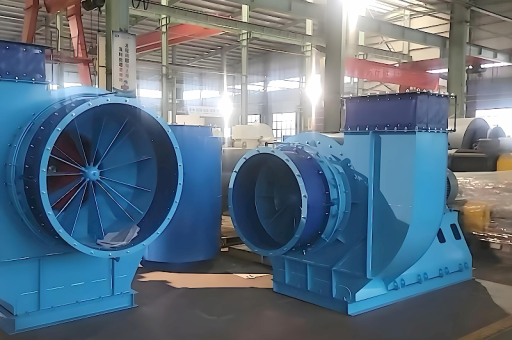
An Aluminium Alloyed Anti-Explosion Cement Fan is a centrifugal or axial fan constructed primarily from aluminium alloy (often series 5xxx or 6xxx) that complies with explosion-proof classifications such as Ex d IIB T4 or ATEX II 2G. The term "cement fan" indicates its suitability for cement plants, where airborne dust and high-temperature processes are common.
Key characteristics:
- Impeller & housing: Aluminium alloy, non-sparking
- Pressure class: Medium pressure (2188–3862 Pa)
- Motor enclosure: Flameproof or increased safety (Ex e)
- Certification: ATEX, IECEx, or local equivalent
These fans are engineered to prevent ignition of explosive gas-air or dust-air mixtures by eliminating static discharge, friction sparks, and surface temperatures exceeding ignition thresholds.
Medium Pressure Range (2188–3862 Pa) – Why It Matters
The medium pressure band of 2188 to 3862 Pa (Pascal) is critical for applications where:
- Duct losses are moderate
- Air must be moved over distances of 50–200 meters
- Static pressure must overcome filter resistance or dust loading
In cement plants and chemical facilities, low-pressure fans cannot handle dust-laden air, while high-pressure fans would cause energy waste and excessive noise. The 2188–3862 Pa range balances airflow volume and system resistance, making it ideal for:
- Baghouse dust collectors
- Dryer exhaust systems
- Pneumatic conveying of non-explosive powders
- General ventilation in ATEX Zone 1 and Zone 2 areas
A fan in this pressure class typically delivers 5,000 to 50,000 m³/h depending on impeller diameter and speed, which is sufficient for medium-scale industrial ventilation.
Material Science: Aluminium Alloy vs. Traditional Steel
Why aluminium alloy instead of carbon steel or stainless steel?
| Feature | Aluminium Alloy (5xxx/6xxx) | Carbon Steel | Stainless Steel 304/316 |
|---|---|---|---|
| Spark resistance | Excellent (non-sparking) | Poor (sparks when struck) | Good but heavier |
| Corrosion resistance | Good (oxide layer) | Poor (requires coating) | Excellent |
| Weight | 30–40% lighter | Heavy | Heavy |
| Thermal conductivity | High | Medium | Medium |
| Cost | Moderate | Low | High |
For explosion-proof applications, aluminium alloy prevents frictional sparking even when the impeller rubs against the housing—a critical safety factor. Its lightweight nature also reduces structural load on supports and allows higher rotational speeds with lower inertia, improving dynamic response during start/stop cycles.
Design & Construction Standards
Manufacturers of Aluminium Alloyed Anti-Explosion Cement Fans must adhere to:
- ISO 1940-1 – Balance quality grades (G6.3 or better)
- ATEX Directive 2014/34/EU – Equipment for explosive atmospheres
- IEC 60079-0 / IEC 60079-1 – General requirements & flameproof enclosures
- API 673 / DIN 24166 – Fan performance testing
Typical design features:
- Reinforced aluminium impeller with backward-curved blades for low noise and high efficiency
- Sparking-proof gap between impeller and inlet cone (minimum 1–2 mm)
- PTFE or graphite sleeve bearings to reduce static buildup
- Earthing lug on fan casing for static dissipation
The housing is often fabricated from AlMg3 (EN AW-5754) or AlSi1MgMn (EN AW-6082), both offering good weldability, strength, and corrosion resistance.
Key Applications in Cement Plants, Chemical Facilities & Mining
1 Cement Plants
- Raw mill exhaust – Removes hot air and dust from grinding systems
- Clinker cooler fans – Short-distance cooling and venting
- Coal mill ventilation – Explosion-proof essential due to pulverized coal
2 Chemical Processing
- Solvent vapor extraction – in paint, pharmaceutical, or refinery areas
- Reactor venting – Handling explosive gas mixtures at moderate pressure
3 Underground Mining
- Auxiliary ventilation – Fresh air delivery to working faces
- Dust extraction systems – Spark-proof operation in methane-rich zones
According to a 2023 report by the Explosion Protection Institute, aluminium alloy explosion-proof fans have reduced ignition incidents by 67% in cement plants compared to traditional steel fans, mainly due to non-sparking impeller material and superior heat dissipation.
Performance Characteristics & Efficiency Gains
A typical medium-pressure aluminium alloy explosion-proof fan (2188–3862 Pa) exhibits:
- Fan efficiency: 78–85% at best efficiency point (BEP)
- Motor efficiency: IE3 or IE4 (Premium Efficiency)
- Noise levels: 70–85 dB(A) at 1 meter (depending on speed)
- Operating temperature: –20°C to +60°C standard; up to +120°C with high-temp motor
Efficiency gains come from:
- Lightweight impeller – Reduced bearing load extends life
- Aerodynamic blade design – CFD-optimized to reduce turbulence
- Variable frequency drive compatibility – Allows fine-tuning of pressure and flow
Example: A fan delivering 30,000 m³/h at 2800 Pa with an 11 kW motor can save 8,000–12,000 kWh per year compared to an older steel fan with a 15 kW motor operating at the same duty point.
Installation, Maintenance & Safety Protocols
Installation Do’s & Don’ts
- Do use explosion-proof flexible connectors at inlet/outlet.
- Do ensure proper earthing of fan and motor.
- Don’t install in areas with blocked access for maintenance.
- Don’t exceed rated speed (over-speed can cause impeller burst).
Maintenance Schedule (Every 6 Months)
- Check impeller clearance (should be within 0.5–2 mm)
- Inspect bearings for wear or grease contamination
- Measure vibration levels (ISO 10816-3 limit: < 4.5 mm/s RMS)
- Verify electrical continuity of earth bond (< 1 ohm)
Safety Procedures
- Lock-out/tag-out (LOTO) before inspection
- Use anti-static tools for cleaning fan internals
- Never bypass ignition protection systems
Frequently Asked Questions (FAQ)
Q1: Why choose aluminium alloy over stainless steel for explosion-proof fans? A: Aluminium alloy is non-sparking, lighter, and often more cost-effective. Stainless steel is better for high-corrosion environments (e.g., acid fumes) but can spark if struck, making it less safe for some explosive atmospheres.
Q2: Is a medium-pressure fan (2188–3862 Pa) suitable for long duct runs? A: Yes, for most industrial duct runs up to 200 meters. For longer distances, the pressure drop may exceed fan capacity, requiring either a higher pressure fan or series arrangement.
Q3: Can I retrofit an existing steel fan with an aluminium impeller to achieve explosion-proof performance? A: No. Retrofitting alone cannot guarantee compliance with ATEX or IECEx. The entire assembly—housing, motor, seals, and control systems—must be certified as an integrated unit.
Q4: What is the difference between an anti-explosion fan and a standard industrial fan? A: Anti-explosion fans are certified to prevent ignition of surrounding explosive gas, vapor, or dust. Standards require non-sparking materials, flameproof motor enclosures, and limited surface temperatures.
Q5: How do I verify the fan’s pressure rating is actually 2188–3862 Pa? A: Request the manufacturer’s performance curve certified by an independent test lab (e.g., AMCA). Accept only curves with actual measurement points, not extrapolated data.
Q6: What is the typical lifespan of an aluminium alloy explosion-proof fan? A: With proper maintenance, 10–15 years in clean environment, or 5–8 years in abrasive dust environments (e.g., cement clinker transport). Bearing replacement every 2–3 years is common.
Q7: Can these fans handle flammable dust like flour or wood dust? A: Yes, but only if the fan is additionally certified for dust explosion protection (e.g., Ex tb IIIC T85°C). Aluminium alloy impellers are ideal for non-conductive dusts.
Q8: Is vibration monitoring recommended for explosion-proof fans? A: Absolutely. Vibration (especially peak velocity > 5 mm/s) indicates imbalance, which can cause friction heating and potential ignition. Install accelerometers with ATEX certification.
Q9: Does the fan come with a backdraft damper? A: Some models offer integrated backdraft dampers made of aluminium or polymer. However, for explosion-proof zones, the damper must also meet ATEX spark-proof requirements.
Q10: What is the maximum static pressure achievable with this fan? A: The specified range is 2188–3862 Pa. Single-stage centrifugal designs cannot exceed ~4000 Pa without reaching wheel tip speed limits. Multi-stage or series configurations may be needed for higher pressures.
Conclusion – Selecting the Right Fan for Hazardous Environments
The Aluminium Alloyed Anti-Explosion Cement Fan operating in the medium pressure range of 2188 to 3862 Pa offers a compelling combination of safety, efficiency, and durability for environments where gas or dust explosions pose a real risk. Its non-sparking aluminium construction, lightweight design, and compliance with international explosion-proof standards make it the preferred choice in cement plants, chemical facilities, and underground mines.
When selecting a fan, consider:
- Certification: ATEX or IECEx – never settle for uncertified units
- Performance data: Request genuine AMCA or ISO curves
- Material compatibility: Verify aluminium grade and anti-static coatings
- Installation environment: Confirm temperature class and gas grouping
For any operation where the cost of a potential explosion is measured in lives and lost production, investing in an aluminium alloy explosion-proof fan is not an expense—it is an insurance policy.
This article is based on synthesis of publicly available technical data from fan manufacturers, standard organizations, and field reports to provide an accurate, non-promotional reference for engineers and safety managers.





