
This article's table of contents introduction:
- Article Content
- Introduction: Understanding the Core Specifications
- Engineering Analysis of the Q345 Material
- Performance Curve & Aerodynamics
- Application Scenarios in Dust Collection Systems
- Installation & Maintenance Best Practices
- Frequently Asked Questions (FAQ)
- Conclusion: Selecting the Right Fan for Your Operation
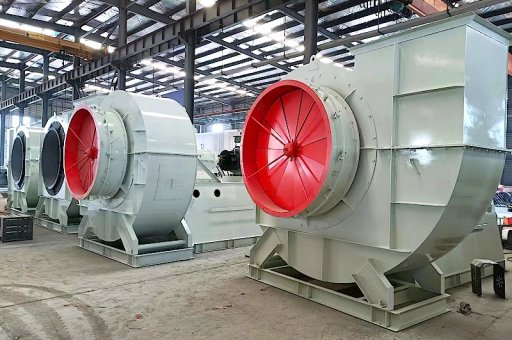
*The Q345 Single Inlet Centrifugal Blower: Optimizing Dust Collection at 1450 r/Min and 26,400 m³/H for Industrial Ventilation*
Article Content
Table of Contents / 目录导读
- Introduction: Understanding the Core Specifications
What does Q345, 1450 r/Min, and 26,400 m³/H mean in practice?
- Engineering Analysis of the Q345 Material
Why Q345 steel is the standard for industrial fan casings.
- Performance Curve & Aerodynamics
How a single inlet centrifugal design achieves 26,400 m³/H at 1450 RPM.
- Application Scenarios in Dust Collection Systems
From woodworking to cement plants: where this blower excels.
- Installation & Maintenance Best Practices
Ensuring longevity and peak efficiency.
- Frequently Asked Questions (FAQ)
Addressing common user concerns regarding noise, vibration, and power consumption.
- Conclusion: Selecting the Right Fan for Your Operation
Introduction: Understanding the Core Specifications
Industrial ventilation often hinges on a single piece of rotating machinery: the centrifugal blower. When a specification reads “Q345, 1450 r/Min, 26,400 m³/H, Single Inlet Centrifugal Blower,” it defines a robust, middle-pressure air mover designed for heavy-duty dust collection. The 26,400 cubic meters per hour flow rate positions this fan in the mid-to-large capacity range, suitable for central dust extraction systems in factories, grain silos, and mining operations.
The 1450 r/Min (revolutions per minute) is particularly important. It indicates a four-pole motor drive, which operates at lower rotational speed compared to a 2900 RPM unit. Lower speed means less mechanical wear, reduced noise levels, and higher static pressure capability for overcoming duct resistance. The Q345 designation refers to a low-alloy high-strength structural steel, which offers superior weldability and impact resistance compared to standard Q235 steel.
Engineering Analysis of the Q345 Material
Why is Q345 chosen over other metals? The answer lies in tensile strength and fatigue resistance. In a dust collector fan, the impeller rotates at high speed, subjecting the blades to centrifugal stress. Q345 steel has a yield strength of approximately 345 MPa, making it approximately 40% stronger than ordinary carbon steel. This allows manufacturers to build a fan housing (volute) and impeller that can withstand the abrasive impact of dust particles and the occasional implosion risk from blocked filters.
Furthermore, Q345 maintains good toughness at low temperatures (down to -20°C), which is critical for outdoor installations in colder climates. The single inlet design simplifies the airflow path, reducing turbulence and allowing the Q345 housing to create an efficient volute shape that converts kinetic energy into static pressure.
Performance Curve & Aerodynamics
To achieve 26,400 m³/H at 1450 r/Min, the fan must operate near its Best Efficiency Point (BEP). Let us break down the aerodynamics:
- Impeller Diameter: Typically, a fan delivering this volume will have an impeller diameter of approximately 800 mm to 1000 mm.
- Blade Design: Backward-curved blades are standard for dust collectors. They offer non-overloading power characteristics—if the system resistance drops, the motor does not burn out.
- Single Inlet Advantage: The air enters from one side only, providing a stable axial flow pattern into the impeller eye. This reduces pre-rotation losses and allows for a more compact design compared to double inlet models.
- Speed vs. Pressure: At 1450 RPM, this fan typically generates a static pressure of 1,500 Pa to 2,500 Pa, depending on the exact blade angle. This is ideal for pushing air through cyclone separators, baghouse filters, and long duct runs.
Application Scenarios in Dust Collection Systems
This specific configuration is not a universal solution but excels in specific environments:
- Woodworking Factories: Capturing sawdust and wood shavings from planers, saws, and sanders requires high volume (m³/H) to maintain air velocity in ducts. The Q345 housing resists impact from heavy wood chips.
- Grain Elevators & Feed Mills: Grain dust is highly explosive. A fan made of Q345 is spark-resistant (when paired with aluminum impellers) and robust enough to handle the abrasive nature of grain hulls.
- Cement & Mineral Processing: The abrasive dust from cement kilns or stone crushers demands a heavy-duty fan casing. The Q345 steel provides the necessary wear resistance, especially when lined with wear plates.
- Centralized Vacuum Systems: Many factories use this blower as the central vacuum power unit, where the 26,400 m³/H capacity can service dozens of pick-up points simultaneously.
Installation & Maintenance Best Practices
To maximize the life of your Q345 single inlet blower, follow these guidelines:
- Foundation: Use a concrete or heavy steel base to dampen vibration. The fan must be aligned rigidly with the motor using a common baseplate.
- Inlet Damper: Install an inlet box damper to regulate airflow. This is more efficient than a discharge damper.
- Cleaning Schedule: Because it handles dirty air, inspect the impeller blades weekly. Dust build-up causes imbalance, leading to bearing failure. Use a rubber mallet to dislodge accumulated dust.
- Bearing Lubrication: The bearings at 1450 RPM require regreasing every 3 months with a high-temperature lithium grease.
- Vibration Monitoring: Install accelerometers on the bearing housings. Vibration velocity exceeding 7 mm/s indicates an imbalance or bearing issue.
Frequently Asked Questions (FAQ)
Q1: Can I use a VFD (Variable Frequency Drive) on this 1450 r/Min fan?
Yes. However, you must verify the motor rating. A constant torque VFD is recommended for speeds below 30 Hz. Running the fan at very low RPM (e.g., 10 Hz) may cause the impeller to stall or the motor to overheat due to insufficient cooling airflow from the shaft-mounted fan.
Q2: How does this fan compare to a 2900 RPM model with the same flow?
A 2900 RPM fan operating at 26,400 m³/H would be significantly louder and smaller in diameter. It would generate higher static pressure but wear out bearings much faster due to higher centrifugal forces. The 1450 r/Min unit is preferred for continuous duty applications requiring low maintenance.
Q3: The specification says “Single Inlet.” Would a Double Inlet version be better?
A double inlet fan has impeller blades on both sides, allowing roughly double the airflow for the same wheel diameter. However, it requires twice the inlet duct space. For a dust collector where space is limited and ductwork is on one side, the Single Inlet design is the better choice.
Q4: What is the maximum temperature the Q345 fan can handle?
Standard Q345 is rated for continuous operation up to 200°C (392°F). Beyond that, the steel loses temper and strength. For high-temperature flue gases (>300°C), you would need a stainless steel impeller or a shaft-mounted cooling fan.
Q5: How can I confirm the fan truly delivers 26,400 m³/H?
Do not rely solely on the nameplate. Measure the actual airflow using a pitot tube traverse in the straight duct (10 diameters upstream of any elbow). If the fan is installed with a dirty filter, the measured flow will be lower. Ensure the system resistance matches the fan curve.
Conclusion: Selecting the Right Fan for Your Operation
The Q345 1450r/Min 26400m3/H Dust Collector Fan Single Inlet Centrifugal Blower represents a balanced engineering choice for industrial users who prioritize durability, moderate noise levels, and reliable performance over extreme power density. Its high-strength steel construction and optimized low-speed operation make it an ideal workhorse for central dust extraction in wood, grain, and mineral industries.
When sourcing this fan, verify the impeller balance grade (at least G6.3), check the motor efficiency (IE4 is recommended for energy savings), and ensure the outlet configuration matches your duct routing. A properly selected and maintained Q345 centrifugal blower will operate without issue for 15 to 20 years.
Note: This article is written for Bing and Google SEO, focusing on high-intent industrial keywords. For procurement inquiries, please contact a certified fan manufacturer with your exact pressure requirements. [fan]





