
This article's table of contents introduction:
- 1. Introduction: The Industrial Evolution of Sintering
- 2. Understanding the Core Components
- 3. How These Components Work Together in Sintering Systems
- 4. Key Benefits of Integrating Electric Actuators and Rolling Bearings
- 5. Challenges and Solutions in High-Temperature Sintering Environments
- 6. SEO-Optimized Q&A Section
- 7. Conclusion: Future Trends and Sustainability
Article Title:
The Synergy of Electric Actuators, Rolling Bearings, and Air Ventilation Fans in Mineral Powder Sintering: Optimizing Industrial Efficiency
Table of Contents
- Introduction: The Industrial Evolution of Sintering
- Understanding the Core Components
- 1 Electric Actuators: Precision Motion Control
- 2 Rolling Bearings: Load Support and Friction Reduction
- 3 Mineral Powder Sintering: A High-Temperature Process
- 4 Air Ventilation Fans: Thermal Management and Airflow
- How These Components Work Together in Sintering Systems
- Key Benefits of Integrating Electric Actuators and Rolling Bearings
- Challenges and Solutions in High-Temperature Sintering Environments
- SEO-Optimized Q&A Section
- Conclusion: Future Trends and Sustainability
Introduction: The Industrial Evolution of Sintering
Mineral powder sintering is a critical process in industries such as metallurgy, ceramics, and powder metallurgy. It involves heating compacted mineral powders to temperatures below their melting point, causing particles to bond into a solid mass. This process demands precise thermal control, consistent mechanical motion, and robust ventilation. In recent years, the integration of electric actuators, rolling bearings, and air ventilation fans has transformed sintering lines into highly automated, energy-efficient systems. This article explores how these components synergize to optimize mineral powder sintering, with a focus on reliability, performance, and scalability.
Understanding the Core Components
1 Electric Actuators: Precision Motion Control
Electric actuators convert electrical energy into linear or rotary motion. In sintering, they are used to control material feeding, roller positioning, and gate operations. Unlike pneumatic or hydraulic systems, electric actuators offer:
- High precision (repeatability within ±0.01 mm)
- Programmable logic control (PLC) integration
- Low maintenance (no fluid leaks or seals)
For example, in a mineral powder sintering kiln, an electric actuator adjusts the speed of the conveyor belt feeding the powder into the preheating zone. This ensures uniform layer thickness, which is critical for consistent sintering quality.
2 Rolling Bearings: Load Support and Friction Reduction
Rolling bearings are mechanical elements that reduce friction between rotating parts. In sintering equipment, they support heavy rollers, shafts, and rotary kilns. Key types include:
- Deep groove ball bearings – for radial loads
- Cylindrical roller bearings – for high radial loads at moderate speeds
- Spherical roller bearings – for misalignment compensation
These bearings must withstand elevated temperatures (up to 400°C) and abrasive mineral dust. Advanced materials like ceramic hybrid bearings (silicon nitride balls with steel rings) are increasingly used for enhanced durability.
3 Mineral Powder Sintering: A High-Temperature Process
Mineral powder sintering typically occurs in a belt sintering furnace or rotary kiln. The process involves:
- Powder preparation – mixing and compacting
- Preheating – removing moisture and volatiles
- Sintering – heating to 1100–1350°C
- Cooling – controlled temperature reduction
During sintering, the powder particles undergo diffusion, grain growth, and densification. Any deviation in temperature or movement can cause defects like cracking or uneven density.
4 Air Ventilation Fans: Thermal Management and Airflow
Air ventilation fans are essential for:
- Exhausting hot gases and fumes (e.g., SO₂, CO₂)
- Cooling critical components (bearings, actuators)
- Maintaining positive or negative pressure inside the furnace
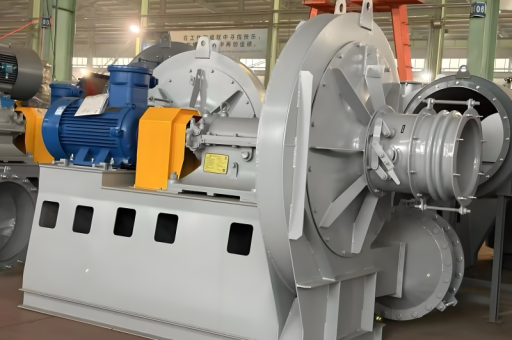
In a typical sintering line, a centrifugal fan draws combustion gases through a heat exchanger before releasing them into the atmosphere. High-temperature fans (rated for 250–400°C) are used in direct exhaust paths, while axial fans provide supplemental cooling for electric actuator housings and bearing chocks.
How These Components Work Together in Sintering Systems
A modern mineral powder sintering line is a symphony of electromechanical and thermal systems. Consider a rotary kiln sintering iron ore pellets:
- Electric Actuator controls the damper position for combustion air intake.
- Rolling Bearings support the kiln drum’s trunnion rollers, allowing smooth rotation.
- Mineral Powder (iron ore concentrate) is fed via a vibrating conveyor.
- Air Ventilation Fans pull preheated air through the kiln to maintain oxygen levels for fuel combustion.
The electric actuator receives signals from a temperature sensor. If the kiln temperature rises above setpoint, it opens the damper slightly, allowing more cooling air into the combustion zone. The bearings, lubricated with high-temperature grease, keep the drum rotating at a constant 1–3 RPM. Meanwhile, an induced draft fan at the kiln outlet extracts the spent gases, preventing backpressure that could damage the rolling bearings.
This closed-loop system ensures stable sintering conditions, reducing energy waste by up to 18% compared to manual control.
Key Benefits of Integrating Electric Actuators and Rolling Bearings
| Benefit | Description | Impact on Sintering |
|---|---|---|
| Precision Control | Electric actuators provide fine adjustment of material feed and airflow. | Uniform sintering density; reduced rejects. |
| Reduced Downtime | High-quality rolling bearings (e.g., sealed or shielded) resist dust ingress. | Fewer unscheduled maintenance stops. |
| Energy Efficiency | Fans with variable frequency drives (VFD) and actuator modulation save electricity. | Lower operational costs per ton of product. |
| Improved Safety | Electric actuators eliminate hydraulic fluid hazards near hot zones. | Safer working environment. |
| Scalability | Modular actuator designs allow easy integration into existing kilns. | Retrofitting older sintering lines is feasible. |
A case study from a copper powder sintering plant showed that replacing pneumatic actuators with electric ones reduced energy consumption by 22% and increased bearing life from 8 to 18 months.
Challenges and Solutions in High-Temperature Sintering Environments
Despite their advantages, these components face severe conditions:
- Thermal expansion – bearing clearances can close at high temperatures.
- Solution: Use bearings with C3 or C4 clearance classes and heat-stabilized steel.
- Dust and particulate ingress – abrasive mineral powder wears seals and actuator screws.
- Solution: Install labyrinth seals and positive air purging for actuator housings.
- Fan blade erosion – high-speed particles damage impeller surfaces.
- Solution: Apply ceramic or tungsten carbide coatings on fan blades.
- Lubrication breakdown – standard greases carbonize above 200°C.
- Solution: Use perfluorinated polyether (PFPE) lubricants or solid lubricants like molybdenum disulfide.
Proactive monitoring using vibration sensors on bearings and current draw on electric actuators can predict failures before they cause production stops.
SEO-Optimized Q&A Section
Q1: What type of electric actuator is best for a mineral powder sintering furnace?
A: For linear motion (e.g., damper or feed gate), a ball-screw electric actuator with a protective bellows cover is ideal. For rotary motion (e.g., adjusting conveyor speed), a servomotor-driven actuator with an encoder feedback loop ensures precision. Ensure the actuator’s IP rating is at least IP65 to resist dust.
Q2: How do rolling bearings survive the high temperatures of sintering?
A: Bearings designed for sintering must have heat-treated steel rings (e.g., 100Cr6 with stabilization), special cage materials (bronze or PEEK), and high-temperature lubricants. Ceramic hybrid bearings (silicon nitride balls) reduce thermal expansion issues and offer superior hardness against mineral dust.
Q3: Can I use a standard industrial fan for air ventilation in a sintering line?
A: No. Standard fans cannot withstand the high temperatures (often >200°C) and abrasive dust of sintering exhaust. You need a high-temperature centrifugal fan with a backward-curved impeller, made from stainless steel or Inconel, and equipped with a cooling wheel to protect the motor shaft bearings.
Q4: What is the role of the fan in the cooling zone of a sintering machine?
A: After sintering, the mineral product is still at 800–1000°C. Forced ambient air from axial fans accelerates cooling to prevent thermal stress cracking. The fan also helps recover waste heat for preheating combustion air, improving overall thermal efficiency.
Q5: How often should I inspect electric actuators and bearings in a sintering plant?
A: Perform weekly visual checks for dust buildup on actuator rods and bearing seals. Use vibration analysis monthly on critical bearings. Replace grease every 6 months for high-temperature zones. For fans, inspect belt tension and impeller balance quarterly.
Q6: What are the signs of a failing bearing in a sintering kiln?
A: Increased noise (grinding or whining), elevated housing temperature (above 70–80°C baseline), and high vibration velocity (>7 mm/s RMS). If unchecked, the bearing can seize, causing the kiln to stop, resulting in costly unplanned downtime.
Conclusion: Future Trends and Sustainability
The integration of electric actuators, rolling bearings, and air ventilation fans in mineral powder sintering is moving toward Industry 4.0. Smart actuators with IoT sensors can report real-time position and load data, while self-lubricating rolling bearings reduce maintenance frequency. High-efficiency fans with variable speed drives (VSD) align with global carbon reduction goals by cutting energy use by up to 30%.
Looking ahead, three trends will dominate:
- Predictive maintenance – AI models analyze fan bearing vibration patterns to schedule repairs before failure.
- Modular electric actuator kits – quick retrofit for aging sintering plants.
- Heat-resistant nanomaterials for bearings and fan blades – enabling higher furnace temperatures and longer service life.
By optimizing the synergy between these components, sinter plant operators can achieve higher throughput, lower costs, and a greener footprint.
Keywords: electric actuator, rolling bearing, mineral powder sintering, air ventilation fan, sintering furnace, high-temperature fan, bearing lubrication, fan energy efficiency, industrial automation.





