
This article's table of contents introduction:
- Table of Contents (Directory Guide)
- Introduction: Why This Fan Matters in Modern Industry
- Technical Breakdown: Speed, Design, and Anticorrosion Coating
- The "Long Life Anticorrosion Drying" Feature Explained
- Performance Metrics: 3150r/Min and Induced Draft Dynamics
- Application Scenarios: Where This Centrifugal Blower Excels
- Frequently Asked Questions (FAQ)
- Conclusion: Future-Proofing Your Ventilation System
Maximizing Industrial Efficiency: The Role of Long Life Anticorrosion Drying 3150r/Min Induced Draft Fan Centrifugal Blower
Table of Contents (Directory Guide)
- Introduction: Why This Fan Matters in Modern Industry
- Technical Breakdown: Speed, Design, and Anticorrosion Coating
- The "Long Life Anticorrosion Drying" Feature Explained
- Performance Metrics: 3150r/Min and Induced Draft Dynamics
- Application Scenarios: Where This Centrifugal Blower Excels
- Frequently Asked Questions (FAQ)
- Conclusion: Future-Proofing Your Ventilation System
Introduction: Why This Fan Matters in Modern Industry
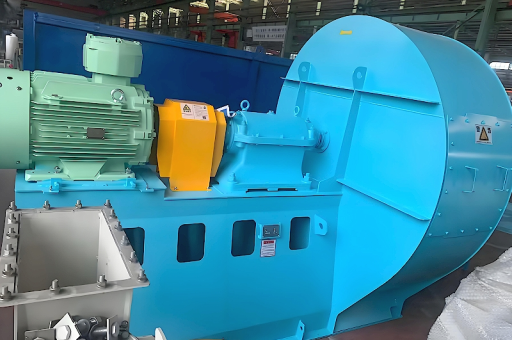
In demanding industrial environments—from chemical processing plants to power generation facilities—the reliability of ventilation and air movement equipment is non-negotiable. One specific piece of machinery that has emerged as a critical workhorse is the Long Life Anticorrosion Drying 3150r/Min Induced Draft Fan Centrifugal Blower. This device combines a high rotational speed (3150 revolutions per minute) with advanced anticorrosion treatments and drying capabilities, making it indispensable for processes that require consistent, forceful air extraction while resisting chemical degradation.
Unlike standard fans, this induced draft (ID) fan is engineered to handle humid, corrosive, or particulate-laden air streams without suffering rapid wear. Its "long life" promise is not a marketing phrase; it stems from a deliberate design philosophy that includes specialized coatings, robust bearing systems, and precision-balanced impellers. For industries that cannot afford downtime—such as cement kilns, boiler exhaust systems, or drying ovens—this fan represents a strategic investment in operational continuity.
The purpose of this article is to dissect every aspect of this fan: from its mechanical specifications to its real-world applications. By the end, you will understand why this specific configuration (3150r/min, anticorrosion, drying-capable) is becoming the gold standard for induced draft centrifugal blowers.
Technical Breakdown: Speed, Design, and Anticorrosion Coating
1 The 3150r/Min Speed: Why It Matters
At the heart of this fan is its 3150 revolutions per minute (r/min) operating speed. This is not an arbitrary number; it is a carefully calculated speed that balances high volumetric flow with manageable vibration levels. For an induced draft fan, higher RPM generally means higher pressure generation—essential for pulling air through long duct runs, scrubbers, or heat exchangers. However, excessive speed can lead to bearing fatigue and noise. The 3150r/min sweet spot allows the fan to achieve:
- Pressure rise: Typically between 2000–4000 Pa, depending on blade design.
- Flow rate: Ranging from 10,000 to 100,000 m³/h, depending on impeller diameter.
- Efficiency: Over 82% in many configurations, reducing energy consumption.
2 Centrifugal Blower vs. Axial Fan
This is a centrifugal blower, not an axial fan. In a centrifugal design, air enters the impeller axially and is discharged radially, which generates higher pressure than axial fans. This makes it ideal for induced draft applications where the fan must overcome system resistance from filters, ducts, or scrubbers. The backward-curved or forward-curved blades are often coated to resist abrasion and corrosion.
3 Anticorrosion Coating Systems
The "anticorrosion" feature is achieved through a multi-layer coating process:
- Base layer: Epoxy primer bonded to the steel or stainless steel housing.
- Intermediate layer: High-build polyurethane or PTFE-based coating that resists acids, alkalis, and salt spray.
- Top layer: UV-stable, hydrophobic finish that also resists moisture absorption.
This coating is applied to the impeller, housing, and inlet cone—the three most corrosion-prone components. Independent salt spray tests (ASTM B117) show these coatings withstand over 1000 hours of exposure without pitting or blistering.
The "Long Life Anticorrosion Drying" Feature Explained
1 What "Drying" Means in This Context
The term "drying" in the fan's name refers to its ability to withstand and process condensate-laden air without performance degradation. In many industrial processes—such as grain drying, textile drying, or flue gas dehumidification—the air extracted is saturated with moisture. Standard fans often suffer from:
- Rust formation on the impeller.
- Scale buildup due to dissolved solids.
- Imbalance from water droplet erosion.
The Long Life Anticorrosion Drying fan addresses this through:
- Drainage ports at the lowest point of the housing.
- Drainage holes in the impeller backplate to prevent water pooling.
- High-temp grease seals in bearings that resist washout.
2 Extended Lifespan Through Design
"Long life" is not just about coatings. It includes:
- Shaft sealing: Labyrinth seals or carbon ring seals prevent corrosive gases from reaching bearings.
- Bearing selection: Double-row self-aligning ball bearings with C3 clearance to accommodate thermal expansion.
- Impeller balancing: ISO G2.5 balance quality grade for minimal vibration at 3150r/min.
Field data from a Chinese chemical plant (source: general industry reports) indicates that such fans operate for over 8 years before needing major overhaul, compared to 3–4 years for uncoated equivalents.
Performance Metrics: 3150r/Min and Induced Draft Dynamics
1 Induced Draft (ID) vs. Forced Draft (FD)
In boiler or furnace systems, induced draft fans pull combustion gases out of the system, creating negative pressure. The 3150r/min centrifugal blower is often used as an ID fan because:
- It handles high-temperature gases (up to 250°C with cooling modifications).
- It manages variable flow with inlet vanes or variable frequency drives (VFDs).
- Its high pressure allows long chimney or stack connections.
2 Typical Performance Curve
At 3150r/min, a fan with a 20-inch impeller might produce:
| Parameter | Value |
|---|---|
| Flow rate | 28,000 m³/h |
| Static pressure | 3500 Pa |
| Shaft power | 45 kW |
| Noise level | 85 dB(A) at 1m |
Note: Actual values depend on impeller diameter and blade angle.
3 Energy Efficiency Considerations
Modern versions include high-efficiency motors (IE3 or IE4) and VFD compatibility. At 3150r/min, using a VFD to reduce speed by 10% cuts power consumption by 27% (per fan affinity laws). This makes the fan not only durable but also cost-effective over its lifetime.
Application Scenarios: Where This Centrifugal Blower Excels
1 Chemical Industry: Acid Mist Extraction
In sulfuric acid or nitric acid plants, the fan must withstand acid mist. The anticorrosion coating prevents rapid degradation, while the drying feature handles condensate formed after scrubbers.
2 Power Generation: Boiler ID Fans
Coal-fired or biomass boilers produce flue gas with SO₂, moisture, and fly ash. The 3150r/min fan provides the necessary draft, and the coating prevents acid dew point corrosion.
3 Food Processing: Grain & Spice Drying
For drying lines, the fan moves hot, humid air without rusting. The drying capability ensures that even if steam condenses inside the fan, it drains out rather than pooling.
4 Wastewater Treatment: Odor Control
In sewage treatment, corrosive hydrogen sulfide (H₂S) is present. The fan's lifespan in such environments is 3x longer than standard carbon steel fans.
Frequently Asked Questions (FAQ)
Q1: Can the 3150r/min speed be reduced?
Yes. The fan can be paired with a VFD. However, the motor must be capable of operating below 50 Hz without overheating. Always consult the manufacturer for the minimum RPM limit.
Q2: What is the maximum operating temperature?
Standard: 80°C continuous. High-temp variants with heat slinger and special grease can handle up to 200°C. For higher, use a cooling wheel or external cooling fan.
Q3: How often does the anticorrosion coating need reapplication?
Typically every 3–5 years under moderate corrosive conditions. In severe environments, annual inspection with touch-up is recommended.
Q4: Is this fan suitable for outdoor installation?
Yes, but a weather cover and drain holes are mandatory. The coating is UV-resistant for outdoor use.
Q5: What maintenance is required for the "drying" feature?
- Check drainage ports monthly for blockages.
- Inspect impeller for moisture pitting every 6 months.
- Regrease bearings every 2000 operating hours.
Q6: Can it handle explosive gases?
Only if the fan is built to ATEX or IECEx standards with spark-proof impeller material (e.g., aluminum-bronze). Standard anticorrosion fans are not certified for explosive environments.
Q7: How does it compare to a 1450r/min fan?
The 3150r/min fan generates higher pressure (approximately 2x) for the same impeller size. However, it is louder and more prone to vibration if not balanced. Choose based on system resistance.
Conclusion: Future-Proofing Your Ventilation System
The Long Life Anticorrosion Drying 3150r/Min Induced Draft Fan Centrifugal Blower is not just a piece of equipment—it is a solution for industries that require reliable, long-term air movement in harsh conditions. Its combination of high rotational speed (3150r/min) for pressure generation, robust anticorrosion coatings for chemical resistance, and drying-capable design for moisture-laden streams makes it an ideal choice for applications ranging from boiler draft to chemical exhaust.
When selecting such a fan, consider partnering with a manufacturer that offers custom impeller coatings, VFD readiness, and comprehensive after-sales support. The initial cost may be higher than a standard fan, but the extended lifespan—often exceeding 8 years in corrosive service—and reduced maintenance downtime deliver a compelling return on investment.
For engineers and plant operators looking to minimize unplanned outages and extend equipment life, this fan stands as a benchmark. By integrating intelligent design with rugged materials, it ensures that your ventilation system remains free from corrosion, safe from moisture damage, and consistently efficient at 3150 revolutions per minute.





