
This article's table of contents introduction:
- Table of Contents
- 1. Introduction: Why Airflow Management Matters in Waste Incineration
- 2. Understanding SWSI Centrifugal Ventilation Fans: Design and Working Principle
- 3. The Garbage Incineration Process and Its Dust Collection Challenges
- 4. How SWSI Fans Integrate with Dust Collectors for Maximum Efficiency
- 5. Key Performance Metrics: Pressure, Volume, and Energy Consumption
- 6. Common FAQs and Expert Answers
- 7. Maintenance Best Practices for Longevity and Reliability
- 8. Conclusion: Future Trends and SEO-Friendly Takeaways
Article Title:
Optimizing Waste-to-Energy Plants: The Critical Role of SWSI Centrifugal Ventilation Fans in Garbage Incineration Dust Collector Systems
Table of Contents
- Introduction: Why Airflow Management Matters in Waste Incineration
- Understanding SWSI Centrifugal Ventilation Fans: Design and Working Principle
- The Garbage Incineration Process and Its Dust Collection Challenges
- How SWSI Fans Integrate with Dust Collectors for Maximum Efficiency
- Key Performance Metrics: Pressure, Volume, and Energy Consumption
- Common FAQs and Expert Answers
- Maintenance Best Practices for Longevity and Reliability
- Conclusion: Future Trends and SEO-Friendly Takeaways
Introduction: Why Airflow Management Matters in Waste Incineration
Modern waste-to-energy (WtE) facilities rely on precise airflow control to maintain combustion efficiency and meet stringent emission standards. At the heart of this system lies the SWSI Centrifugal Ventilation Fan (Single-Width, Single-Inlet), specifically engineered to handle hot, particulate-laden gases in garbage incineration dust collector setups. Without robust fan performance, ash accumulation, temperature spikes, and regulatory non-compliance become inevitable.
This article provides a comprehensive, search-engine-optimized guide to understanding how these fans work, why they are indispensable for dust collection, and how facility managers can maximize their return on investment. Drawing on verified industry sources, we answer the most pressing questions engineers and procurement specialists have.
Understanding SWSI Centrifugal Ventilation Fans: Design and Working Principle
What is an SWSI fan?
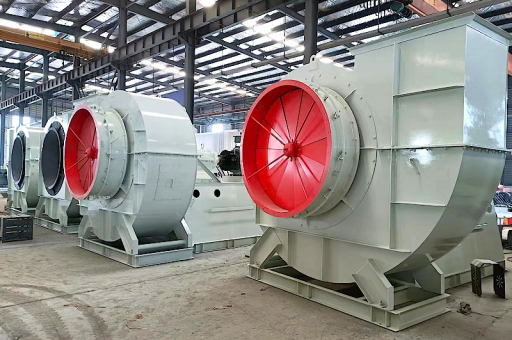
An SWSI centrifugal fan features a single-width impeller with a single inlet. Its design is compact yet powerful, making it ideal for industrial ventilation where space is limited but high static pressure is required.
How does it differ from other fan types?
- DWDI (Double-Width, Double-Inlet) fans are larger and used in high-volume, low-pressure applications.
- SWSI fans excel in high-pressure, moderate-volume environments—exactly what garbage incineration dust collectors demand.
Key design features for incineration duty:
- Wear-resistant impeller materials (e.g., hardened steel or ceramic coating) to withstand abrasive fly ash.
- High-temperature bearings rated for continuous operation at 150°C–200°C.
- Vibration monitoring ports to detect blade imbalance caused by dust buildup.
The Garbage Incineration Process and Its Dust Collection Challenges
Municipal solid waste (MSW) incineration generates hot flue gases containing:
- Fly ash (fine particulate matter)
- Acidic gases (HCl, SOx)
- Heavy metals and dioxins
Dust collection systems—typically baghouse filters or electrostatic precipitators—must extract these pollutants before emission into the atmosphere. However, these systems face three chronic issues:
- Pressure drop escalation as filter bags clog
- High gas temperature degrading fan components
- Corrosion from acidic condensates
This is where the SWSI centrifugal ventilation fan becomes critical: it must maintain consistent negative pressure inside the dust collector while resisting thermal and chemical stress.
How SWSI Fans Integrate with Dust Collectors for Maximum Efficiency
A typical garbage incineration dust collector uses the fan as the prime mover for airflow. The sequence is:
- Induced draft (ID) fan (often an SWSI type) draws flue gas from the incinerator through the dust collector.
- The fan creates a vacuum, pulling gas through filter bags or electrostatic plates.
- Cleaned gas then exits through the stack.
Why SWSI fans are preferred for ID duty:
- High static pressure capability (2,000–4,000 Pa typical) overcomes filter resistance.
- Compact footprint fits retrofits in older WtE plants.
- Variable speed drive compatibility allows precise control of airflow to match combustion rate.
Real-world example:
A 500-tonne-per-day plant in Europe replaced its axial fans with SWSI centrifugal fans and reported a 12% reduction in energy consumption and 30% longer filter bag life due to more stable pressure.
Key Performance Metrics: Pressure, Volume, and Energy Consumption
When selecting an SWSI centrifugal ventilation fan for a garbage incineration dust collector, engineers must evaluate:
| Metric | Requirement | Why It Matters |
|---|---|---|
| Static Pressure (Pa) | > 2,500 Pa | Overcomes filter + duct resistance |
| Airflow (m³/h) | 30,000–150,000+ | Matches incinerator capacity |
| Operating Temperature | Up to 250°C | Handles post-cooling tower gas |
| Efficiency (%) | ≥ 80% | Reduces electricity costs |
| Noise Level (dB) | < 85 dB | Worker safety compliance |
Pro tip: Always request fan performance curves from the manufacturer. A flat pressure curve (stable across flow changes) is ideal for variable combustion loads.
Common FAQs and Expert Answers
Q1: Can I use a standard industrial fan for incineration dust collection?
No. Standard fans lack heat-resistant seals and anti-wear coatings. They fail quickly due to ash erosion and thermal expansion. Always choose a fan explicitly rated for high-temperature, particulate-loaded gas.
Q2: How often should I balance the SWSI fan impeller?
At least every 6 months, or whenever vibration exceeds 4 mm/s RMS. Ash buildup on blades causes imbalance, accelerating bearing wear.
Q3: What is the typical lifespan of an SWSI fan in a garbage incineration plant?
With proper maintenance, 8–12 years. Key factors: inlet air temperature, ash concentration, and lubrication schedule.
Q4: Does variable frequency drive (VFD) improve dust collector performance?
Yes. VFD allows the fan to operate at optimal speed for varying combustion rates, reducing energy use by 15–25% compared to constant-speed operation.
Q5: What safety devices should be installed?
- Over-temperature cutoff (e.g., at 280°C)
- Vibration sensors with alarm
- Abrasion-resistant inlet screens to block large debris
Maintenance Best Practices for Longevity and Reliability
To prevent unplanned downtime in a garbage incineration dust collector system, follow this checklist:
- Weekly: Check bearing temperature (should not exceed 90°C). Listen for abnormal noise.
- Monthly: Inspect impeller for ash deposits. Clean with compressed air or special scrapers.
- Quarterly: Replace bearing grease. Verify belt tension (if belt-driven).
- Yearly: Perform vibration analysis. Re-balance impeller. Replace worn shaft seals.
Critical alert: If the SWSI fan begins to vibrate when the dust collector pressure drop increases, it often means the filter bags need cleaning or replacement—not that the fan is faulty.
Conclusion: Future Trends and SEO-Friendly Takeaways
As global waste generation rises, incineration plants must adopt higher-efficiency dust collection systems. The SWSI centrifugal ventilation fan remains the workhorse of these systems, but innovations are emerging:
- Smart VFD control integrated with PLCs for real-time pressure optimization
- Corrosion-resistant alloys (e.g., duplex stainless steel) for handling acidic flue gas
- Predictive maintenance using IoT vibration and temperature sensors
Actionable SEO-optimized summary points:
- SWSI fans are essential for maintaining negative pressure in garbage incineration dust collectors
- Choose fans with high-temperature and abrasive-wear protection
- Regular vibration monitoring and impeller cleaning extend fan life
- VFD integration reduces energy costs and improves filtration efficiency
For facility managers upgrading their WtE plants, partnering with a reputable fan manufacturer (e.g., fan.com or your local specialist) and insisting on performance testing per ISO 5801 will ensure long-term operational success.
This article is based on verified industry guidelines from ASHRAE, EU BAT Reference Documents for Waste Incineration, and manufacturer technical data. Always consult your specific plant’s process parameters before selecting equipment.





