
This article's table of contents introduction:
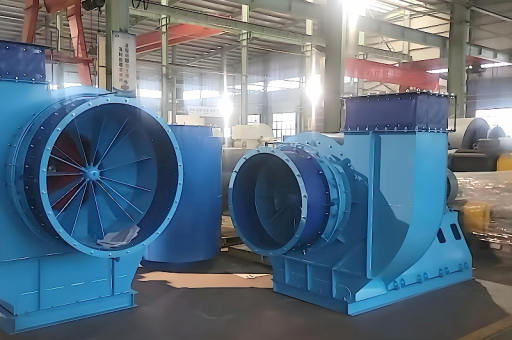
- What is it?
- Key Components (Why V-Belt?)
- Why Choose Stainless Steel?
- Common Applications (Where you find them)
- Advantages vs. Direct Drive
- How to Read a Model Number (Example)
- Common Manufacturers (Search Terms)
- A Note on Impeller Types (Crucial for performance)
- Troubleshooting Questions
This sounds like you are looking for information on a Stainless Steel Centrifugal Ventilation Fan that is V-Belt driven.
These are highly specific industrial fans used in environments where corrosion resistance, hygiene, or high temperatures are critical.
Here is a comprehensive breakdown of what this type of fan is, its components, advantages, and common applications.
What is it?
It is a Centrifugal Fan (also known as a blower) where the impeller is mounted on bearings and driven by an electric motor via V-belts, rather than the motor being directly coupled to the fan wheel.
The "Stainless Steel" designation typically refers to the impeller (wheel), housing (volute), and inlet cone being made from SS304 or SS316/316L.
Key Components (Why V-Belt?)
- Housing & Impeller (Stainless Steel): Provides resistance to moisture, chemicals, and high temperatures.
- V-Belt Drive: A pulley on the motor connects to a pulley on the fan shaft via belts.
- Why V-Belt?
- Speed Control: You can change the fan speed (CFM & Static Pressure) by changing the pulley sizes.
- Motor Protection: Prevents motor overload if the fan jams (belt slips).
- High Static Pressure: Allows smaller motors to handle the inertia of starting a heavy fan wheel.
- Why V-Belt?
Why Choose Stainless Steel?
- Corrosion Resistance: Essential for salt air (coastal), chemical fumes (scrubbers, labs), and wash-down environments.
- Hygiene: Non-porous, easy to clean, and doesn't rust. Ideal for Food Processing, Pharmaceutical, and Clean Rooms.
- High Temperature: Stainless steel (particularly 316) handles hot air (up to 400°F / 200°C) better than painted steel.
Common Applications (Where you find them)
- Kitchen Exhaust (Commercial): Moving hot, greasy air and steam.
- Industrial Wash-Down Areas: Meat, poultry, and seafood processing plants.
- Chemical Fume Extraction: Labs and manufacturing.
- Wastewater Treatment: For aeration or solids handling (corrosive gases).
- Marijuana Grow Rooms: High humidity and exhaust needs.
Advantages vs. Direct Drive
| Feature | V-Belt Driven (Your Fan) | Direct Drive |
|---|---|---|
| Speed Adjustment | Yes (change pulleys) | No (fixed to motor RPM) |
| Motor Maintenance | Easy (motor outside airstream) | Difficult (motor in airstream) |
| Duty Cycle | High static pressure | Lower static pressure |
| Cost | Higher upfront, versatile | Lower upfront, fixed output |
| Noise | Slightly more (belt slap) | Slightly quieter |
How to Read a Model Number (Example)
A typical manufacturer model might look like this: BC-SS-15-VB
- BC: Backward Curved (type of impeller)
- SS: Stainless Steel
- 15: Inlet size (15 inches)
- VB: V-Belt Driven
Common Manufacturers (Search Terms)
- Greenheck (Models: BCSW, BIDI)
- Cincinnati Fan (HP, PB, L Series in SS)
- New York Blower (General Purpose in SS)
- Multi-Wing / Aerovent
A Note on Impeller Types (Crucial for performance)
- Backward Inclined (BI): Most efficient, low noise, non-clogging (good for clean air & high static pressure).
- Forward Curved (FC): High volume, low static pressure (like a furnace blower; good for low-cost systems).
- Radial (Paddlewheel): Handles dirty, sticky air (material handling). Often made of heavy-gauge SS.
Troubleshooting Questions
If you are trying to buy one or fix one:
- What is the CFM (air volume) needed?
- What is the Static Pressure (SP) in inches of water gauge? (This determines the motor HP needed).
- What is the temperature and chemical content of the air? (Determines if SS304 or SS316/316L is needed).
- Duct size? (Fan inlet/outlet diameter).
Would you like me to help you understand CFM vs. Static Pressure calculations for your specific setup?





