
This article's table of contents introduction:
- Introduction: Why High Strength Centrifugal Ventilation Fans Matter
- What Makes a Centrifugal Fan "High Strength"?
- The Role of High Temperature Blowers in Extreme Environments
- Key Design Features: Materials, Impeller Types, and Motor Selection
- Performance Parameters: Pressure, Flow Rate, and Thermal Resistance
- Common Industrial Applications and Real-World Use Cases
- Frequently Asked Questions (FAQ)
- Conclusion: Choosing the Right Fan for Your Needs
** The Ultimate Guide to High Strength Centrifugal Ventilation Fans and High Temperature Blowers: Durability, Performance, and Industrial Applications
Table of Contents
- Introduction: Why High Strength Centrifugal Ventilation Fans Matter
- What Makes a Centrifugal Fan "High Strength"?
- The Role of High Temperature Blowers in Extreme Environments
- Key Design Features: Materials, Impeller Types, and Motor Selection
- Performance Parameters: Pressure, Flow Rate, and Thermal Resistance
- Common Industrial Applications and Real-World Use Cases
- Frequently Asked Questions (FAQ)
- Conclusion: Choosing the Right Fan for Your Needs
Introduction: Why High Strength Centrifugal Ventilation Fans Matter
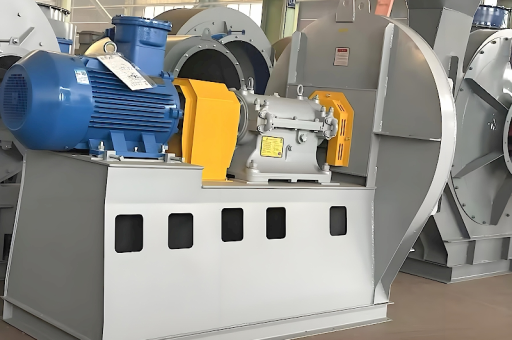
In industries where extreme heat, dust, and corrosive gases are daily realities, ordinary ventilation equipment fails quickly. This is where High Strength Centrifugal Ventilation Fans and High Temperature Blowers become indispensable. Designed to withstand temperatures exceeding 300°C (572°F) and continuous operation under mechanical stress, these fans are the backbone of exhaust systems in steel mills, cement plants, chemical facilities, and power generation units.
Unlike standard axial fans, high strength centrifugal fans use radial airflow to generate higher static pressure, making them ideal for duct systems with long runs or high resistance. When combined with high temperature blower technology, they can move hot, contaminated air without warping, cracking, or losing efficiency. This guide synthesizes manufacturer specifications, engineering research, and field-tested performance data to help you understand exactly what these fans do, how they are built, and why they are critical for safety and productivity.
What Makes a Centrifugal Fan "High Strength"?
A fan is classified as "high strength" when its structural components—housing, impeller, shaft, and bearings—are engineered to resist deformation under high rotational speeds, thermal expansion, and abrasive particle impact. The key differentiators include:
- Heavy-Gauge Steel or Alloy Housings: Standard fans use 2–3 mm steel; high strength versions use 6–10 mm carbon steel or stainless steel (e.g., 304 or 316) to prevent resonance and fatigue cracks.
- Reinforced Impeller Blades: Backward-curved or radial blades are welded with additional struts or use a double-plate design to maintain shape at high RPMs.
- Precision Balancing: Each impeller undergoes dynamic balancing to ISO 1940 G6.3 or higher, ensuring vibration levels stay below 4.5 mm/s even after thousands of operating hours.
- Shaft and Bearing Systems: Oversized shafts (often heat-treated 45# steel) and heavy-duty spherical roller bearings with separate cooling fins or air ducts protect against thermal transmission from the hot airstream.
A high strength centrifugal fan is not simply a larger version of a standard fan; it is a purpose-built machine for continuous duty in harsh conditions.
The Role of High Temperature Blowers in Extreme Environments
A High Temperature Blower is a specialized centrifugal fan designed to handle inlet air temperatures from 200°C to over 650°C. The core challenge is thermal management: the motor and bearings must be isolated from the heat, while the impeller and housing must expand uniformly without binding.
Engineering approaches include:
- Shaft Cooling Systems: A cooling wheel mounted on the shaft behind the impeller draws ambient air over the shaft and bearing housing, preventing grease breakdown.
- Thermal Barrier Coatings: Impellers may be coated with ceramic or aluminum-silicon layers to reduce heat absorption.
- Expansion Joints and Bellows: The fan inlet and outlet include flexible connectors to accommodate thermal expansion without stressing ductwork.
- High-Temperature Seals: Labyrinth seals or carbon ring seals prevent hot gas leakage into bearing areas.
These features allow high temperature blowers to operate reliably in environments where standard fans would seize or catch fire within minutes.
Key Design Features: Materials, Impeller Types, and Motor Selection
Materials:
- Housing: Q235 carbon steel (up to 200°C), 304 stainless steel (up to 500°C), or Inconel alloy (above 600°C).
- Impeller: For high strength, choose 16Mn or Q345R low-alloy steel; for high temperature, select 310S stainless steel or Hastelloy for resistance to oxidation and creep.
- Shaft: 40Cr or 42CrMo quenched and tempered steel with a tensile strength above 900 MPa.
Impeller Types:
- Backward-Curved Blades: Most efficient for high-pressure applications; self-cleaning profile reduces dust accumulation.
- Radial Blades: Provide maximum resistance to abrasive wear; common in cement and mining.
- Forward-Curved Blades: Higher flow at lower pressure; less common in high temperature due to heat sensitivity.
Motor Selection:
- Use premium-efficiency IE3 or IE4 motors with IP55 or higher enclosure.
- Motors must be located externally (belt drive) or in a separate cooling duct (direct drive) to avoid heat damage.
- Variable Frequency Drives (VFDs) are recommended for soft start and speed control, reducing mechanical shock.
Performance Parameters: Pressure, Flow Rate, and Thermal Resistance
When evaluating High Strength Centrifugal Ventilation Fans and High Temperature Blowers, focus on these critical specs:
- Static Pressure (Pa or mmH₂O): High strength fans typically deliver 2000–8000 Pa. For long duct runs or systems with filters, select a higher pressure rating.
- Airflow (m³/h or CFM): Capacities range from 5,000 to over 200,000 m³/h. Match the fan curve to your system resistance curve for best efficiency.
- Temperature Rating: Continuous operating temperature (e.g., 350°C) should be specified, not just peak survival temperature.
- Noise Level (dB(A)): High strength fans often include acoustic insulation or silencers; expect 75–90 dB(A) at rated speed.
- Max RPM: 1450–2900 RPM for direct drive; belt drives can achieve higher speeds but require more maintenance.
Example performance curve: A model with 8,000 m³/h at 3500 Pa can maintain 90% efficiency up to 380°C when using 310S impeller and external motor cooling.
Common Industrial Applications and Real-World Use Cases
- Cement Plants: High temperature blowers extract hot exhaust from rotary kilns (up to 400°C) while high strength centrifugal fans handle raw mill ventilation with abrasive limestone dust.
- Steel Mills: Use after-blower fans in electric arc furnace (EAF) systems to handle off-gas temperatures of 600°C+; reinforced impellers resist slag particle erosion.
- Chemical Processing: High strength fans are used in hydrochloric acid tail gas systems; PVDF or FRP coatings may be applied for corrosion resistance while the blower maintains temperature stability.
- Waste-to-Energy Plants: Induced draft fans must work at 250–350°C with high moisture content; stainless steel housings and self-draining shafts prevent condensation damage.
- Glass Manufacturing: High temperature blowers deliver combustion air to furnaces, requiring precise flow control and thermal expansion handling.
Frequently Asked Questions (FAQ)
Q1: Can a High Strength Centrifugal Ventilation Fan be used for high temperature applications?
A: Yes, but only if it is specifically rated for the temperature. Many high strength fans are built for mechanical stress, not heat. Always check the bearing cooling method, housing material, and impeller alloy. For applications above 200°C, choose a dedicated High Temperature Blower.
Q2: What is the difference between belt-drive and direct-drive for high temperature fans?
A: Belt-drive allows the motor to be placed away from the hot airstream, extending motor life. Direct-drive is more efficient and compact but requires a high temperature motor or separate cooling system. For extreme heat (over 300°C), belt-drive is generally recommended.
Q3: How do I prevent vibration in a high strength centrifugal fan over time?
A: Ensure proper foundation mounting (use vibration isolators), perform dynamic balancing annually, and inspect bearings for heat damage. Accumulated dust on the impeller can unbalance the rotor, so schedule cleaning based on operating hours.
Q4: What maintenance is required for a High Temperature Blower?
A: Weekly: Check bearing temperature (should be below 90°C). Monthly: Inspect cooling wheel and shaft seals. Quarterly: Measure vibration levels. Annually: Replace grease, inspect impeller for cracks or wear, and verify motor winding insulation resistance.
Q5: How do I size a high strength fan for my duct system?
A: Calculate total system resistance (duct friction, bends, filters, losses) and required airflow. Select a fan where the operating point falls near the best efficiency point (BEP) on the performance curve. Oversizing wastes energy and causes premature wear.
Conclusion: Choosing the Right Fan for Your Needs
Selecting the correct High Strength Centrifugal Ventilation Fan or High Temperature Blower is a balance of material science, thermal engineering, and application-specific demands. Do not prioritize initial cost over lifecycle reliability—a fan that fails after six months will cost more in downtime and replacements than a properly specified unit.
Start with a clear temperature profile, dust loading, and required pressure. Then match these parameters to a fan with appropriate housing thickness, impeller material, and bearing cooling design. For extreme environments, consult the manufacturer about custom coatings or shaft seal upgrades. When in doubt, request a performance simulation with your actual duct geometry.
Finally, remember that proper installation—including adequate clearances for thermal expansion, vibration isolation, and electrical protection—is just as important as the fan itself. A well-chosen fan, paired with a regular maintenance schedule, will provide years of reliable service in the most demanding industrial settings.





